Inspiring Inclusion: The Imperative for Gender Equity and Economic Empowerment in the Global Tourism Sector

The 2024 International Women’s Day campaign, centered on the theme of "Inspire Inclusion," serves as a critical diagnostic tool for the global tourism industry. This annual observance, which traces its origins to the early 20th-century labor movements, has evolved into a global platform for evaluating systemic gender disparities. In the context of tourism—a sector that accounts for roughly one in ten jobs worldwide—the call to "break down barriers and challenge stereotypes" is not merely a social mandate; it is an economic necessity. Despite women constituting over half of the industry’s workforce, they remain systematically excluded from the upper echelons of power and management, a reality that necessitates a fundamental restructuring of corporate and government policies.
A Chronology of Advocacy and Global Standards
The history of women’s advocacy in the workplace is long and complex. International Women’s Day (IWD), formally recognized by the United Nations in 1977, has historically served as a pivot point for measuring progress in labor rights. For the tourism sector, this scrutiny intensified following the 2019 publication of the UN World Tourism Organization’s (UNWTO) Global Report on Women in Tourism. This seminal document established the baseline for current discourse: while women perform the majority of labor within the industry, their participation is disproportionately concentrated in precarious, informal, and low-wage sectors.
The subsequent COVID-19 pandemic acted as an accelerant for these existing inequalities. According to data from the World Travel & Tourism Council (WTTC), the collapse of global tourism in 2020 resulted in the disproportionate displacement of female workers, who were more likely to be employed in non-contractual roles without the safety nets afforded to executive leadership. This period of contraction highlighted the fragility of the status quo and spurred a new wave of policy initiatives, including the UNWTO’s updated gender-mainstreaming strategies and the emergence of private-sector pledges to audit supply chains for gender bias.

The Statistical Reality: A Sector of Extremes
To understand the scope of the challenge, one must look at the quantitative disparity between participation and representation. Current research indicates that women account for approximately 54% of the tourism sector’s global workforce. However, the qualitative distribution of this labor remains stagnant. Industry analysis suggests that only 19% to 25% of leadership positions, including C-suite and board-level roles, are held by women.
The implications of this gap are twofold. First, it represents a failure of institutional equity, as the talent pipeline is choked by invisible barriers such as lack of mentorship, unequal access to capital for entrepreneurs, and systemic bias in recruitment. Second, it represents a missed economic opportunity. According to McKinsey & Company’s longitudinal research, companies with high levels of gender diversity in executive management are consistently more profitable than their counterparts. This is attributed to "collective intelligence"—the ability of diverse teams to process information, solve problems, and innovate more effectively than homogenous groups.
The Multiplier Effect: Why Investing in Women Yields Returns
The argument for gender inclusion in tourism transcends corporate social responsibility (CSR); it is rooted in macro-economic development. Data from Kiva and UN Women demonstrate a consistent "multiplier effect" associated with female economic empowerment. Studies show that women are statistically more likely to reinvest up to 80% of their earnings back into the health, nutrition, and education of their families and communities.
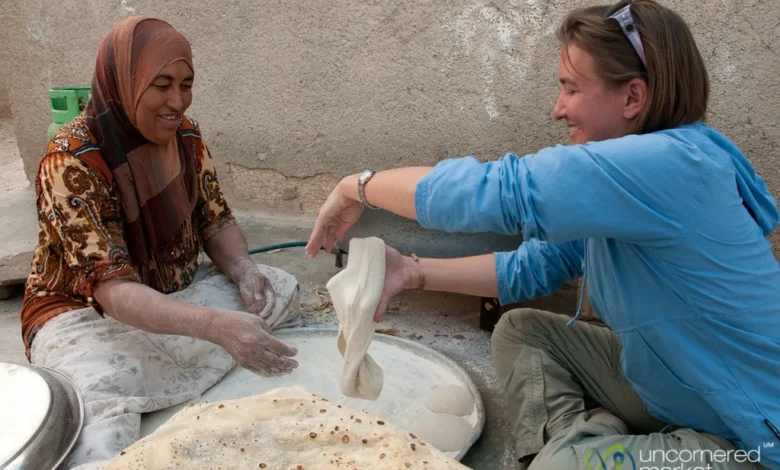
In the tourism context, this means that every dollar earned by a female entrepreneur in a tourism-dependent destination has a higher social velocity than a dollar earned in a vacuum. When tourism enterprises—such as the Moshi Mamas initiative in Tanzania or the Zikra Initiative in Jordan—provide business training and market access to local women, the resulting stability fosters community resilience. These programs demonstrate that tourism, when managed with a focus on local participation, acts as a mechanism for long-term poverty reduction rather than merely an extractive industry.

Addressing the Gender Gap: Practical Mechanisms for Change
For the tourism sector to achieve the "Inspire Inclusion" benchmark, industry leaders must transition from symbolic gestures to structural reform. Experts in sustainable development propose a multi-pronged approach:
- Supply Chain Auditing: Companies must move beyond internal HR metrics and assess the gender composition of their supply chains. This involves intentionally sourcing services, handicrafts, and experiences from women-led small and medium-sized enterprises (SMEs).
- Access to Microfinance: Institutional barriers often prevent women from accessing the credit necessary to scale their tourism businesses. Partnership with microfinance institutions allows for the removal of collateral requirements that historically disadvantage female applicants.
- Leadership Pipelines: Formal mentorship and sponsorship programs are required to address the "broken rung" in the career ladder. This includes setting transparent targets for board representation and executive recruitment.
- Skills Development for the Formal Economy: Tourism businesses must provide training that offers certifications and technical skills that are transferable. This ensures that even if a worker leaves the tourism sector, they possess the professional capital to enter other segments of the formal economy.
The Consumer Mandate: Market Drivers for Equality
The impetus for change is also coming from the consumer side. Market research indicates that women make between 70% and 80% of all travel purchasing decisions. This demographic shift has created a feedback loop: female travelers are increasingly seeking out brands and experiences that align with their values. Companies that fail to demonstrate a commitment to inclusivity are increasingly at risk of alienation from their primary consumer base.
The modern traveler is not merely interested in the destination; they are interested in the ethics of the journey. As travelers become more discerning, the "mindful" and "sustainable" labels are being scrutinized for their gender-equity credentials. A company that boasts of its environmental footprint but lacks a diverse leadership team or fails to support local women in its host destinations is increasingly viewed as incomplete.
Future Outlook and Implications
The path forward for the tourism industry is clear, though the implementation remains arduous. Achieving true inclusion requires a departure from the "trickle-down" philosophy of development. Instead, it requires a "bottom-up" strategy that recognizes women not as passive beneficiaries of tourism, but as active, essential partners in the global economy.

The 2024 International Women’s Day serves as a reminder that the tourism sector stands at a crossroads. It can continue to rely on the labor of women while denying them the fruits of that labor, or it can lean into the structural changes that lead to a more resilient, innovative, and equitable industry. The transition from rhetoric to reality depends on the willingness of governments and private entities to institutionalize these changes. When the tourism sector finally manages to "Inspire Inclusion" in a substantive way, it will not only empower the millions of women working in the shadows of the industry—it will create a more stable, intelligent, and prosperous future for the global community at large. The objective is clear: to ensure that every individual, regardless of gender, has the infrastructure and opportunity to occupy the driver’s seat in the global journey of economic development.
Related posts: