Redefining Accessible Adventure: How One Traveler Defied Expectations on a European Cycling Expedition


The landscape of modern tourism is undergoing a quiet revolution, expanding its boundaries to include travelers of all abilities. For individuals with visual impairments, a cycling holiday across foreign terrain might traditionally have seemed entirely out of reach. However, recent advancements in adaptive travel planning, combined with proactive tour operators and innovative assistive technology, are dismantling these barriers. A prime example of this shifting paradigm is the journey of Jennifer Mazerolle, a legally blind traveler from Nova Scotia, Canada, who recently completed an eight-day small-group cycling expedition along the Danube River.
Mazerolle’s experience highlights a growing movement within the global tourism sector toward true inclusivity. Rather than relying on generic accommodations, modern accessible travel increasingly emphasizes customized logistical support, open communication between operators and clients, and the integration of personal safety systems. Her voyage from Vienna to Budapest not only challenges preconceived notions regarding disability and adventure travel but also establishes a practical framework for how tour operators can successfully adapt complex itineraries for visually impaired participants.
Navigating the Urban Labyrinth: Arrival and Initial Adjustments
The logistical challenges of any international tour typically manifest intensely during the first twenty-four hours. For Mazerolle, who lives with Stargardt disease—a genetic condition characterized by progressive central vision loss diagnosed when she was nine years old—arriving in Vienna presented a uniquely daunting environment. Navigating an ancient European capital requires processing a complex array of sensory inputs: non-standard curb heights, bustling tram networks, dense bicycle lanes, and heavy vehicular traffic.
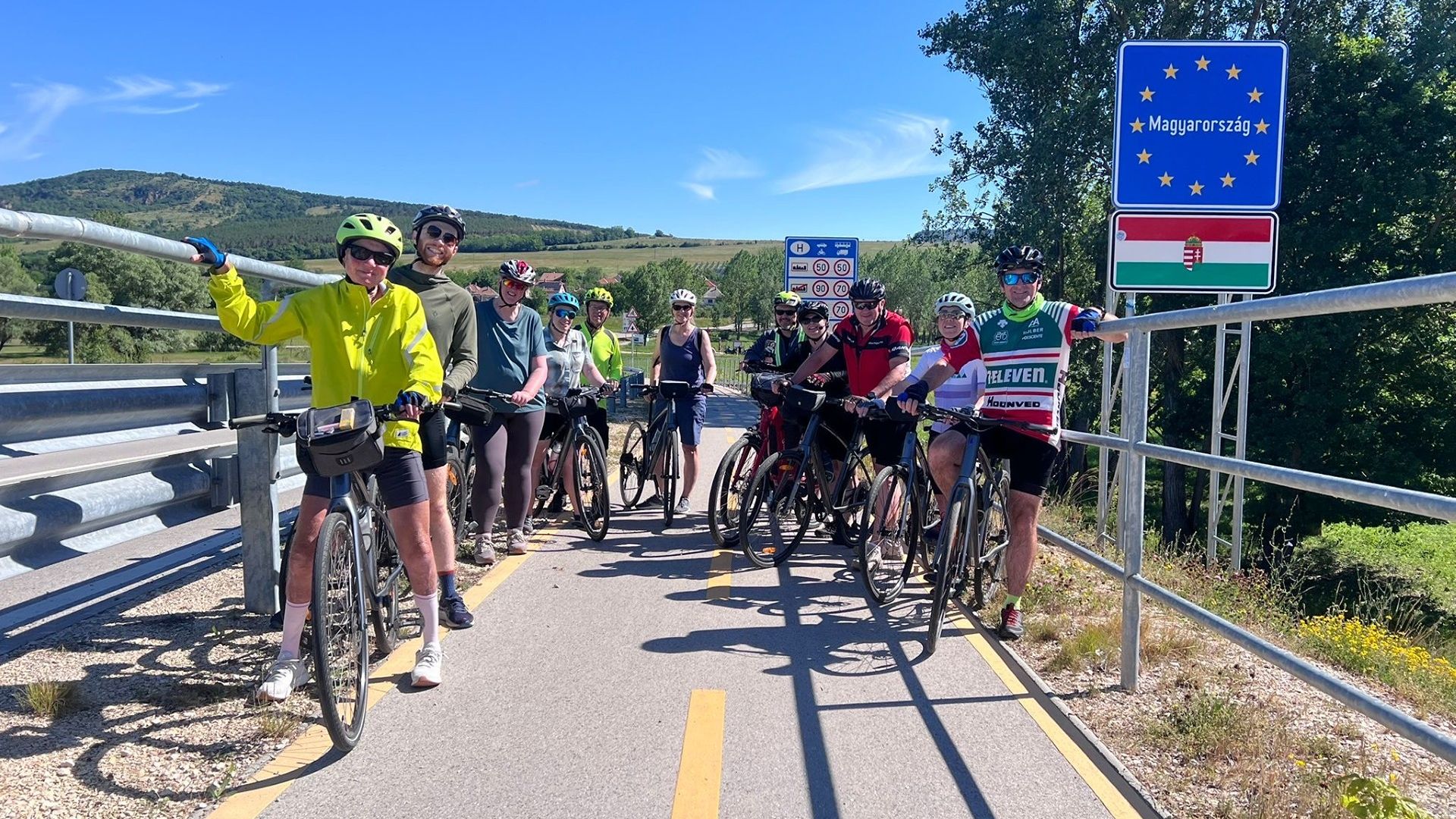
Despite retaining useful peripheral vision capable of distinguishing lights, shapes, and general movement, Mazerolle misses fine details, making dense urban navigation hazardous. Recognizing these initial anxieties, the trip’s operational leadership demonstrated the value of flexible planning. Gabor, the Intrepid trip leader, alongside van driver Ivan, immediately addressed her safety concerns regarding the congested morning ride from the hotel to the trail head.
Instead of forcing a standardized route, the leadership team integrated the tour’s support vehicle into Mazerolle’s daily itinerary. Rather than cycling through chaotic city streets, she utilized the support van to bypass urban bottlenecks, joining the group safely once they reached the structured bike paths along the Danube. This proactive adjustment set a collaborative tone for the remainder of the journey, proving that minor logistical modifications can completely transform an accessible travel experience.
Technological Integration and Peer Support Systems
The success of Mazerolle’s expedition relied heavily on a combination of pre-existing assistive technology and a robust support network consisting of her husband, Gilles, and her friend, Fairleigh. Cycling safely with a visual impairment requires constant, real-time environmental awareness. To bridge this gap, Mazerolle and her husband utilize a specialized intercom system integrated directly into their bicycle helmets via earpieces and microphones.
This communication rig allows Gilles, riding slightly ahead, to narrate the trail ahead in real time, alerting Mazerolle to surface anomalies, elevation changes, or approaching pedestrians. This auditory feedback loop significantly reduces cognitive fatigue, eliminating the intense physical and mental strain required to constantly scan for potential hazards.

Furthermore, Mazerolle utilized an e-bike for the duration of the Danube tour. Before each leg of the journey, trip leaders provided comprehensive briefings detailing surface types, daily mileage, and potential geographic challenges. This meticulous preparation ensured that Mazerolle could pace herself effectively while remaining fully integrated with the broader group of eleven travelers from Canada, the United Kingdom, and Australia.
The Evolution of Accessible Tourism: Industry Implications
Mazerolle’s journey underscores a broader economic and social shift within the travel industry. Historically, adventure tourism and active small-group travel have marketed themselves primarily to able-bodied demographics. However, as global populations age and advocacy for disability rights gains momentum, travel companies are recognizing both the ethical imperative and the commercial viability of designing genuinely accessible itineraries.
Industry analysts note that successful accessible tourism requires a shift from reactive accommodation to proactive co-design. When travelers engage with tour operators months in advance—as Mazerolle and her companions did—it allows companies to evaluate infrastructure, train local guides, and test supportive technologies. The economic implications are substantial; by opening active itineraries to travelers with disabilities, tour operators tap into an underserved demographic seeking high-engagement experiential travel rather than passive, highly segregated tours.
Moreover, the normalization of visible disabilities in active tourism serves a dual purpose. Beyond providing personal fulfillment for the traveler, it challenges institutionalized paternalism within the tourism sector, where operators have historically erred on the side of exclusion to mitigate liability risks. By demonstrating that calculated risk-taking and proper safety protocols can coexist, operators like Intrepid are setting new standards for international adventure standards.
Broader Perspectives on Disability and Exploration
Beyond the technical logistics of the cycling tour, Mazerolle’s travels highlight the cultural nuances of disability advocacy on a global scale. Working professionally as a mentor for children and youth who are blind or visually impaired, Mazerolle views her international journeys as an opportunity to model independence and challenge regional stigmas surrounding disability.
Her travels span multiple continents, including excursions to the United States, Thailand, Costa Rica, and China. Throughout these expeditions, she has encountered varied cultural attitudes toward accessibility, ranging from infrastructural assistance to well-meaning but overprotective bewilderment. By visibly navigating foreign environments with her white cane and participating in rigorous activities like hiking and cycling, she actively shifts local and international perceptions.
Interestingly, Mazerolle resists the label of "inspirational," a term frequently applied to disabled individuals performing standard daily activities or recreational pursuits. Reflecting on a previous trip with fellow visually impaired travelers in Puerto Rico—where the group humorously attempted to enter a coffee shop through a window mistaking it for a door—she emphasizes that their motivations are rooted in standard human curiosity and leisure, rather than public inspiration. The true value, she suggests, lies in the mundane normalization of disabled travelers exploring the world on their own terms.
Future Outlook and Recommendations for Travelers
As Mazerolle plans her next adventures—including an upcoming family cruise and research into future active kayaking and cycling itineraries—she offers pragmatic advice for other travelers with specific access needs. She stresses the importance of thorough advance research, transparent communication with tour providers, and a clear understanding of one’s personal capabilities derived from daily routines.
For the travel industry, stories like the Danube cycling expedition serve as a blueprint. True accessibility is no longer merely about wheelchair ramps and large-print brochures; it encompasses flexible leadership, communication infrastructure, and a cultural willingness to listen to the traveler’s lived experience. As more operators adopt these collaborative methodologies, the horizon of adventure travel will continue to expand, ensuring that the world’s most compelling landscapes remain open to all.