MakeMyTrip Pivots Toward Non-Air Travel as Domestic Aviation Faces Market Headwinds

MakeMyTrip, the dominant force in India’s online travel agency (OTA) sector, is strategically recalibrating its business model as the domestic aviation market encounters persistent turbulence. While the company continues to maintain a formidable stronghold in flight bookings, its latest financial disclosures reveal a decisive shift toward high-margin segments—specifically hotels, bus ticketing, and cab services. This transition is not merely a reaction to current market volatility but a calculated move to capitalize on the long-term growth trajectory of India’s burgeoning domestic tourism and hospitality industry.
The company’s fiscal second-quarter results, ending in September, provide a clear roadmap of this transition. Reporting gross bookings of $2.7 billion, MakeMyTrip demonstrated a robust 21% year-over-year growth on a constant-currency basis. Perhaps more significantly, adjusted operating profit surged to $46.2 million, underscoring the efficacy of its diversified portfolio. As the airline sector grapples with capacity constraints and high fares, MakeMyTrip’s non-air business now constitutes 63.2% of its gross bookings, a notable increase from the 61.5% recorded during the same period last year.
The Aviation Paradox: High Fares and Declining Volume
The domestic aviation sector in India is currently defined by a paradox of high demand and supply-side limitations. Despite a post-pandemic resurgence in travel appetite, the September quarter saw domestic air departures decline by 7%, while international departures dipped by 4%. These figures, while seemingly contradictory to the general narrative of Indian tourism growth, are largely attributed to a significant increase in ticket pricing. Industry-wide, airfares have climbed by approximately 25% to 30%, a factor that has priced out a segment of the casual traveler and prompted others to seek more cost-effective alternatives or simply defer their travel plans.
MakeMyTrip, which commands a market share exceeding 30% in domestic air ticketing, remains the primary beneficiary of the country’s flight bookings. However, the company is acutely aware that relying solely on aviation is a precarious strategy. The structural issues plaguing the Indian aviation sector—ranging from aircraft delivery delays affecting fleet expansion to rising operational costs for carriers—have created an environment where the ceiling for growth in air travel is currently capped by external logistics rather than consumer interest.
Strategic Diversification: The Rise of Hotels and Packages
In response to the softening air market, MakeMyTrip has intensified its focus on the "stay" and "ground transport" segments. Hotels and holiday packages now account for approximately 40% of the company’s total business, serving as a critical buffer against the volatility of the airline industry. Stand-alone hotel room nights grew by 18.6% during the quarter, with domestic room nights witnessing a more aggressive expansion of over 20%.
This shift is rooted in the fundamental maturation of the Indian traveler. As the middle class expands and disposable income rises, there is a marked transition from transactional travel (booking a flight) to experiential travel (booking a curated stay). By aggressively expanding its inventory of premium and budget hotels, MakeMyTrip is positioning itself as a comprehensive travel ecosystem rather than a simple ticketing portal. This ecosystem approach is designed to increase customer lifetime value, as users are incentivized to book their entire itinerary—flights, hotels, and local transit—within the same application.
Chronology of a Market Shift
The evolution of MakeMyTrip’s strategy can be traced back to the post-pandemic recovery phase. In 2021 and 2022, the company focused on regaining lost ground in the air ticketing segment as borders reopened and domestic flight schedules returned to pre-COVID levels. However, as the travel industry entered 2023, the leadership team—headed by Group CEO Rajesh Magow—began signaling a pivot toward "high-margin, non-air segments."
Throughout 2023, the company invested heavily in its "Homestays" and "Luxury Resorts" categories, recognizing that the post-pandemic traveler sought more privacy and personalized service. By the first quarter of the 2024 fiscal year, the strategy began to yield tangible results, with the non-air segment consistently outperforming the aviation vertical in terms of growth percentage. The second quarter of the current fiscal year acts as the culmination of this two-year strategic push, establishing a new baseline where non-air services are the primary engines of revenue expansion.
Industry Implications and Competitive Analysis
The move to de-emphasize air travel—or at least to balance it with stronger hotel and ground transport offerings—has profound implications for the Indian travel market. Currently, the OTA landscape in India is highly competitive, with players like EaseMyTrip and Ixigo vying for market share. While these competitors have also diversified, MakeMyTrip’s massive scale allows it to negotiate better rates with hotel chains, effectively creating a "moat" that is difficult for smaller players to bridge.
From an investor perspective, the pivot to hotels and packages is viewed as a stabilizing force. Hotel bookings typically carry higher margins than air tickets, where the commission structures are often dictated by airline policies and regulatory caps. By increasing the percentage of hotel and bus bookings, MakeMyTrip is fundamentally improving its unit economics. Analysts suggest that if the current trend continues, the company’s operating margins could see further expansion, as the cost of customer acquisition in the non-air segment is increasingly offset by repeat bookings and brand loyalty programs.
Addressing the Ground Transport Opportunity
Beyond hotels, the bus and cab segment represents a massive, fragmented market that MakeMyTrip is actively consolidating. India’s bus travel market is the largest in the world by volume, yet it remains largely unorganized. By digitizing this experience, MakeMyTrip is capturing a demographic that may not travel by air but is increasingly comfortable using digital platforms to secure reliable, scheduled, and safe ground transportation. This segment serves as a gateway for users who are new to the digital economy, effectively feeding them into the company’s broader travel ecosystem.
Official Perspective and Future Outlook
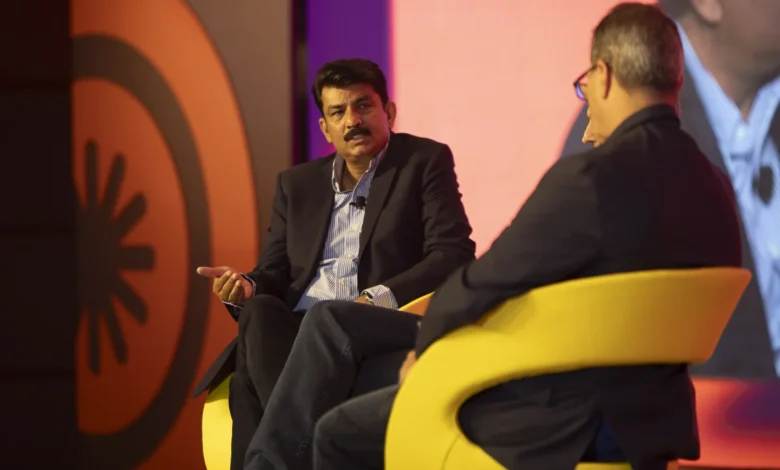
Speaking at various industry forums, including the recent Skift India Summit, Rajesh Magow has consistently emphasized the necessity of agility in the travel sector. Magow’s commentary reflects a philosophy of "customer-centricity," where the company’s priorities are aligned with the evolving preferences of the Indian traveler. The sentiment within the company is that while aviation remains a high-volume, high-visibility business, the true value-creation lies in the deep integration of travel services.
Looking ahead, MakeMyTrip is expected to continue its aggressive push into Tier 2 and Tier 3 cities. As digital infrastructure improves in these regions, the company’s ability to offer localized, affordable, and easily accessible travel packages will be key to maintaining its lead. The current slowdown in the aviation sector, while a challenge for the broader industry, has served as a catalyst for MakeMyTrip to solidify its standing as a diversified travel conglomerate rather than a simple flight aggregator.
Conclusion: A New Standard for Indian Travel
The shift within MakeMyTrip is representative of a broader trend in the global travel industry: the move from being a "search and book" engine to a "plan and experience" platform. By pivoting away from the volatility of the airline sector and doubling down on hotels and ground transport, the company is insulating itself against supply-side shocks while tapping into the high-growth potential of domestic hospitality.
The fiscal results of the second quarter serve as a testament to the success of this strategy. As India continues to see a rise in domestic tourism, the companies that will thrive are those that can provide a seamless, end-to-end travel experience. For MakeMyTrip, the path forward is clear: continue to scale the high-margin non-air businesses, maintain a dominant market share in aviation to serve as a top-of-funnel acquisition tool, and leverage data to offer hyper-personalized travel experiences. The current air travel environment may be a "soft spot," but for the company, it has provided the perfect impetus to evolve into a more resilient, profitable, and customer-focused organization. As the travel landscape in India continues to mature, MakeMyTrip’s recent maneuvers suggest a well-prepared entity ready to capture the next wave of growth in one of the world’s most dynamic travel markets.
Related posts: