JetBlue shares rally as airline pushes back against bankruptcy rumors with long-term recovery plan

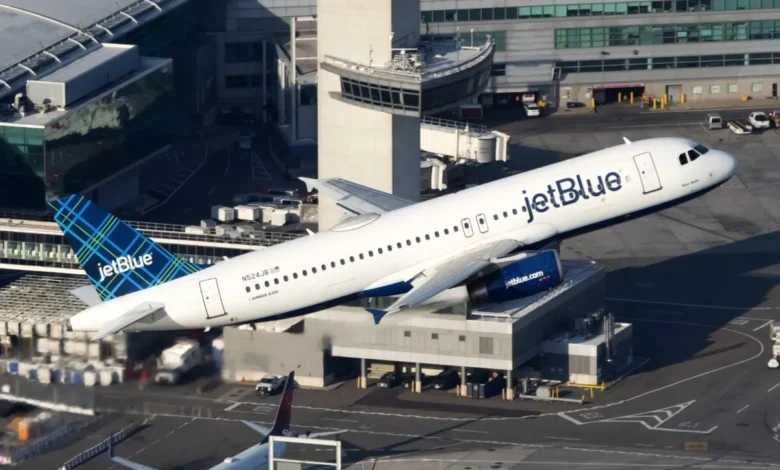
JetBlue Airways signaled a definitive push to stabilize its financial future on Monday, reporting a wider-than-expected third-quarter loss while simultaneously moving to aggressively dispel mounting market speculation regarding a potential bankruptcy filing. The New York-based carrier, which has faced a grueling period of operational headwinds and market skepticism, saw its shares climb more than 10% in after-hours trading following an unscheduled early release of its quarterly financial results. The rally provided a much-needed reprieve for investors, who had driven the stock down by over 20% in the preceding week alone, culminating in a closing price of $2.37 on Monday.
The decision to release the earnings report a day ahead of schedule was widely interpreted by industry analysts as a calculated move to stabilize investor confidence and put an end to rumors regarding a Chapter 11 filing. By reaffirming its long-term financial guidance, JetBlue management sought to shift the narrative from immediate survival to a structured, multi-year recovery plan known internally as "JetForward."
Financial Performance and the Road to Recovery
For the third quarter, JetBlue reported a net loss that underscored the persistent challenges facing the airline industry, including inflationary pressures, high labor costs, and a complex competitive landscape. While the airline did not immediately disclose the granular figures in its early statement, the disclosure of a "wider" loss reflects the significant drag of these systemic costs.
Despite the current fiscal pressure, JetBlue’s leadership maintains a steadfast commitment to its long-term objectives. The airline reiterated its target of achieving sustained operating profitability by 2027 and reaching an earnings-per-share (EPS) milestone of at least $1.00 by 2028. Central to this outlook is the company’s assertion that its unit costs, excluding fuel, are poised for a "meaningful step-down" in the fourth quarter of this year. This cost-reduction strategy is expected to provide the necessary liquidity to maintain positive free cash flow as the carrier navigates a transitionary period.
Chronology of the Crisis
The recent volatility surrounding JetBlue is the culmination of a difficult twelve-month cycle. Following the termination of its proposed merger with Spirit Airlines earlier this year—a move blocked by federal regulators on antitrust grounds—JetBlue found itself in a precarious strategic position.
- Early 2024: The collapse of the Spirit merger forced JetBlue to pivot toward a standalone recovery strategy. The company incurred significant breakup fees and faced the loss of projected synergies that were intended to bolster its network reach.
- Mid-2024: Operational bottlenecks at key hubs, including New York’s John F. Kennedy International Airport, combined with persistent engine inspection requirements (related to Pratt & Whitney GTF engines), constrained capacity and increased maintenance costs.
- October 2024: As market conditions tightened, speculative rumors began to circulate regarding JetBlue’s debt load and the possibility of a Chapter 11 reorganization. These fears triggered a sell-off that shaved more than a fifth of the company’s market capitalization in just seven trading days.
- Monday, October 28, 2024: JetBlue preempted its scheduled Tuesday morning report by releasing its quarterly update after the market close, effectively silencing immediate bankruptcy concerns and sparking a sharp rebound in share price.
Contextualizing the Industry Landscape
JetBlue’s current predicament is not entirely unique in the post-pandemic aviation sector, but it is magnified by the carrier’s specific business model. Unlike "Big Four" legacy carriers—Delta, United, American, and Southwest—JetBlue occupies a "hybrid" space. It offers premium amenities such as its Mint business-class product, yet it lacks the massive scale and diverse revenue streams of its larger competitors.
The aviation industry as a whole is currently grappling with a "two-tier" recovery. While large legacy carriers are benefiting from strong demand in premium cabins and international routes, low-cost and hybrid carriers are seeing their margins squeezed by a softening in domestic demand and increased competition from ultra-low-cost carriers. JetBlue has been particularly exposed to the volatility in the Northeast corridor, where air traffic control staffing shortages and weather-related disruptions have caused disproportionate impacts on its flight schedule.
Management’s Strategic Response: The JetForward Initiative
The "JetForward" plan is the cornerstone of the airline’s effort to reassure the investment community. This initiative focuses on three primary pillars: cost containment, network optimization, and revenue diversification.
- Cost Containment: The airline is undergoing a rigorous review of its non-fuel operating expenses. By streamlining administrative processes and renegotiating supplier contracts, JetBlue aims to lower its "CASM-ex" (Cost per Available Seat Mile, excluding fuel) to levels that are more competitive with the industry average.
- Network Optimization: JetBlue is trimming underperforming routes and focusing its assets on high-demand markets where its brand loyalty remains strongest. This involves a shift away from some of its more experimental long-haul international routes in favor of reliable, high-frequency domestic circuits.
- Revenue Diversification: Beyond traditional ticket sales, JetBlue is aggressively expanding its loyalty program revenue and ancillary service offerings. By monetizing the passenger experience more effectively, the airline hopes to create a buffer against the cyclical nature of ticket pricing.
Implications for Stakeholders
The market reaction on Monday suggests that the institutional investment community remains cautiously optimistic about JetBlue’s ability to execute this turnaround. However, the path forward is fraught with risks.
For the airline’s employees, the focus remains on operational reliability. Labor unions have closely monitored the company’s cost-cutting measures, and any attempt to drastically reduce payroll or benefits could lead to industrial relations friction. For the traveling public, the primary impact will likely be seen in the carrier’s network footprint. Passengers may see fewer flight options on peripheral routes as the airline consolidates its focus on core markets.
Analysts remain divided on the feasibility of the $1 EPS target. While the "meaningful step-down" in costs projected for the fourth quarter is a positive sign, the airline still faces significant debt obligations that will require refinancing in the coming years. If interest rates remain elevated, the cost of servicing this debt could continue to weigh on the company’s bottom line, potentially delaying the return to sustained profitability.
Analyzing the "Bankruptcy" Narrative
The speculation surrounding a potential Chapter 11 filing was largely fueled by credit default swap (CDS) pricing and debt-to-equity ratios that appeared alarming to retail investors. However, industry experts point out that JetBlue possesses sufficient liquidity to manage its near-term obligations.
The early earnings release was a strategic "information warfare" tactic. By providing clarity on the balance sheet, the company essentially rendered the "bankruptcy" narrative factually unsupported. However, the fact that the market was so easily spooked into a 20% sell-off highlights the fragility of investor sentiment in the current high-interest-rate environment.
Future Outlook and Analyst Consensus
Looking ahead to the remainder of 2024 and into 2025, JetBlue’s performance will be heavily scrutinized on a quarter-by-quarter basis. The success of the JetForward program will depend on the carrier’s ability to maintain a delicate balance: cutting costs without compromising the customer service standards that have historically defined the JetBlue brand.
As the industry approaches the busy holiday travel season, JetBlue will have the opportunity to prove that its operational reliability has improved. A strong performance in the fourth quarter, characterized by improved margins and a successful execution of its cost-saving measures, would provide the necessary momentum to carry the airline through the 2025 fiscal year.
Ultimately, while the immediate danger of an insolvency event has been mitigated by management’s transparency, the airline remains in a "show-me" phase. Investors will likely require consistent evidence of margin expansion and debt reduction before returning to the stock in a meaningful, long-term capacity. The rally on Monday is a victory for the company’s communications team and a testament to the power of proactive disclosure, but for JetBlue, the real work of restoring its status as a profitable, high-growth carrier has only just begun.