The Walking Witchers: How a Family’s 2002 Appalachian Trail Thru-Hike Forged a Lifelong Legacy of Conservation and Adventure

A heavy, 300-pound metal bear-proof box rested on a gravel forest road near the Catawba Mountain Shelter, held temporarily in suspension by a team of volunteers whose heavy breathing mixed with the sounds of shifting equipment. With a synchronised countdown of a half-dozen voices shouting in unison, the cadre hoisted the container from the bed of a pickup truck and lowered it into position. Among the assembly was Homer Witcher, an 84-year-old former board member and shelter supervisor for the Roanoke Appalachian Trail Club. Wearing a Los Angeles Dodgers cap, a handlebar mustache, a vintage club T-shirt, work khakis, and hiking boots, Witcher dryly observed the installation with characteristic humor. His 32-year-old son, Bennett, and 21-year-old grandson, Brenin, traded lighthearted barbs with the octogenarian, referencing a recent spring northbound thru-hike attempt that Homer had undertaken alongside his wife, Therese. That journey had been cut short due to hazardous weight loss, bringing the couple home only a few weeks prior.
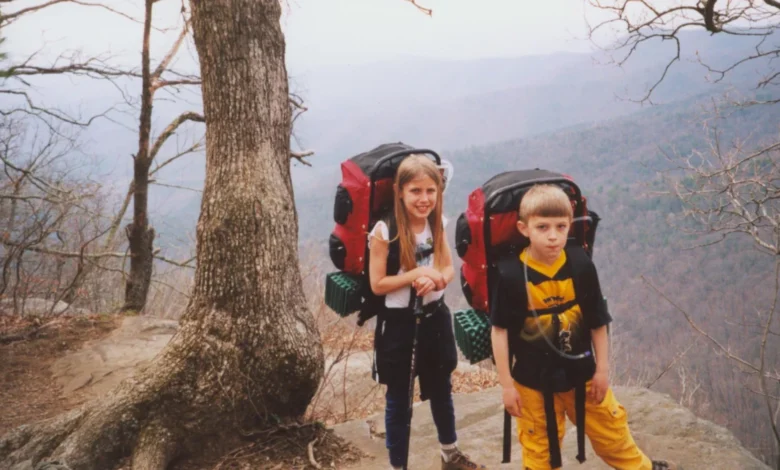
Yet, even as age and physical limits test the senior Witchers, their commitment to the 2,200-mile Appalachian Trail (AT) remains unbroken. By late afternoon, their daughter, Taylor Peterson, arrived with her two small children, helping to carry the bear box down a 0.3-mile side trail to its final resting place. For the Witcher family, labor-intensive trail maintenance is not merely a civic duty or a hobby; it is a primary medium for familial connection. Homer and Therese have logged roughly 7,000 and 11,000 volunteer work-hours respectively over the decades, instilling an enduring ethos of stewardship in their children and grandchildren. The bedrock of this multi-generational devotion traces back directly to a transformative family thru-hike undertaken in 2002, when Bennett and Taylor were just 8 and 11 years old. That monumental six-month journey fundamentally reshaped their developmental years, establishing a distinct boundary between an ordinary suburban upbringing and a life inextricably bound to the wilderness.
Origins of a Hiker Family and Early Stewardship
The trajectory of the Witcher family began in the early 1980s during the courtship of Homer and Therese. Both shared an affinity for the outdoors, though neither was initially aware of the legendary footpath winding through the American East. Their introduction occurred by chance when they encountered an Appalachian Trail sign during a recreational walk in Shenandoah National Park. Captivated by the concept of a continuous, historic path stretching across multiple states, the couple returned to their home in the Roanoke area and immersed themselves in literature on the subject, including Ronald M. Fisher’s seminal book, The Appalachian Trail.
Intrigued by the sheer scale of the 2,200-mile route—maintained almost entirely by regional volunteer organizations—the Witchers sought to engage with the community firsthand. Around 1983, they joined the Roanoke Appalachian Trail Club, participating in regular work hikes that involved clearing fallen timber, constructing stone staircases, and maintaining backcountry shelters. For Homer, who balanced the high-stress demands of working as an administrator for a regional hospital group, these volunteer operations provided an essential psychological refuge. The cooperative culture of hikers, naturalists, and conservationists offered a stark contrast to corporate pressures.
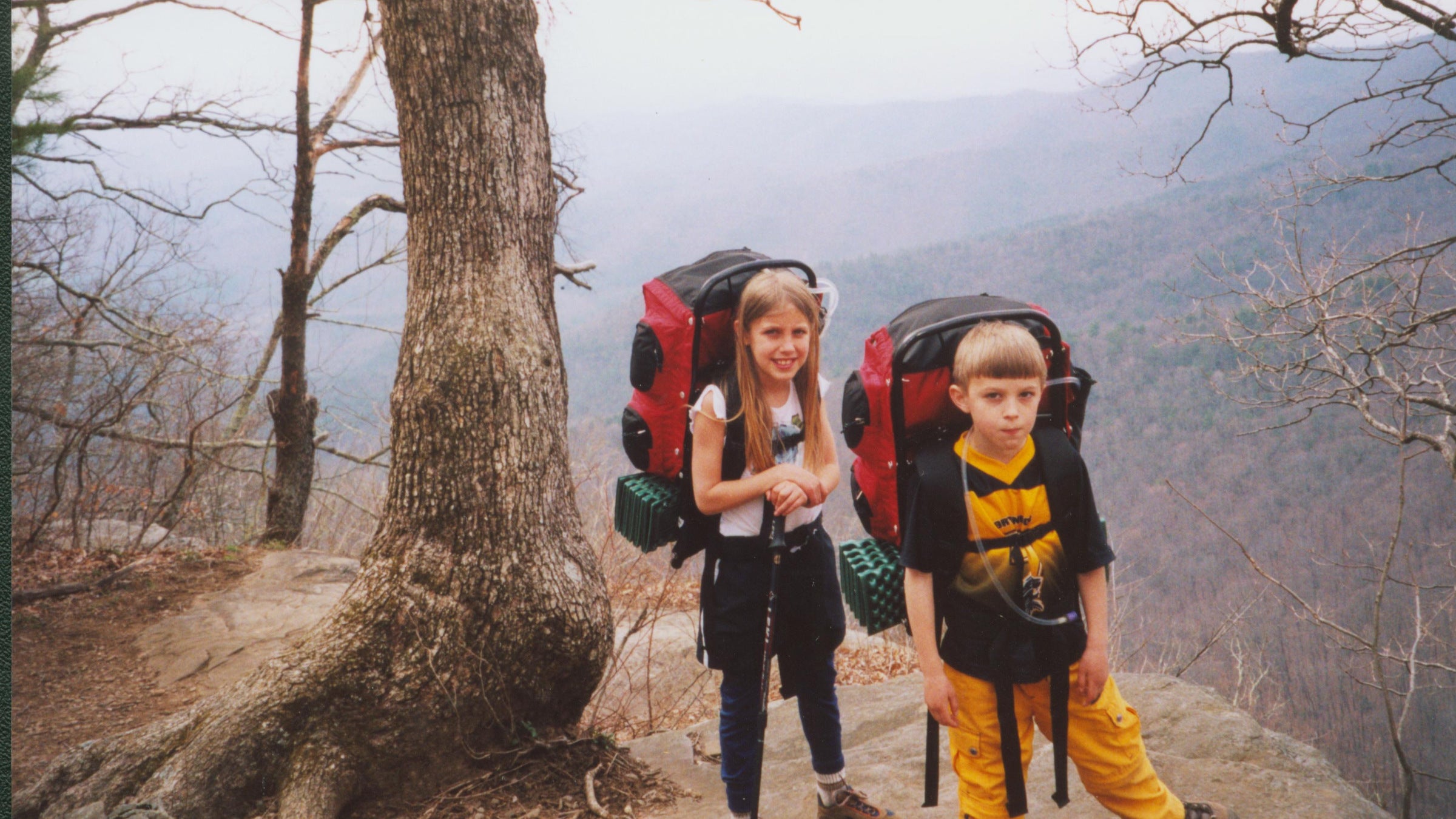
As their involvement deepened, section hiking became a regular fixture of their weekends and vacations, frequently supplemented by driving hiker shuttles for other backpackers. By the time Taylor and Bennett were born, the trail was already woven into the fabric of domestic life. The children were introduced to the outdoors as infants, riding in carrier packs during work hikes and camping alongside their parents. By the close of 1999, both children had contributed hundreds of volunteer hours and accompanied their parents on significant portions of an ongoing 1,400-mile section hike. Observing how comfortably the children navigated the backcountry—with Taylor capable of carrying a 10-pound pack and maintaining double-digit mileage by age eight—Therese floated the ambitious idea of a complete family thru-hike.
Planning and Preparation for a Historic Trek
Embarking on a full Appalachian Trail thru-hike with young children was virtually unprecedented at the turn of the 21st century. Organizing such an expedition required meticulous logistical maneuvering across professional, educational, and domestic fronts. Therese successfully urged Homer, then 60, to take early retirement, arguing that the chronic stress of his administrative career posed long-term health risks. Therese herself secured a leave of absence from her position as a medical technologist, framing the journey as the catalyst for a second chapter of life centered explicitly on family and conservation.
Educational continuity for the children demanded formal coordination with local school authorities. Therese arranged for Bennett and Taylor to complete standardized testing in advance, filed a formal notice of intent to homeschool with the district, and submitted a detailed curriculum plan to ensure academic progress continued on the trail. Contingency planning also addressed the possibility that the children might wish to abandon the endeavor. Although Homer and Therese were fully committed to finishing the route, they designated adult step-children in their twenties as temporary guardians in the event that Bennett or Taylor chose to quit.
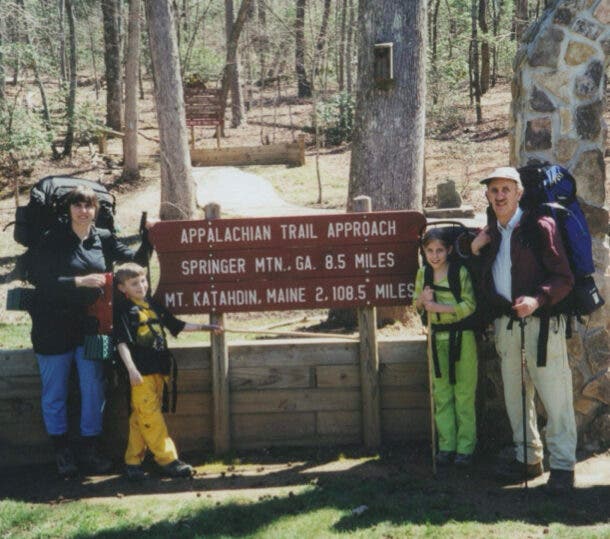
Crucially, the parents insisted that the children retain absolute agency regarding participation. Before finalizing plans for the 2002 season, Homer and Therese held extensive family discussions detailing the realities of the trip: missing six months of school, leaving friends behind, and enduring physical hardship. The children were explicitly told that they could terminate the hike at any point without penalty if it ceased to be enjoyable. Convinced by the prospect of an extended wilderness adventure, both siblings agreed, and preparations culminated in a March departure at Springer Mountain, Georgia.
Life on the Trail: The Witcher Wagon
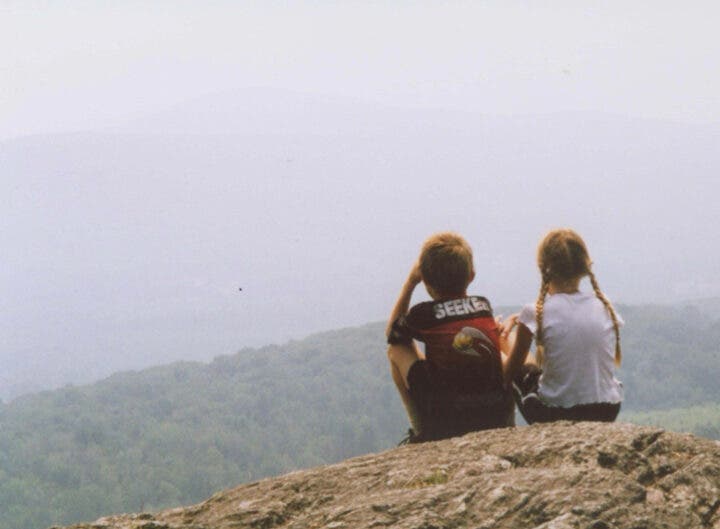
The expedition commenced at the base of Georgia’s Amicalola Falls, where the 729-foot cascade provided an awe-inspiring introduction for an eight-year-old Bennett. Navigating a slow, methodical pace of 12 to 13 miles per day, the family adapted quickly to the rhythms of long-distance backpacking. Days were defined by sensory immersion—birdsong, cascading streams, shifting weather patterns, and mountain vistas—while evenings involved shared meals, campfire storytelling, and stargazing. A distinctive feature of their journey was the informal coalition known among the broader hiking community as the "Witcher Wagon." Because family thru-hikes were exceptionally rare, curious solo trekkers frequently gravitated toward the group, drawn by Homer’s affable nature and the unique dynamic of children on the trail.
At various points, the group swelled in size; when passing through Daleville, Virginia, the traveling contingent numbered 16 individuals. Among them was a young trekker suffering from severe shin splints who attached himself to the Witcher family near Erwin, Tennessee, remaining with them for more than 500 miles. He assisted with childcare, played games with the children, and integrated so thoroughly into their daily routine that his eventual departure near Shenandoah National Park prompted tearful goodbyes and years of subsequent correspondence. This continuous stream of transient companionship provided Bennett and Taylor with an unusual social education, fostering a profound sense of trust and openness toward strangers that contrasted sharply with modern cultural anxieties.
Decision-making on the trail remained a collaborative exercise. The family regularly reviewed maps and adjusted their itinerary together, with the children actively advocating for extra mileage to earn zero-days in trail towns like Damascus, Virginia, or recreational stops like the Nantahala Outdoor Center. Adhering to the cardinal rule of earning rest days in advance rather than retroactively, the children cultivated a high degree of personal accountability.
Naturally, the journey included psychological and physical crucibles. Therese experienced a moment of intense doubt during a cold, rainy climb through Tennessee’s Bald Mountains, overwhelmed by lingering anxieties regarding her career and home life. Her panic was defused when Bennett and Taylor intervened, offering reassurance and framing the ascent as a collective, step-by-step endeavor. Similarly, Bennett suffered a temporary crisis of morale near the end of Shenandoah National Park, refusing to leave a support van after experiencing homesickness during a brief off-trail excursion. The intervention of a fellow traveler who playfully dubbed him "Rockslide" and offered to carry his pack quickly restored his resolve.
Reintegration and Long-Term Implications
Re-entering conventional society presented significant hurdles for the children upon completion of the thru-hike. Entering a much larger middle school, Taylor struggled to relate to peers engrossed in adolescent social hierarchies, popular television, and peer gossip. Having spent months operating in an adult-oriented environment characterized by high responsibility, she initially felt alienated from her contemporaries. Bennett experienced similar difficulties in forming new peer connections, though both ultimately viewed their accelerated maturity as a lasting benefit. The experience liberated them from the pursuit of superficial popularity, encouraging self-reliance and the pursuit of intrinsic interests.
The psychological impact of the trail manifested in subtle, permanent shifts in perspective. Family values were permanently reframed; Bennett famously pared down his Christmas wish list at age eleven, observing that while there were many things he wanted, the trail had taught him he required very little. Similarly, Taylor later relied on the mental resilience forged during her thru-hike to navigate adolescent emotional crises, noting that surviving the Appalachian Trail provided an unshakeable benchmark for handling adversity.
Decades later, the legacy of the 2002 expedition continues to ripple through subsequent generations. Both Bennett and Taylor maintained a lifelong engagement with long-distance trekking. Bennett has completed extensive mileage on western U.S. routes and the Swiss Alps, while Taylor incorporated her own children into backcountry environments within months of their births. Plans for a family hike of South Carolina’s Foothills Trail underscore a continuous commitment to outdoor education. For the Witcher family, the Appalachian Trail served not merely as a temporary recreational diversion, but as an enduring educational institution that permanently aligned their familial bonds with the stewardship and preservation of America’s public lands.