Costa Rica Through the Eyes of a Five-Year-Old: A Child’s Perspective on a Two-Week Family Expedition


When families embark on international travel, the narrative is almost invariably documented through the lens of adult planners—focusing on logistics, itinerary optimization, fine dining, and cultural immersion. However, a recent family travelogue offers a distinct paradigm shift by chronicling a two-week excursion to Costa Rica entirely from the viewpoint of a five-year-old child. Armed with a specialized children’s travel journal, the young traveler recorded his daily impressions during an extended October trip to Manuel Antonio, revealing what truly resonates with a young mind navigating an unfamiliar tropical ecosystem.
The initiative highlights a growing trend among traveling parents: encouraging children to document their journeys independently. By delegating the recording duties to the participant, families capture an authentic record of childhood perception, which often prioritizes sensory experiences, local wildlife encounters, and culinary discoveries over adult-centric milestones.
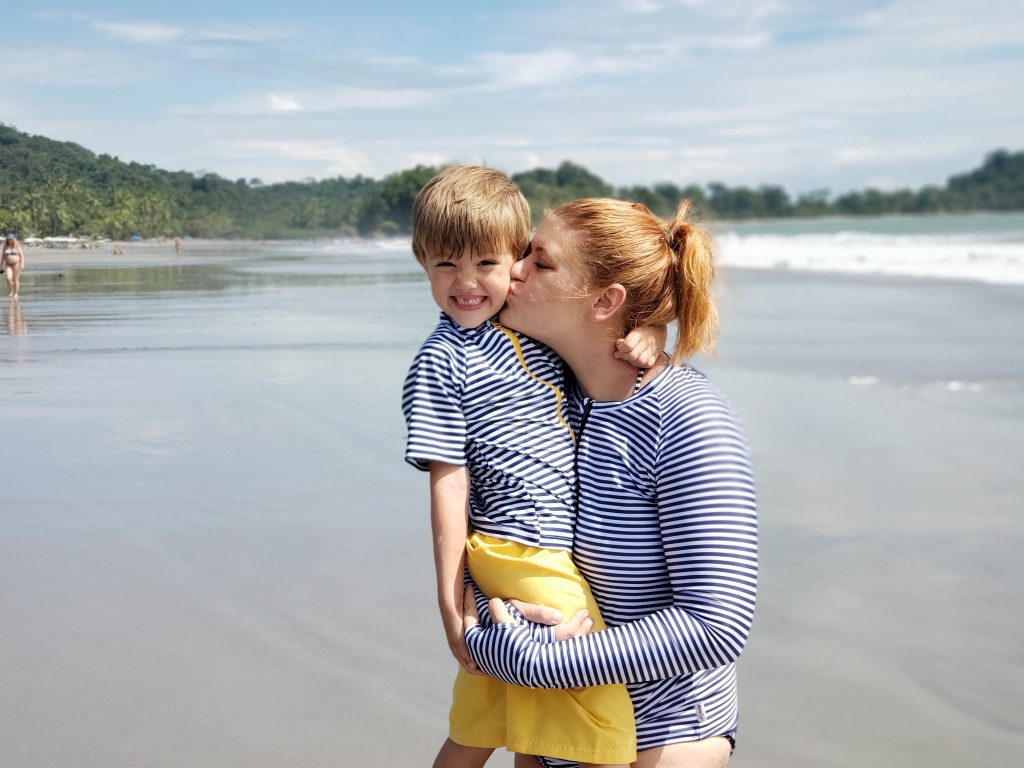
Main Facts and Logistical Overview
The expedition spanned a full fortnight in October, taking the family from their point of origin to the coastal and rainforest regions of Costa Rica, specifically centered around Manuel Antonio and Quepos. Travel logistics involved commercial air transit followed by regional motor vehicle transport. While the overarching adult itinerary included leisure, wildlife observation, and regional exploration, the child’s account distilled the journey into high-impact moments: wildlife sightings, weather disruptions, local culinary highlights, and moments of leisure involving digital games and cartoons.
The experiment in youth-led journaling underscores the psychological and educational benefits of travel for early childhood development. Psychologists note that exposing children to foreign environments, bilingual settings, and diverse ecosystems fosters cognitive flexibility and global awareness. Although a five-year-old’s priorities may center on unexpected earthquakes, favorite snack foods, and ocean waves, the act of recording these events reinforces literacy and memory retention.

Chronological Timeline of the Expedition
The journey unfolded across a varied timeline, marked by typical travel disruptions, weather shifts, and spontaneous adventures.
The transit phase on Day 1 introduced immediate challenges. Following commercial flights, the family encountered a five-hour traffic delay en route to Manuel Antonio due to a vehicular accident on a primary arterial roadway. The disruption was mitigated by a stop at a local supermarket for provisions and a wildlife viewing stop in Tarcoles to observe native crocodiles.

By Day 2, the family had transitioned into a routine of leisure and exploration. The child’s journal noted morning swims, sightings of monkeys and sloths within the immediate vicinity of their lodging, and a dining excursion to a local restaurant featuring custom sandwich selections. Day 3 brought regional precipitation, confining the family indoors for locally prepared meals and downtime. Day 4 followed a similar weather pattern, characterized by indoor relaxation, digital gaming on a tablet, and a brief excursion to a local marina.
Coastal and marine activities dominated Day 5, featuring a boat excursion that included marine wildlife sightings and a beach visit involving coastal cave exploration. Day 6 required an early morning departure for a rainforest trek to regional waterfalls, where the young traveler navigated riverbeds and rocky terrain before returning to the coast for afternoon surf play.
Unanticipated events marked Day 7, which concluded with the experience of a moderate 4.9 magnitude seismic event during the evening hours—a common occurrence in the seismically active Pacific Ring of Fire, which provided a dramatic focal point for the young diarist. Days 8 and 9 introduced visiting family members and friends, beachside recreation in hammocks, traditional barbecues, and localized dining.

Mid-trip logistics on Day 10 involved vehicle transit, medical treatment for insect bites, fresh fruit smoothies, and evening dining featuring regional quesadillas and ice cream. Day 11 brought severe coastal storms that preempted a planned waterfall excursion near Dominical, resulting in a morning culinary outing featuring local plantains and mango crepes. Day 12 offered favorable weather for beach exploration, tide pooling, and visits to the Quepos farmers’ market, where the child sampled exotic produce including white pineapple, dragon fruit, and mora juice, alongside inspecting marine artifacts at a local vendor stall.
Following two undocumented days, Day 15 marked the return transit. The journey home involved a three-hour drive to the international airport, an extended flight connection in Houston, Texas, and a late-night arrival greeted by extended family.
Supporting Data and Context on Costa Rican Tourism

Costa Rica remains one of Central America’s premier family-friendly tourism destinations, renowned for its robust biodiversity, safety standards, and well-developed infrastructure. According to the Costa Rican Tourism Board (ICT), family travel accounts for a substantial percentage of inbound visitors, driven by the country’s commitment to sustainable ecotourism and educational travel opportunities.
The specific region visited by the family, Manuel Antonio, is home to Costa Rica’s smallest yet most visited national park. Spanning approximately 683 hectares of land and 55,000 marine hectares, Manuel Antonio National Park welcomes hundreds of thousands of international visitors annually. The park is celebrated for its dense concentration of wildlife, including white-faced capuchin monkeys, mantled howler monkeys, squirrel monkeys, and three-toed sloths—species that prominently featured in the young traveler’s daily logs.
Furthermore, Costa Rica’s geography exposes travelers to variable microclimates. October typically falls within the peak of the green season (or rainy season) on the Pacific coast, explaining the frequent precipitation, localized storms, and altered itineraries documented during the two-week stay. Seismic activity, such as the 4.9 magnitude earthquake recorded during the trip, is a frequent characteristic of the region, which sits atop major tectonic plates. National emergency management systems in Costa Rica are highly organized to handle such events with minimal disruption to civilian populations and tourism infrastructure.

Parental Reflections and Broader Implications
Reflecting on the completion of the project, the supervising parent noted the value of maintaining a youth-authored travel record. While adult travel blogging often emphasizes aesthetic photography, gastronomic reviews, and seamless itineraries, the child’s journal captured the unfiltered reality of traveling with a young family: the melange of cultural curiosity, preference for familiar comfort foods like macaroni and cheese alongside local delicacies like plantains, and the resilience required to navigate motion sickness, heavy traffic, and sudden tropical downpours.
Educational experts suggest that involving children in the documentation process of long-haul travel significantly enhances their engagement with geography, anthropology, and environmental science. Rather than serving as passive observers, children who maintain travel journals develop observational skills that bridge the gap between abstract classroom lessons and tangible real-world experiences.

The success of this dual-perspective travel documentation points to a broader shift in family travel media. More parents are recognizing that the authentic value of a vacation lies not in perfection, but in shared adaptability. As the family prepares for future returns to Manuel Antonio, the recorded impressions of a five-year-old serve as an enduring testament to the fact that childhood wonder can transform even the most routine travel delays and weather delays into unforgettable life milestones.