Backpacker Rescued in Yavapai County After Flash Floods Sweep Away Gear During Severe Arizona Storms

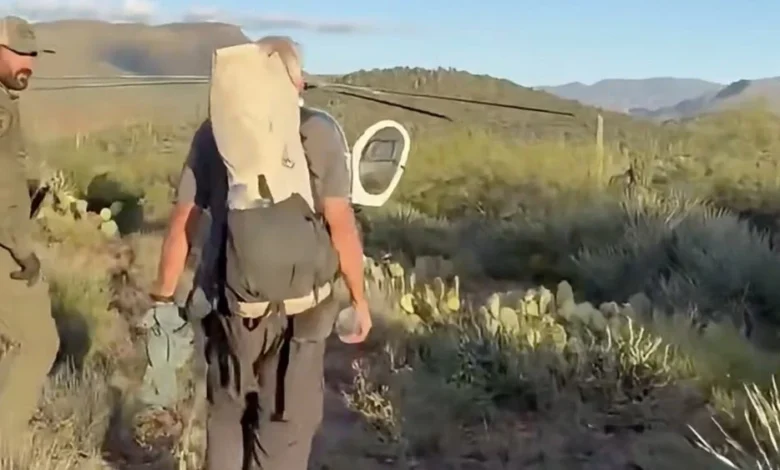
A lone backpacker enduring a grueling weeklong trek through the rugged terrain of Yavapai County, Arizona, was successfully rescued by emergency personnel on October 24, 2026, after a powerful atmospheric system triggered sudden flash floods that washed away his vital supplies and camping equipment. The rescue operation, which involved coordinated efforts from the Yavapai County Sheriff’s Office (YCSO) Aviation Team, Forest Patrol, and Search and Rescue (SAR) volunteers, brought a dramatic end to a harrowing ordeal that underscored the unpredictable and perilous nature of desert and canyon weather systems during unseasonal downpours.
The incident unfolded against the backdrop of a broader meteorological event originating from the California coast, which swept eastward and slammed into northern and central Arizona with severe thunderstorms, damaging winds, large hail, and torrential rainfall. As emergency services worked tirelessly to locate the stranded hiker near Sheep Bridge off Bloody Basin Road, authorities noted that the rescue was just one of multiple weather-related emergencies that strained local resources over a turbulent 48-hour period in late October.
A Chronology of Survival: From Seven Days on the Trail to the Final SOS
The unnamed hiker had been navigating the remote backcountry of Yavapai County for seven days, a standard duration for experienced backpackers tackling the region’s expansive trail networks. Autumn in central Arizona is historically characterized by mild, stable, and dry conditions, making October a prime month for outdoor recreation. However, the meteorological landscape shifted dramatically mid-week.
On October 21, the National Weather Service (NWS) issued a formal flood watch for northern and central Arizona, warning that dry washes, low-water crossings, and normally placid creeks could transform into raging torrents with little to no warning. The advisory remained in effect through the evening of October 22 as the storm system intensified.
By the time the full force of the storm struck the hiker’s remote location, he was completely cut off. Rising waters from a swollen, unnamed creek rapidly encroached on his campsite, eventually carrying away his tent, sleeping gear, food rations, and other essential equipment. Left exposed to the elements without shelter or provisions, and with his physical endurance pushed to absolute depletion, the hiker managed to transmit a critical emergency text message to his family detailing his predicament. Moments after the message went through, his mobile phone battery died, plunging him into total communication blackout and leaving his relatives scrambling to notify authorities.
The Search and Rescue Operation
Upon receiving the distress notification relayed by the hiker’s family, the Yavapai County Sheriff’s Office immediately activated its multi-agency response protocols. Command staff deployed the YCSO Aviation Team alongside specialized Forest Patrol deputies and civilian SAR volunteers to comb the vast and challenging topography surrounding Sheep Bridge, a historic landmark situated in a rugged canyon landscape north of Phoenix.
Search efforts were severely hampered by lingering storm debris, muddy access roads, and treacherous visibility conditions. Nevertheless, aerial crews persevered, scanning the convoluted riverbeds and high-water lines from above.
On the morning of Saturday, October 24, aerial spotters finally located the stranded hiker. A ground-air coordination effort allowed rescue personnel to reach him and extract him from the remote area. Officials reported that although the man was severely dehydrated, physically exhausted, covered in cuts and scrapes, and operating at the absolute limits of his human endurance, he was fundamentally in good health and did not sustain life-threatening injuries.
Broader Scope of the Emergency: Vehicles Swept Away and Flash Flood Dangers
The backpacker’s ordeal was not an isolated incident during the ferocious October storm cycle. Just 24 hours prior to his rescue, the Yavapai County Sheriff’s Office received a panicked emergency call from the Wet Beaver Creek crossing near Dragonshead and Culpepper Ranch roads.
In that incident, a vehicle carrying four individuals attempted to navigate or became trapped by fast-rising floodwaters. The relentless current swept the automobile approximately 150 feet downstream. With water levels surging up to the vehicle’s headlights—transforming the crossing into a turbulent, muddy rapid—all four occupants were forced to climb onto the roof of the car to escape the interior cabin, where they awaited rescue stranded above the swirling debris.
Footage of the Wet Beaver Creek rescue broadcasted the extreme velocity and opacity of the floodwaters, illustrating why local public safety officials repeatedly emphasize the lethal nature of moving water in desert environments.
Meteorological Context and Precipitation Data
While October rainfall is a normal and anticipated component of central Arizona’s seasonal climate transition, the sheer volume and widespread nature of this particular precipitation event stunned meteorologists and local residents alike. According to precipitation data compiled by Community Collaborative Rain, Hail and Snow Network (CoCoRaHS) observers, localized sectors of Yavapai County accumulated more than an inch of rainfall over a condensed 48-hour period.
In arid and semi-arid regions, even moderate rainfall can trigger catastrophic flash floods. Hard-baked desert soils and sparsely vegetated terrain lack the capacity to absorb rapid downpours, leading to immediate surface runoff that funnels directly into dry washes, slot canyons, and creek beds. When these localized inputs converge, water levels can rise feet in a matter of minutes, catching outdoor enthusiasts entirely unaware.
Official Responses and Safety Implications
In the wake of these back-to-back rescue operations, officials from the Yavapai County Sheriff’s Office issued strong public safety reminders aimed at curbing preventable backcountry emergencies. Authorities stressed that outdoor recreationists must exercise heightened situational awareness, particularly during transitional weather months when atmospheric anomalies from the Pacific Coast can destabilize regional forecasts.
"Know your physical limitations, understand trail conditions, and check the weather forecast for your route," YCSO officials stated in a public advisory. Search and rescue experts further emphasized that wilderness travelers should always carry multiple redundant communication devices—such as satellite messengers or personal locator beacons (PLBs) that do not rely on traditional cellular networks—and establish strict check-in protocols with contacts back home before embarking on solo expeditions.
As climate patterns continue to produce volatile weather events across the American Southwest, the Yavapai County rescues serve as a stark reminder of the fragile margin between a successful wilderness adventure and a life-threatening catastrophe when Mother Nature unleashes her fury on the desert floor.