The search for two missing Japanese mountaineers on the formidable slopes of Gangapurna West has concluded in tragedy. This morning, recovery teams confirmed the discovery of the remains of 40-year-old Hidesuke Taneishi and 25-year-old Tetsu Hashimoto. The climbers, who had been attempting the elusive first ascent of the 7,140-meter peak located in Nepal’s Manang district, were found at an altitude of approximately 6,300 meters on the mountain’s south face. The discovery marks the end of a high-stakes search operation that had been hampered by the extreme technical difficulty of the terrain and the initial uncertainty regarding the climbers’ last known location.
A High-Stakes Chronology of the Search
The disappearance of Taneishi and Hashimoto triggered an international concern when the pair failed to check in on October 15. The two men were last heard from at approximately 7,050 meters, deep into their summit push. When the mandatory check-in window closed, the silence from the upper slopes signaled a potential crisis.
The official search-and-rescue (SAR) efforts commenced on October 19. Because the climbers’ specific route was ambitious and the mountain remains largely unmapped in terms of established high-altitude camps, rescue coordinators initially faced a "blind" search area. Operations were based out of the village of Manang, the gateway to the Annapurna massif.
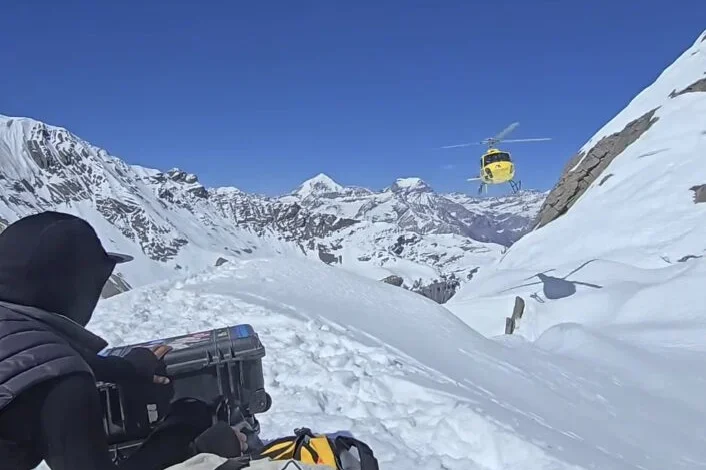
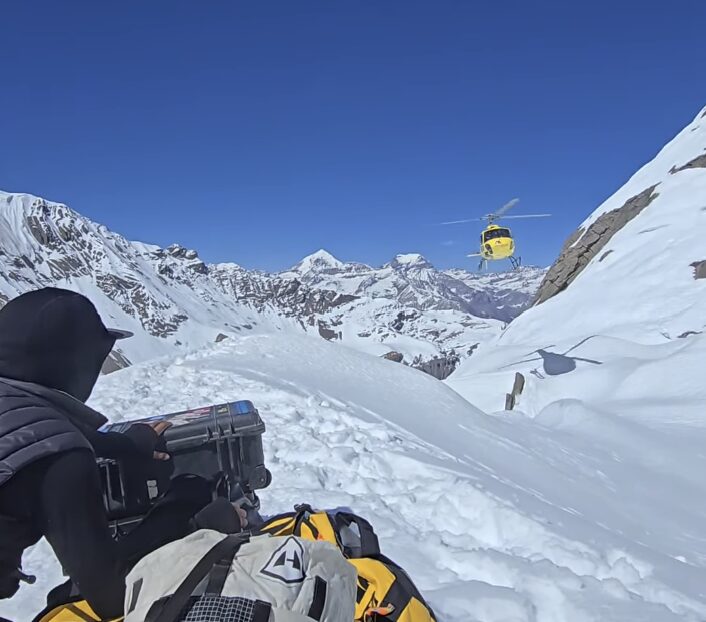
The rescue team, composed of highly experienced mountaineers and aviation specialists, included helicopter pilot Sobit Gauchan, renowned high-altitude photographer and climber Manish Maharjan, and IFMGA mountain guide Pansang Rinzee Sherpa. Recognizing that the sheer verticality of the mountain made ground-based searches from the base impossible, the team utilized a combination of aerial reconnaissance and drone technology. On the days leading up to the discovery, the team focused on the northeast and southwest aspects. By identifying the remains of the climbers’ high camp, the search party was able to narrow the search grid significantly, eventually locating the bodies on the south side of the peak.
Analyzing the Incident: The Dangers of Gangapurna West
While formal investigations into the exact cause of death are ongoing, preliminary observations by the recovery team suggest a catastrophic environmental event. Pansang Rinzee Sherpa, who participated in the recovery, indicated that the terrain showed clear signs of a snow slab collapse.
In high-altitude mountaineering, a slab avalanche—where a cohesive layer of snow breaks away from an underlying layer—is one of the most lethal hazards. At 6,300 meters, the instability of snowpack is often exacerbated by rapid temperature fluctuations, common in the Annapurna region during the transition months. The weight of climbers on a steep, wind-loaded slope can be enough to trigger a collapse that leaves no escape route, particularly in the "alpine style" of climbing favored by Taneishi and Hashimoto, where teams carry minimal gear and eschew fixed ropes.
Background and Mountaineering Context
Gangapurna West, sometimes referred to as Asapurna or Lachenal Peak, is a formidable objective. Since it was officially opened to foreign mountaineering expeditions in 2014, it has remained a "holy grail" for alpinists—a 7,000-meter peak that has yet to see a successful summit. The mountain’s proximity to the main Annapurna massif means it is subject to erratic, violent weather patterns, and its complex, shattered glaciers make navigation treacherous.
Hidesuke Taneishi was no stranger to the risks of the Himalayas. His reputation in the international climbing community was well-established. Just last year, he received a nomination for the prestigious Piolet d’Or—often described as the "Oscars of Mountaineering"—for his daring first ascent of the 6,652-meter Pholesobi Peak. His successful climb, completed alongside partner Hiroki Yamamoto via the peak’s vertical north face, demonstrated a mastery of technical, high-risk climbing. Taneishi’s decision to tackle Gangapurna West was consistent with his career-long pursuit of "little-known" or "forgotten" peaks, focusing on light-weight, high-intensity routes rather than the more commercialized paths on neighboring 8,000-meter giants.
The Broader Implications for Nepalese Alpinism
The tragic outcome of this expedition underscores the inherent dangers of attempting first ascents on unclimbed 7,000-meter peaks. Unlike popular summits such as Everest or Manaslu, which benefit from established infrastructure, fixed ropes, and a constant presence of support staff, mountains like Gangapurna West require self-sufficiency.

This incident has prompted a broader discussion within the mountaineering community regarding the risks of "alpine style" expeditions on increasingly volatile, climate-affected slopes. As global temperatures rise, the stability of snow and ice at high altitudes in the Himalayas is becoming less predictable. The "forgotten" peaks, which were once considered stable, are now seeing higher rates of serac falls and slab collapses.
Furthermore, the search operation highlights the logistical strain placed on local rescue resources. The reliance on private helicopter pilots and specialized Sherpa guides, while highly effective, is a limited resource in the Manang region. The success of the rescue team in finding the climbers—even in death—is a testament to the skill of the local aviation and guide community, yet it also serves as a sobering reminder of the limits of human intervention at extreme altitudes.
Looking Forward: Recovery and Respect
As the bodies are repatriated, the focus turns to the grieving families and the Japanese climbing community, which has lost one of its most promising modern-era talents. The recovery of the remains is a vital step for the families, providing closure in an environment where many climbers are lost to the ice indefinitely.
The tragedy on Gangapurna West will likely lead to a temporary pause in attempts on the peak, as officials and the climbing community assess the safety conditions on the south face. For now, the mountain remains unclimbed, its slopes serving as a final resting place for two men who sought to push the boundaries of human endurance. Their attempt, while unsuccessful in terms of the summit, remains a significant chapter in the ongoing history of Himalayan exploration—a chapter written with the same passion and ambition that characterizes the very best of the sport.
As the mountaineering season progresses, the international climbing community will undoubtedly look to the lessons learned from this disaster. Whether through improved satellite monitoring or a re-evaluation of route viability on such peaks, the legacy of Taneishi and Hashimoto will serve as a guiding, if somber, influence for those who follow in their footsteps. The inherent risk of these endeavors remains the defining characteristic of mountaineering at the 7,000-meter level, a threshold where skill and preparation often encounter the raw, unforgiving nature of the high peaks.