Open Tab: Global Food Supply Instability, Corporate Transparency, and Emerging Food Technologies

The global food landscape is currently navigating a period of unprecedented volatility, characterized by supply chain disruptions, shifts in consumer expectations regarding product quality, and the rapid integration of alternative protein manufacturing technologies. From the streets of Italy to the grocery aisles of the American Northeast, the intersection of political activism, economic pressure, and industrial innovation is reshaping how society views the most fundamental of human needs: sustenance.
Civil Unrest and Agricultural Logistics in Italy
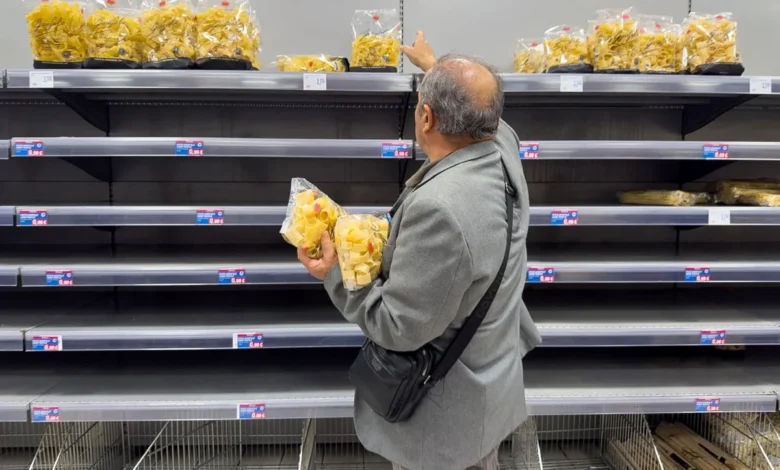
In recent weeks, Italy has faced a mounting crisis regarding its domestic food supply, driven by a convergence of geopolitical tensions and economic hardship. Strikes and logistical blockades orchestrated by agricultural workers and independent truckers in the country’s southern regions have resulted in significant interruptions to the distribution of fresh produce and essential commodities. These actions, which have left supermarket shelves bare in major urban centers, are largely a response to the escalating cost of living and soaring fuel prices.
The unrest has transcended regional boundaries. In Northern Italy, student-led movements have staged protests against stagnant wage growth, aggressive tax policies, and the inflationary pressure on grocery staples. The economic strain is exacerbated by the ongoing conflict in Iran, which has constricted global energy markets and driven fuel costs to historic highs.
Official government data confirms the severity of the situation. On Thursday, the administration of Prime Minister Giorgia Meloni announced a $200 million emergency subsidy package aimed at stabilizing gas prices. This move follows an earlier expenditure of $3 billion intended to mitigate the impact of energy costs on both consumers and the transport sector. Analysts suggest that while these fiscal injections provide temporary relief, the structural reliance on volatile energy imports leaves the Italian food supply chain vulnerable to further shocks. Similar patterns of civil disobedience have emerged across Europe and beyond, with significant demonstrations reported in France and Albania, where citizens are similarly protesting the combined effects of governmental corruption and the eroding purchasing power of the middle class.
The Shrinking Quality of Commercial Confectionery
Parallel to the macro-economic challenges in Europe, the American food industry is facing a crisis of public trust, particularly within the confectionery sector. Investigations into the quality of mass-market chocolate have gained significant traction, following whistleblowing reports regarding long-term shifts in ingredient composition.
For decades, major candy manufacturers have systematically replaced traditional cocoa butter and high-quality dairy fats with cheaper, synthetic alternatives. This practice, often described by industry critics as a consequence of late-stage capitalism, seeks to maximize profit margins amidst rising commodity costs. However, recent reporting by outlets such as New York magazine has brought the issue to the forefront of consumer discourse. The evidence suggests that the "formulaic drift"—the slow, incremental change in recipe—has reached a threshold where the sensory experience of the consumer has been fundamentally altered.
The financial implications of this transparency have been immediate. Market data indicates that Hershey’s stock has experienced a sustained decline following the public revelation of these manufacturing shifts. Industry experts argue that the loss of consumer confidence poses a greater threat to the company’s long-term valuation than the original cost-saving measures ever provided in short-term gains.
The Technological Pivot: 3D-Printed Proteins
As traditional supply chains falter and the quality of legacy products comes under scrutiny, the food industry is looking toward laboratory-grown and 3D-printed alternatives. Perfecta, a subsidiary of the Israel-based Steakholder Foods Ltd, has initiated a major rollout of 3D-printed plant-based meats throughout the northeastern United States.
This expansion covers a broad geographic footprint, including Delaware, New York, New Jersey, Maryland, Pennsylvania, Massachusetts, Maine, New Hampshire, Vermont, and Virginia. The product line features hyper-realistic imitations of poultry, steak, and seafood. Furthermore, through its Belgian subsidiary, Peace of Meat, the company is utilizing stem-cell-based technology to cultivate animal fats. By incorporating these lab-grown fats into plant-based matrices, manufacturers are attempting to replicate the specific mouthfeel and flavor profiles that have historically been missing from meat substitutes.
This shift represents a significant move toward "precision food," where the objective is to decouple food production from traditional agricultural land use. While adoption remains in the early stages, the integration of these products into mainstream grocery retail signals a potential long-term shift in the global protein market, driven by the need for more efficient and resilient production models.
Political Engagement and Food Security
The intersection of food security and political advocacy was further highlighted this week by the detention of New York Congressional candidate Brad Lander. Lander was detained by the Israel Defense Forces (IDF) while participating in an olive harvest in the West Bank alongside Palestinian farmers and activists. The incident drew international attention, underscoring the role of agriculture as a focal point in global political conflicts.
While Lander has since been released, he has remained vocal about the detention of several dozen other participants, including several rabbis who were present at the scene. In the days following his release, Lander returned to the fields, framing the act of harvesting as a form of non-violent resistance and a testament to the importance of agricultural sovereignty.
This event reflects a growing trend in which political candidates are increasingly aligning their platforms with food-related issues. In Michigan, Senatorial candidate Abdul El-Sayed has prioritized discussions on food affordability and the preservation of local food cultures. In a recent interview, El-Sayed emphasized that the viability of local food economies is not merely a regional concern but a fundamental component of national stability. His analysis posits that as urban centers grow and the cost of basic nutrition rises, the policy framework surrounding food access—including issues of logistics, market competition, and local entrepreneurship—must be central to the legislative agenda.
Contextual Analysis: The Road Ahead
The events of this week, while disparate, are bound by a common thread: the fragility of the current food ecosystem. The Italian protests demonstrate that when energy costs impact transportation, the entire distribution network for basic nutrition is threatened. The chocolate industry scandal illustrates the risk that corporations take when they prioritize short-term margins over product integrity in an era of heightened consumer awareness. Simultaneously, the rise of 3D-printed proteins and the political involvement in agricultural issues show that both the technology and the discourse around food are evolving rapidly.
The global food system is currently transitioning from a period of relative post-war stability to one of high-frequency disruption. The implications for the near future are twofold. First, governments will likely be forced to intervene more frequently in food markets, whether through direct price subsidies—as seen in Italy—or through stricter regulation of food production and ingredient transparency. Second, the reliance on traditional, large-scale supply chains will likely be challenged by a move toward decentralized, tech-driven production methods.
As we look toward the end of the year, the stability of the food supply will remain a bellwether for wider political and economic health. Whether it is a congressional candidate in a field in the West Bank or a shopper in a grocery store in New Jersey, the common focus on the source, cost, and quality of food suggests that we are entering an era where food policy is, quite literally, the most pressing matter on the table. The coming months will likely see these threads continue to converge, as the world struggles to balance the competing demands of economic efficiency, consumer safety, and political stability in an increasingly complex and interconnected global market.
Related posts: