Community-Driven Holiday Book Drive Transforms Resource-Limited Title I School Libraries Through Grassroots Philanthropy and Strategic Budgeting

The holiday season traditionally serves as a period of heightened charitable giving, with communities rallying to support vulnerable populations through established channels such as toy drives, angel trees, and food distributions. However, beyond the visible needs of winter clothing and holiday meals, a quieter crisis frequently persists within the public education sector: the profound resource gap affecting Title I school libraries. While affluent districts often enjoy well-stocked media centers equipped with modern literature, underfunded schools frequently operate without foundational libraries, leaving students with limited access to supplementary reading materials. Addressing this disparity requires innovative approaches to philanthropy, blending community awareness with cost-effective purchasing strategies to maximize the impact of every charitable dollar.
Genesis of the Initiative: Uncovering Library Disparities in Local Districts
The foundation of the recent community-led book drive was established during a routine district Parent Teacher Organization (PTO) meeting. Discussions regarding resource allocation across various campuses brought to light a stark inequality in educational infrastructure. While standard funding covers basic administrative and curricular needs, discretionary items such as library acquisitions rely heavily on external donations, PTA fundraising, and community grants.

During the assembly, a representative for a local Title I school explicitly stated that their library possessed virtually no physical books for students to check out and take home. Compounding the issue, the surrounding demographic faced significant financial limitations, rendering traditional localized fundraising efforts largely ineffective. The stark contrast between this under-resourced campus and wealthier schools within the exact same district galvanized community members to take direct action, shifting the focus of holiday giving toward educational equity and literacy access.
Strategic Procurement: Maximizing Purchasing Power via Bargain Outlets
Recognizing that traditional retail book pricing would severely limit the volume of materials a single household could donate, organizers sought alternative procurement channels. The solution emerged through online platforms specializing in bargain and surplus literature, such as BookOutlet.com. These platforms acquire excess publisher inventory, overstock releases, and shelf-worn returns directly from major publishing houses, offering steep discounts to consumers.
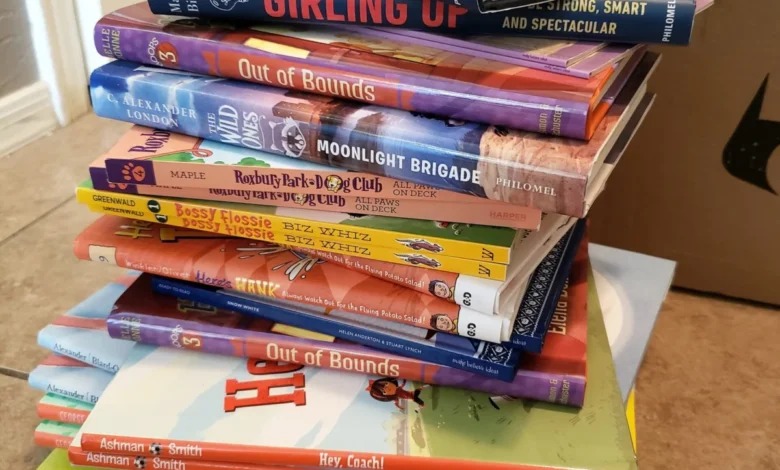
Through strategic utilization of these discount channels, the economics of book donation shifted dramatically. New hardcover and paperback titles—ranging from contemporary juvenile fiction to educational nonfiction—were acquired at prices as low as $0.69 per volume, with even the most expensive selections capping at $1.29. By consolidating purchases to exceed the minimum threshold for complimentary shipping, organizers acquired a total of 44 brand-new books for a cumulative investment of approximately $40. This high-yield purchasing model demonstrated that modest individual contributions, when strategically directed, could yield substantial material benefits for underfunded institutions.

Family Engagement and Educational Values
Involving younger generations in philanthropic endeavors is widely recognized by educators and child psychologists as a critical component of social-emotional development. Rather than executing the donation privately, the initiative integrated family decision-making by presenting the young student of the household with three distinct choices: retaining the newly acquired books for personal use, donating the entire collection to his own well-resourced neighborhood school, or distributing the materials across two separate Title I schools in need.
Demonstrating a clear understanding of community equity, the student unhesitatingly selected the dual-school donation option, prioritizing peers facing resource scarcity over personal accumulation. Although logistical challenges—specifically holiday shipping congestion—resulted in the packages arriving at the family residence a single day after the academic institutions closed for winter recess, plans were immediately put in place to deliver the surprise donation upon the resumption of classes in the new year.
Leveraging Cashback Programs for Sustainable Charitable Expansion
To further amplify the scope of the initiative, organizers integrated digital cashback and rewards platforms into the fundraising model. Services such as Rakuten allow consumers to earn financial rebates on everyday online purchases while simultaneously offering referral incentives for new subscriber acquisition.

By directing online retail traffic through these portals, consumers earn a percentage of cash back on transactions while triggering corporate or sponsor-backed matching contributions. In this specific campaign, organizers pledged an additional $10 worth of books to Title I schools for every new user who registered through their referral link and completed a qualifying transaction. This mechanism transformed routine consumer behavior into a sustainable funding stream for educational charities, illustrating how modern digital tools can be harnessed for social good.
Broader Implications for Educational Equity and Community Action
The initiative serves as a micro-level case study in grassroots educational advocacy, highlighting the ongoing structural deficits within public school funding models. Title I federal funding is designed to assist schools with high percentages of students from low-income families, yet these allocations frequently prioritize mandatory core instruction over enrichment facilities like libraries. Consequently, the presence of a robust school library often depends entirely on the socioeconomic status of the surrounding community’s tax base and active parent volunteers.
Experts in literacy and child development emphasize that access to print materials is a primary determinant of academic achievement and lifelong reading habits. When students in low-income areas are denied access to physical books outside of mandatory classroom texts, the literacy gap widens significantly—a phenomenon often referred to as the "summer slide" or systemic achievement gap. Initiatives that leverage discount wholesale platforms, digital rewards programs, and localized advocacy offer a scalable blueprint for citizens seeking to bridge these resource gaps independently.

Ultimately, the campaign challenges individuals and civic organizations to look beyond traditional seasonal giving and invest directly in educational infrastructure. By proving that high volumes of literature can be secured on minimal budgets, the effort removes the financial barrier to entry for everyday donors, encouraging a year-round commitment to educational equity, community solidarity, and childhood literacy.
Related posts: