The Invisible Production: How Pocket-Sized Multicam Setups Are Redefining Non-Actor Interview Documentaries

For over two decades, the standard paradigm of professional documentary filmmaking and corporate video production has been anchored in hardware escalation. Larger sensors, heavier cinema rigs, robust external monitors, follow-focus systems, and elaborate matte boxes have long served as the industry’s visual shorthand for high quality. For veteran documentarians and corporate profile producers, the primary metric of preparation has historically focused on what the camera package offers the filmmaker: superior dynamic range, precise lens choices, unmatched low-light performance, and absolute technical control.
However, a fundamental shift in gear technology over recent years has prompted a counter-intuitive movement within the industry. Filmmakers are increasingly turning their attention away from the traditional cinema rig and toward a new class of high-performance pocket-sized cameras. The central inquiry driving this evolution is no longer technical superiority, but human psychology: how does the physical presence of massive production equipment alter the behavior of non-performers sitting in front of the lens? By leveraging ultra-compact multi-camera setups, modern directors are discovering that scaling down the physical footprint of a production can paradoxically yield a technically robust multicam edit while allowing everyday professionals, artists, and entrepreneurs to shed their camera-induced anxiety.
The Psychological Footprint of Traditional Production
To understand the mechanics of this shift, industry analysts point to the well-documented phenomenon of camera-induced self-consciousness. When a subject—such as a corporate executive, an artisan, a lawyer, or a scientist—is placed in front of a substantial cinema or mirrorless camera mounted on a heavy tripod, accompanied by external audio gear, multiple lighting stands, and a dedicated crew, an immediate physiological and psychological transformation often occurs.
Statistically, studies in media psychology indicate that upwards of 75 percent of individuals who lack regular media training exhibit immediate signs of performance anxiety when exposed to professional broadcast environments. Shoulders stiffen, vocal inflections flatten or rise unnaturally, and responses become condensed, highly polished, or defensively rehearsed. Rather than speaking with the authentic cadence of their everyday professional lives, subjects begin the unconscious act of monitoring themselves through the imagined lens of a public audience.
For documentary portraits and business profiles, this overly curated delivery represents a primary creative hurdle. Directors frequently report that the most compelling moments of an interview—the thoughtful hesitation before a complex answer, the unscripted hand gestures, or the reflective silence that follows a profound thought—are precisely what get buried beneath the nervous polish triggered by an imposing physical production. The filmmaking challenge, therefore, is rarely a matter of directing more; rather, it lies in figuring out how to make the machinery of production disappear.
The Technological Evolution of Pocket Cameras
This strategic rethinking of production design has only recently become viable due to rapid advancements in compact imaging technology. Historically, choosing a small camera meant accepting severe compromises in image fidelity, dynamic range, color science, low-light handling, and recording stability. Early compact options frequently suffered from rolling shutter artifacts, thermal throttling, and inadequate codec options, rendering them unsuitable for high-end corporate or broadcast delivery.
By the mid-2020s, however, the engineering gap between traditional mirrorless bodies and advanced pocket cameras narrowed significantly. Current-generation compact devices are now capable of recording pristine 10-bit footage, offering reliable autofocus algorithms, and providing multiple usable fields of view within a single, highly portable footprint. This technological maturity has liberated directors from the binary choice between cinematic quality and logistical discretion.
Industry data from commercial gear suppliers underscores a steady year-over-year rise in the adoption of ultra-compact B-cameras and primary pocket rigs across independent documentary units and corporate production houses alike. Producers are no longer utilizing these devices merely out of budget constraints; instead, they are integrating them as intentional creative instruments designed to reshape the power dynamic between subject and gear.
Scaling Up the Production While Shrinking the Presence
The operational core of this methodology relies on a counter-intuitive deployment strategy: utilizing a two- or three-camera pocket setup to replace a single, imposing cinema camera.
In a traditional single-camera configuration, even if the camera itself is moderately sized, the constant oversight, the visible reframing, and the proximity of the operator can keep the subject hyper-aware of the recording process. Conversely, placing three tiny, strategically positioned pocket cameras around the room creates a robust, multi-angle workflow for the editor in post-production without overwhelming the physical space.
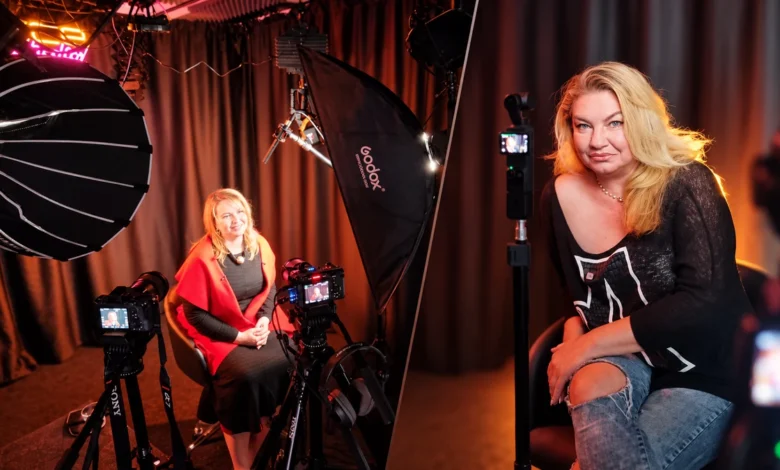
Under this workflow, one discreet pocket camera can capture the primary interview angle at eye level, a second can sit slightly off-axis for a profile or dynamic three-quarter view, and a third can establish a wider contextual frame. From the filmmaker’s perspective, the technical coverage is comprehensive and sophisticated. From the viewpoint of the interview subject, however, the room remains largely free of intimidating machinery, cables, and towering light stands. The setup feels less like a television studio interrogation and more like an ordinary, unhurried conversation.
Economic and Logistical Implications for Modern Studios
Beyond the psychological benefits for interview subjects, the widespread adoption of pocket multicam workflows has triggered significant structural adjustments within the commercial production economy. Independent production companies—such as European digital studios and boutique agencies specializing in corporate storytelling—face mounting pressure to deliver high-volume, premium-grade video profiles under increasingly tight budgetary and temporal constraints.
Traditional professional video profiles require substantial overhead: heavy transport logistics, extended setup and breakdown times, larger crew footprints, and complex lighting arrangements. For enterprise-level corporations with expansive marketing budgets, these expenditures are standard operating procedure. However, for mid-sized businesses, independent entrepreneurs, and creative professionals needing credible video assets, traditional overhead can quickly render a project economically unviable.
By streamlining the equipment payload through high-end pocket systems, production houses have demonstrated the ability to reduce on-site setup times by up to 60 percent. Transport costs decline, crew sizes can be optimized without sacrificing safety or quality, and production companies can pass these operational efficiencies on to clients. Crucially, industry veterans emphasize that a smaller, more agile production does not equate to a cheap aesthetic. Lighting, audio fidelity, environmental curation, and post-production color grading remain rigorous; the reduction occurs entirely within the visible machinery that interferes with human interaction.
Industry Response and Balancing Perspectives
Despite the clear advantages of minimalist setups, established cinematographers and studio directors caution against writing off traditional cinema rigs entirely. Major commercial shoots, narrative fiction, complex multi-source lighting scenarios, and environments requiring extensive lens articulation and broadcast-standard redundancy still demand heavy, professional-grade cinema cameras.
Furthermore, experienced directors note that certain corporate subjects actually draw confidence and gravitas from a serious, highly professional studio environment. For seasoned executives accustomed to high-stakes public speaking, a visible, well-funded production setup can reinforce the perceived importance of their message and elevate their performance energy.
The prevailing consensus among contemporary documentary and corporate filmmakers is therefore not one of replacement, but of diversification. The traditional cinema rig remains an indispensable tool for absolute optical and technical control, while the pocket multicam setup emerges as a specialized psychological instrument tailored for the uninitiated, the hesitant, and the everyday professional.
Broader Industry Impact and Future Outlook
As video content continues to dominate digital communication channels, the demand for authentic, human-centric storytelling is projected to accelerate. Audiences across corporate, educational, and journalistic platforms have grown increasingly skeptical of hyper-polished, overly scripted executive messaging, favoring instead transparency, vulnerability, and unscripted candor.
This cultural shift places a premium on methodologies that disarm subjects and capture genuine human behavior. By demonstrating that technical excellence can be decoupled from physical intimidation, the integration of pocket-sized multicam setups points toward a maturing digital media landscape. As lens technology, sensor sensitivity, and processing power continue to advance within ultra-compact form factors, the industry’s definition of production value is undergoing a permanent evolution—proving that sometimes, the most sophisticated tool a filmmaker can utilize is the one the subject forgets is even there.