The Unsung Hero of Camera Design: Why Battery Backward Compatibility is the Ultimate Gear Investment

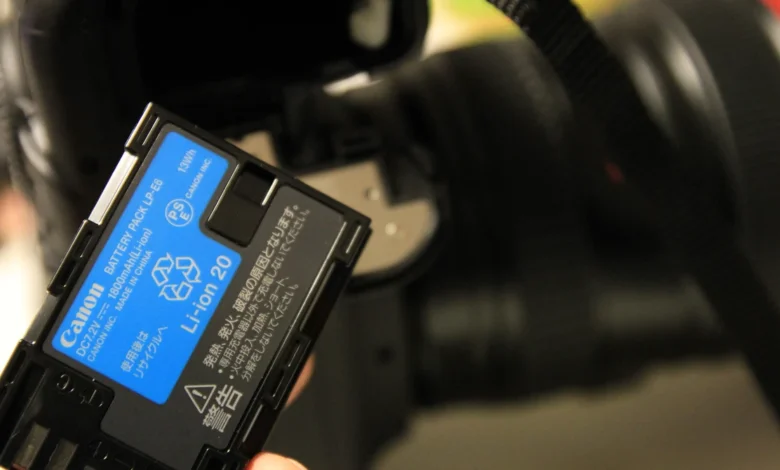
When a photographer purchases a modern mirrorless marvel like the Canon EOS R7 this afternoon, the accompanying user manual reveals a surprising continuity: the camera accepts up to six distinct battery pack variations from the LP-E6 family. Most notably, this includes the original LP-E6 cell that Canon debuted alongside the EOS 5D Mark II back in November 2008—nearly a decade before the company’s RF lens mount even existed. A power source engineered for a heavy-duty DSLR from the late 2000s continues to successfully operate contemporary mirrorless technology ordered brand new today. Despite its profound impact on both workflow economics and environmental waste, this engineering longevity is rarely highlighted in standard camera reviews.
Four Generations, One Exterior Shell
Over the course of nearly eighteen years, Canon has iteratively revised the LP-E6 platform three separate times without ever altering its physical dimensions or exterior geometry. The evolution began in 2008 with the original EOS 5D Mark II battery, which offered an 1,800 mAh capacity—noted by Canon’s corporate museum at the time as providing roughly 1.3 times the power density of its predecessor. Six years later, in 2014, the LP-E6N accompanied the release of the EOS 7D Mark II, increasing capacity slightly to 1,865 mAh. July 2020 brought the LP-E6NH alongside the groundbreaking EOS R5 and R6 bodies, expanding energy storage to 2,130 mAh while retaining the exact same physical shell as the LP-E6N. Most recently, the LP-E6P launched with the EOS R5 Mark II in July 2024. While maintaining the identical 2,130 mAh energy profile of its immediate predecessor, the LP-E6P introduced a critical upgrade: a maximum continuous discharge current of 6 amperes designed to meet the rigorous power demands of advanced stacked sensors and high-speed data processing.
Across this entire 18-year lineage, total energy capacity has grown by approximately 18 percent. When juxtaposed against the exponential leaps witnessed in sensor resolution, image processing power, and autofocus tracking capabilities over the same timeframe, Canon’s incremental battery evolution might initially be misconstrued as stagnation. In reality, it represents a triumph of purposeful engineering. Rather than forcing consumers to constantly adapt to newly designed power envelopes, Canon chose to engineer its electronics within a fixed physical boundary. Consequently, legacy battery chargers like the LC-E6 and LC-E6E remain fully operational, existing battery doors continue to seal properly, and dedicated portrait grips—such as the BG-R10 originally built for the 2020 EOS R5—remain physically and electrically compatible with updated bodies like the R5 Mark II.
This enduring standard has become so deeply entrenched in the imaging ecosystem that competing hardware manufacturers have intentionally built around it. Blackmagic Design, for instance, explicitly designates the Canon LP-E6 as the standard power source for its Pocket Cinema Camera 4K lineup. Furthermore, numerous third-party accessory manufacturers now produce LP-E6NH-compatible cells equipped with integrated USB-C charging ports, recognizing that Canon’s foundational 2008 physical shell serves as an industry-wide benchmark for portable camera power.
Parallel Paths: Nikon and the EN-EL15 Chronology
While consumer discussion forums frequently praise Canon for maintaining this rare level of backward compatibility, industry analysis reveals that this practice is not exclusive to a single manufacturer. Nikon executed a strikingly similar strategy with the introduction of the D7000 on September 15, 2010. That DSLR debuted the EN-EL15 battery pack, a power source rated for roughly 1,050 shots per charge that has since undergone three internal revisions while preserving its core physical format.
Nikon’s official compatibility documentation for its current EN-EL15c variant bridges an extraordinary gap, listing classic F-mount DSLRs—such as the D850, D810, D780, D750, D610, D500, D7500, and D7200—alongside modern Z-mount mirrorless powerhouses including the Z8, Z7II, Z7, Z6III, Z6II, Z6, Z5II, Z5, and Zf. This cross-compatibility connects enthusiast DSLRs from the early 2010s directly to high-resolution, stacked-sensor mirrorless flagships utilizing the exact same battery architecture and charging infrastructure. While Canon’s lineage bridges the gap between EF and RF systems, Nikon’s lineage seamlessly crosses from F to Z. Both legacy giants have successfully avoided forcing unnecessary hardware transitions upon their loyal customer bases.
Broader Industry Comparison: The Financial and Environmental Cost of Form-Factor Redesigns
To fully appreciate the value of this design philosophy, one must examine the financial and practical consequences faced by users of competing camera systems that chose to abandon their legacy battery formats.
Sony transitioned from its older NP-FW50 battery—which powered the early NEX lineup and the first two generations of a7 full-frame mirrorless cameras—to the significantly improved NP-FZ100 with the launch of the a9 in 2017. The NP-FZ100 is an undeniably superior power source, delivering 2,280 mAh compared to the modest 1,020 mAh of the NP-FW50. However, it required an entirely new physical shell. Photographers upgrading from an a7 II to an a7 III in 2018 were forced to replace their entire inventory of spare batteries and dedicated chargers simultaneously. While Sony retained the older NP-FW50 in select APS-C bodies as late as the 2021 ZV-E10, its full-frame ecosystem offered no transitional bridge.
Similarly, Fujifilm initiated a major power overhaul in 2020 by introducing the NP-W235 battery alongside the X-T4, boasting roughly 1.5 times the capacity of the outgoing NP-W126S. While this new format successfully powers modern flagships like the X-T5, X-H2, X-H2S, X-S20, and GFX systems, it offers zero backward compatibility for loyal users upgrading from the popular X-T3 or earlier generations.
The Financial Impact on Professional Workflows
Quantifying the financial burden of a forced form-factor change reveals significant hidden costs for working professionals. Current retail pricing places official manufacturer replacement batteries, such as Canon’s LP-E6P, at approximately $79.99 each. Accumulating a modest kit of four backup batteries requires an investment of nearly $320 before factoring in additional multi-slot chargers. For professionals shooting intensive multi-day events, fast-paced weddings, or working in sub-zero environments where lithium-ion efficiency plummets, maintaining a rotation of eight or more batteries is commonplace.
When a manufacturer preserves battery continuity across a decade and a half, a photographer can carry forward an established inventory of power cells rather than repeatedly purchasing replacements with every body upgrade. Retaining eight operational batteries equates to nearly $640 in direct savings—funds that can be redirected toward high-performance optics or studio lighting. While commercial photographers meticulously calculate the depreciation schedules of camera bodies and glass, consumable power accessories are frequently omitted from financial planning, despite representing a recurring operational expense.
From an ecological perspective, maintaining a consistent battery form factor yields profound environmental benefits. Camera batteries are complex, sealed lithium-ion assemblies integrated with sophisticated internal control circuits, rendering them ineligible for standard municipal recycling streams and requiring specialized hazardous-waste disposal. While frequent form-factor changes accelerate the obsolescence of perfectly functional power cells—pushing them prematurely into drawers and eventually toward recycling facilities—backward compatibility extends their operational lifespan. In this rare instance, the environmentally responsible outcome aligns perfectly with the most cost-effective choice for the consumer.
Understanding the Real-World Limitations and Technical Restrictions
Despite the remarkable longevity of these battery platforms, neither Canon nor Nikon offers an unconditional guarantee of full functionality across every historical iteration. As modern mirrorless cameras demand higher electrical currents to drive advanced features—such as rapid sensor readouts, intensive 8K video codecs, complex wireless network stacks, and external accessory power delivery—older battery variations inevitably encounter performance bottlenecks.
Canon’s official product manuals incorporate detailed compatibility tables that categorize power sources into fully functional, partially functional, or incompatible tiers. For instance, the original LP-E6 introduced in 2008 is formally classified as incompatible with the latest EOS R5 Mark II and EOS R6 Mark III bodies, lacking the necessary discharge capabilities to serve as an active power source.
Intermediate power sources, such as the LP-E6NH and LP-E6N, occupy a restricted tier in contemporary flagship bodies. When utilized in demanding operational modes, these older cells incur specific software limitations: continuous shooting speeds may be throttled, high-end video formats—such as 8K DCI and 8K UHD recording, high frame rates exceeding 100 fps, and HDMI RAW output—are disabled, and wireless network connectivity features are restricted.
Interestingly, while some limitations are absolute hardware constraints dictated by current draw thresholds, others have proven flexible through firmware optimization. At the initial launch of the EOS R5 Mark II, the restriction list included standard 24p video recording—the foundational frame rate for commercial and narrative video production. Following immediate industry backlash, Canon released firmware version 1.0.2 in December 2024, successfully restoring support for 23.98fps and 24.00fps recording when utilizing LP-E6NH and LP-E6N batteries, demonstrating that software engineering can occasionally bridge the gap left by aging hardware chemistry.
Nevertheless, the underlying physical limitations remain robust. High-performance accessories, such as Canon’s Cooling Fan CF-R20EP, require the robust 6-ampere discharge ceiling of the modern LP-E6P; utilizing an older LP-E6NH or LP-E6N battery explicitly disables the fan system according to official manufacturer guidelines. Legacy accessories like the older DR-E6 DC Coupler and the WFT-R10 wireless file transmitter are similarly phased out by modern power draws.
Conclusion: The Imperative for Transparent Specification Sheets
Ultimately, the longevity demonstrated by Canon and Nikon over the past fifteen to eighteen years operates as a gradual ratcheting mechanism rather than an infinite promise. Legacy power cells continue to function reliably until the electrical demands of a newly engineered camera body decisively outrun their capabilities. At that juncture, older packs are systematically demoted to restricted operational tiers before eventually reaching the end of their support lifecycle.
Even with these inevitable, well-documented limitations, preserving battery form factors for nearly two decades delivers immense value to the photographic community. It shields working professionals from redundant capital expenditures, reduces electronic waste, and streamlines fieldwork where rapid, fumble-free battery swaps can mean the difference between capturing a once-in-a-lifetime moment and missing it entirely.
As the imaging industry continues to advance at a rapid pace, comprehensive gear reviews and specification sheets would benefit from placing greater emphasis on power compatibility. Prospective buyers must look beyond headline-grabbing CIPA battery life estimates and instead consult manufacturer user manuals and compatibility matrices. Doing so provides an accurate, transparent assessment of how legacy equipment will perform within a modern digital workflow, ensuring that the batteries currently resting inside a photographer’s equipment bag remain an asset rather than an immediate casualty of progress.
Related posts: