A Comprehensive Guide to Exploring the River Red Gum Parks and the Natural Wonders of New South Wales Riverina Region

The afternoon warmth filtering through the dense canopy of ancient Eucalyptus camaldulensis—commonly known as the river red gum—sets a serene stage for travelers seeking a departure from Australia’s traditionally coastal-centric tourism. Situated along the banks of the Murrumbidgee River, the expansive River Red Gum Parks within the Riverina region of New South Wales represent a significant ecological, historical, and recreational landscape. Long overshadowed by coastal attractions and major metropolitan destinations, this inland protected area offers a unique glimpse into the complex biodiversity and conservation efforts defining modern Australian environmental management.

Geographical Scope and Ecological Significance
Spanning a vast network across the borderlands of New South Wales and Victoria, the River Red Gum protected areas comprise multiple state parks, regional reserves, and national parks. Centered primarily along Australia’s major inland waterways—the Murray River and the Murrumbidgee River—the ecosystem forms a vital floodplain corridor. Key sections include the Barmah-Millewa National Park, the Nyah Vinifera forest, the Lower Goulburn floodplains, and the extensive wetlands surrounding the Warby Range-Ovens River.

Geographically positioned roughly equidistant from major southeastern capitals, the region serves as a strategic inland hub. For travelers journeying from Sydney (approximately 549 kilometers away), Melbourne (428 kilometers), Canberra (341 kilometers), or Adelaide (852 kilometers), the Riverina offers an accessible wilderness retreat.
Ecologically, the park protects the largest contiguous river red gum forest in the world. These monumental trees, capable of reaching heights of up to 30 meters, possess exceptional longevity, with mature specimens estimated to live between 500 and 1,000 years. The distinctive white watermarks visible several meters up the trunks serve as physical records of seasonal flooding events, which are essential for replenishing the floodplain ecosystem and sustaining the health of the red gums.

Chronology of Conservation and Land Management
The modern landscape of the River Red Gum National Park is deeply intertwined with a history of intensive resource extraction and subsequent conservation intervention. For generations, the timber industry heavily utilized the dense forests for durable red gum hardwood, valued for its resistance to decay in marine and construction environments. However, decades of commercial logging, combined with river regulation and prolonged drought conditions, severely impacted the ecological health of the region. By the early 2000s, scientific assessments indicated that approximately 75% of the forest’s canopy was either dead, dying, or under severe environmental stress.

In response to mounting environmental concerns and advocacy from conservation groups, the New South Wales Government implemented a landmark policy shift. In July 2010, the region was officially designated as a National Park, halting commercial logging operations and establishing the area as the largest protected forest network in the state. This legislative action initiated a comprehensive ecological restoration framework aimed at rehabilitating natural flood regimes, protecting wildlife habitats, and preserving cultural heritage sites managed in partnership with traditional Indigenous custodians.
Flora, Fauna, and Biodiversity

The transition from a commercial timber resource to a protected national park has catalyzed a remarkable recovery in local biodiversity. The park now supports more than 150 bird species, ranging from waterbirds utilizing the extensive wetland networks to iconic woodland inhabitants such as laughing kookaburras, cockatoos, and galahs. Notably, the area serves as a critical habitat and the last known refuge for the vulnerable superb parrot (Polytelis swainsonii).
In addition to avifauna, the forest hosts a thriving population of koalas (Phascolarctos cinereus). Following population declines and regional pressures in the late 20th century, targeted conservation and relocation programs were established in the 1970s, introducing koalas from Victoria and Queensland into protected reserves near towns like Narrandera. Decades later, monitoring data indicates that these populations have successfully expanded beyond the original sanctuary boundaries, establishing self-sustaining colonies throughout the broader river red gum ecosystem. Visitors frequently observe koalas foraging in the canopy or seeking relief from summer temperatures near the riverbanks.

Recreational Infrastructure and Sustainable Tourism
Management authorities have developed low-impact recreational infrastructure to accommodate growing interest in sustainable nature-based tourism while safeguarding fragile habitats. Visitors to the region engage in a variety of regulated outdoor activities:

Bush Camping: The park offers extensive, free bush-camping facilities situated along the Murrumbidgee and Murray riverbanks. Locations such as Town Beach near Narrandera and historic campsites like Graham’s Grave provide basic amenities while encouraging minimal-impact camping practices. These sites serve as key economic drivers for nearby regional townships, encouraging visitors to support local commerce.
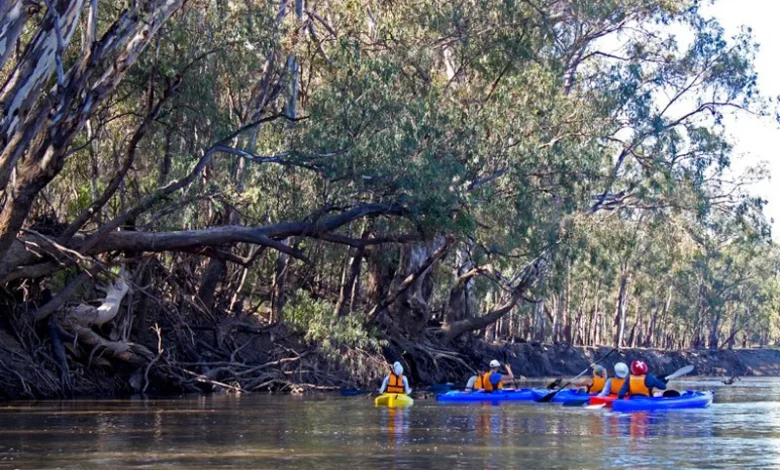
Non-Motorized Water Sports: The Murrumbidgee River provides premier conditions for kayaking and canoeing. Navigable stretches, such as the 14-kilometer route downstream toward Narrandera, allow travelers to experience the riparian zone from the water, facilitating close observations of wildlife, river cliffs, and native vegetation without disturbing the sensitive riverbed habitats.

Mountain Biking and Hiking: A growing network of multi-use trails intersects the Flora and Fauna Reserve and surrounding state forests. These paths accommodate mountain biking and walking excursions, offering access to historical sites, wetlands, and designated swimming zones such as First and Second Beach. Infrastructure upgrades, including planned footbridges and expanded trail networks, are designed to enhance connectivity between regional population centers and the protected interior.
Socio-Economic Implications and Regional Impact

The elevation of the River Red Gum forests to national park status has generated notable economic shifts within the Riverina region. While the transition initially posed economic adjustments for local timber-dependent industries, it has successfully stimulated the regional service and tourism sectors. Local municipalities, including Narrandera, have capitalized on increased visitation by promoting eco-tourism, cultural heritage tourism—featuring Indigenous art workshops and historical interpretation—and outdoor adventure travel.
Furthermore, academic and governmental bodies continue to monitor the long-term effectiveness of environmental flows managed through river regulation systems. Ensuring adequate hydrological connectivity remains critical to maintaining the health of the red gum floodplains against the backdrop of climate variability and long-term water resource competition in the Murray-Darling Basin.

Conclusion
The River Red Gum Parks offer a compelling case study in the intersection of industrial heritage, ecological restoration, and sustainable regional tourism. By transforming a heavily logged resource extraction zone into a protected sanctuary of global significance, New South Wales has preserved a vital inland ecosystem. For travelers and researchers alike, the region provides an invaluable window into the resilience of Australia’s interior landscapes, emphasizing the enduring importance of rigorous conservation policies in safeguarding biodiversity for future generations.