Montenegro Travel Costs: A Comprehensive Financial Breakdown of the Balkan Nation’s Tourism Landscape

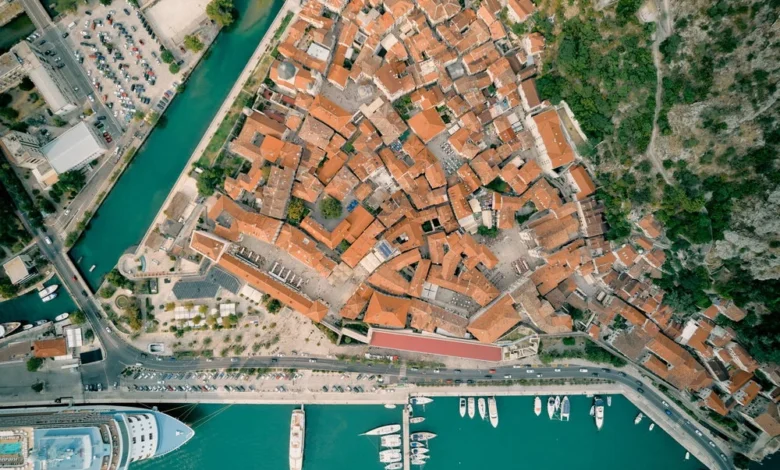
Montenegro has long lived in the shadow of its neighbor to the north, Croatia. Drawing travelers with its similarly dramatic limestone coastlines, medieval stone fortifications, and the convenient adoption of the euro despite its non-eurozone status, the nation is frequently assumed to mirror Croatian pricing models. However, an empirical evaluation of Montenegro’s tourism economy reveals a starkly different financial reality. While lodging and terrace dining remain subject to competitive European resort pressures, the country’s national parks, cultural monuments, and infrastructure fees diverge sharply from neighboring pricing standards, fundamentally altering the economics of a Balkan itinerary.
Financial Architecture and the Euro Anomaly

A defining characteristic of Montenegro’s financial ecosystem is its unilateral adoption of the euro, a policy implemented in 2002 following years of utilizing the German mark. While Montenegro does not belong to the eurozone and possesses no independent monetary policy issuance, all commercial transactions, public tariffs, and private accommodations operate strictly in euros. Major credit cards are widely accepted across hotels, car rental agencies, and urban dining establishments, though minor establishments and municipal tourist taxes frequently require physical currency.
Accommodation: The Primary Expense Driver
Lodging remains the single largest variable in any Montenegrin travel budget, dictated primarily by geography and seasonality. According to data compiled from regional booking platforms and hostel networks, baseline pricing exhibits notable regional variations. In Kotor—heavily impacted by Mediterranean cruise ship tourism—dormitory beds typically command between €20 and €30 per night, with floor pricing resting at €10. In contrast, coastal resort hubs like Budva and mountain outposts like Žabljak in the Durmitor mountain range offer competitive baseline pricing, with hostel dormitories ranging from €12 to €20 and low-end private rooms dropping as low as €5.50 in Budva during off-peak periods.
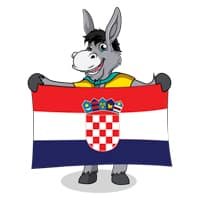
Mid-range accommodations, including family-run guesthouses and three-to-four-star hotels, generally range from €30 to €120 per night, while luxury seafront properties in peak summer months regularly exceed €150. Compounding these figures is the mandatory tourist tax, a statutory levy applied across the country. Adults are assessed a fee of €1 per night, while minors aged 12 to 18 are charged half that rate, and children under 12 are exempt. Though nominally minor, this tax is strictly enforced and typically collected in cash upon arrival at smaller establishments.
Gastronomy and Daily Cost of Living
Dining out in Montenegro highlights a nuanced economic division between sustenance and terrace ambience. Crowd-sourced economic data compiled via Numbeo and verified through local menu sampling indicate that basic food costs remain relatively uniform across the country. A modest, informal meal for one person averages €10 in the capital city of Podgorica and Kotor, rising to approximately €13 in the resort-dense environment of Budva.

However, the cost of leisure beverages reveals the economic impact of location. A standard 0.5-liter domestic draft beer costs €2.50 in Kotor and Podgorica, but escalates to €4.25 in Budva’s high-traffic coastal terraces. For an extended ten-day itinerary, the cumulative expenditure on terrace beverages can rival the cost of an overnight stay. Conversely, non-tourist baseline metrics, such as a standard cappuccino in Podgorica priced at €1.95, illustrate domestic purchasing power isolated from international tourism markups.
Infrastructure, Transit, and Ferry Logistics
Transportation logistics across Montenegro’s mountainous terrain rely on a mix of public bus networks, vehicle rentals, and vital maritime infrastructure. The Kamenari-Lepetane ferry, which spans the narrowest point of the Bay of Kotor, serves as an essential transit shortcut, eliminating a 40-minute driving detour around the bay. Official operator tariffs set the one-way crossing fee at €5 for passenger automobiles, €2.50 for motorcycles, and zero cost for pedestrians and cyclists.
Intercity bus travel remains economically accessible, with routes connecting Kotor to Budva ranging between €2 and €4, and longer journeys from Podgorica to Žabljak costing €10 to €12. A common operational custom across regional bus lines is the luggage fee, wherein passengers are charged a flat €1 per bag stored in the vehicle’s hold, payable in cash directly to the driver.
Parks, Monuments, and State-Regulated Tariffs
The most significant divergence between Montenegro and its regional competitors lies in public sector pricing for natural and cultural attractions. The Public Enterprise for National Parks of Montenegro administers a unified tariff schedule across the nation’s five protected areas. Daily admission to major ecological sites—including Durmitor National Park (encompassing Black Lake and the Tara River canyon), Lake Skadar, and Biogradska Gora—is standardized at €4 to €5 per person. An annual pass providing unlimited access to all five national parks is available for €13.50.
These figures contrast sharply with equivalent parks in neighboring Croatia, where peak-season adult admission to Plitvice Lakes or Krka National Park reaches €40. Consequently, outdoor recreation and nature tourism in Montenegro represent a negligible fraction of an overall travel budget.
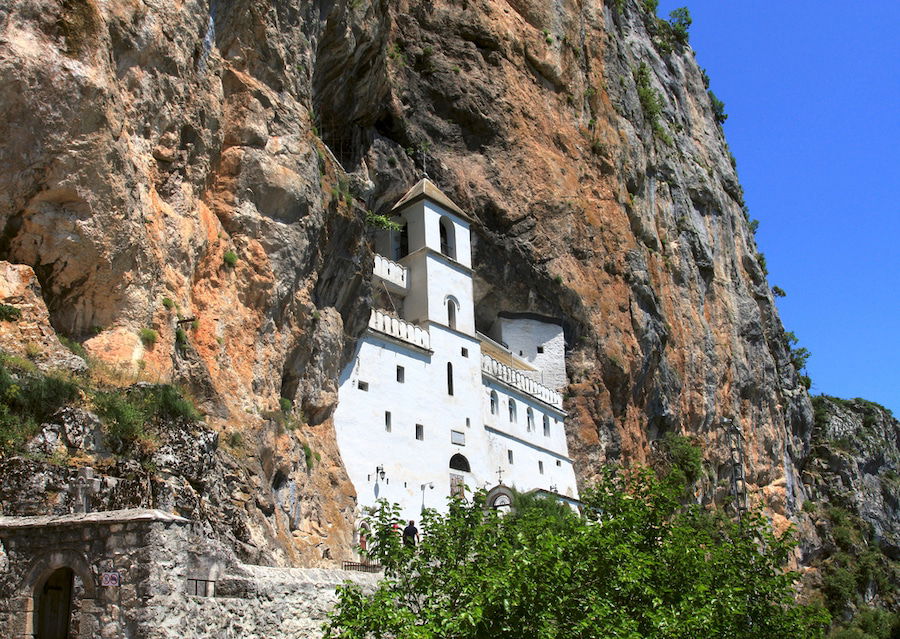
Cultural and historical monuments exhibit varied pricing models. Ostrog Monastery, carved directly into a vertical cliff face, maintains a policy of free admission with voluntary donations. Conversely, municipal authorities enforce higher tariffs on heavily visited urban landmarks. The climb to St. John’s Fortress along the medieval walls of Kotor is priced at €15 per person from March 1 to November 30, with access remaining free during the winter months when ticket booths are unstaffed. Similarly, the Njegoš Mausoleum atop Mount Lovćen commands an €8 admission fee, supplemental to the €3 Lovćen National Park entry ticket.
Comprehensive Cost Projections for a Ten-Day Itinerary
A standard ten-day Montenegrin loop—incorporating the Bay of Kotor, Lovćen, Ostrog, Durmitor, Lake Skadar, and Budva—involves minimal fixed administrative costs. The aggregate sum of mandatory sightseeing fees, including the Kotor city walls, Our Lady of the Rocks maritime transport, park admissions, bay ferry crossings, and cumulative tourist taxes, totals approximately €62 per traveler.
When evaluated across distinct travel tiers, the financial requirements vary substantially:
- Backpacker Tier: Utilizing hostel dormitories (€10–€20 per night), economical local meals, and public transit, total daily expenditures average between €40 and €50.
- Mid-Range Tier: Incorporating private guesthouses or standard hotels (€30–€60 per night), sit-down restaurant dining, and a rental vehicle, daily expenditures scale to between €100 and €130 per person.
- Comfort Tier: Featuring luxury seafront accommodations exceeding €150 per night, fine dining, and private transit services, total expenditures align with broader European Adriatic averages, rendering the country’s low administrative entry fees financially negligible.
Implications for Regional Tourism Competitiveness
Industry analysis suggests that while Montenegro’s lodging and hospitality sectors are increasingly aligned with Mediterranean market rates, its preservation of low-cost public park access and infrastructure fees provides a distinct economic advantage for independent travelers, hikers, and nature tourists. Rather than functioning as a uniformly inexpensive destination, Montenegro offers a bifurcated economic experience: basic park and cultural entry costs remain heavily subsidized and accessible, while commercial accommodation and coastal leisure services are dictated by seasonal European demand.