I Tested 22 Milk Frothers to Find the Best for Barista-Quality Foam and Here is What You Need to Know

The evolution of home coffee culture has shifted significantly over the past decade, moving from simple drip machines toward complex setups that prioritize café-style beverages. As specialty coffee consumption grows, the demand for accessories that bridge the gap between amateur home brewing and professional barista standards has surged. Central to this transition is the milk frother, a device once dismissed as a redundant kitchen gadget that has now become a foundational tool for the modern home café.

Recent industry data suggests that the global milk frother market is expanding as consumers seek to recreate labor-intensive drinks like lattes, cappuccinos, and flat whites without the high price tag of daily coffee shop visits. With the rise of dairy alternatives—including oat, almond, and soy milks—the technical challenge of creating stable, textured foam has become a primary focus for appliance manufacturers.
The Science of Microfoam and Temperature Control
Professional baristas maintain that the difference between a high-quality beverage and an average one lies in the texture of the milk. The industry standard for a "perfect" milk texture is microfoam: a silky, glossy layer of tiny air bubbles that integrate seamlessly with the espresso.

Achieving this consistency requires precise control over two variables: aeration and temperature. Erika Arostegui, a professional barista at Love You a Latte in Greenwich, Connecticut, notes that temperature management is often overlooked by home consumers. "If milk is heated beyond 150°F, it begins to scald. This process breaks down the natural sugars, resulting in a flat or burnt flavor profile that ruins the integrity of the drink," Arostegui explains.
Furthermore, the stability of foam is highly dependent on the fat and protein content of the liquid. While whole dairy milk remains the easiest to manipulate due to its natural fat content, plant-based milks present unique hurdles. Many high-end frothers now incorporate specific programs designed to handle the viscosity and lower fat content of oat milk, which has become the industry standard for non-dairy coffee applications.

Comparative Analysis of Top-Tier Frothing Technology
To determine which devices currently offer the most reliable performance, 22 distinct milk frother models were subjected to rigorous testing. The evaluation focused on froth stability, heat consistency, ease of cleaning, and the ability to handle both dairy and non-dairy alternatives.
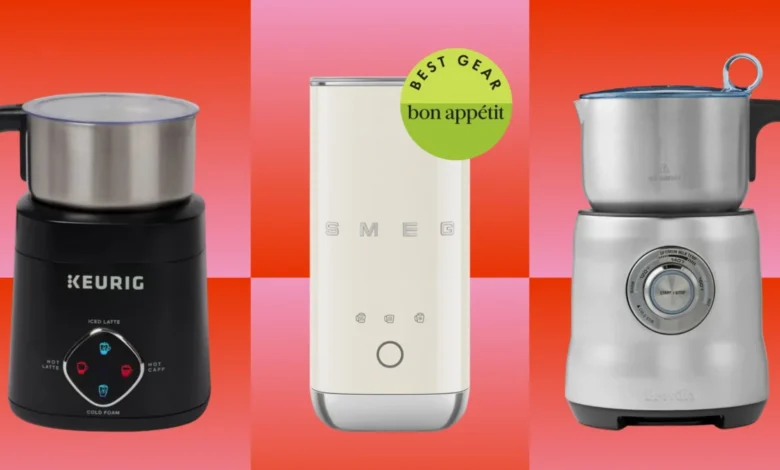
The Breville Milk Café emerged as the top-performing unit, particularly for users prioritizing precision. Utilizing an induction heating system, it allows for granular temperature adjustments between 120°F and 160°F. Its ability to create elastic, dense microfoam makes it a benchmark in the home appliance category, though its significant counter footprint and premium pricing suggest it is better suited for dedicated coffee enthusiasts rather than casual users.

The Keurig K-Froth Hot and Cold Frother offers a compelling alternative for those seeking a balance between professional results and accessibility. Priced significantly lower than the Breville, the K-Froth utilizes a three-carafe system that allows for high-volume use in office or family settings. Its ability to produce consistent results across four presets—Hot Latte, Hot Capp, Cold Foam, and Iced Latte—demonstrates how mid-range technology has closed the performance gap between budget and professional-grade appliances.
For users interested in the technical nuances of latte art, the Subminimal NanoFoamer PRO stands out. Unlike traditional immersion frothers, this device uses magnetic flow controllers to manipulate air intake. By offering six distinct programs and three interchangeable paddles, it provides the level of customization required to produce the specific microfoam textures necessary for pouring rosettas or hearts.

The Rise of Portable and Specialized Frothing
The market has also seen a rise in handheld, battery-operated, or rechargeable wands, which cater to a mobile or space-constrained demographic. The Maestri House LunaFro Max represents the current standard in this segment. Its USB-C rechargeable design, coupled with a rotary speed control dial, provides a level of versatility that surpasses standard, single-speed wands.
Similarly, the Subminimal NanoFoamer Go serves as a portable solution for travelers. By including a travel-friendly case and interchangeable heads, it addresses a specific consumer need: the ability to maintain coffee quality while away from a home kitchen. However, testing revealed that these portable units often lack the power required to produce the stiff, voluminous foam associated with traditional cappuccinos, making them better suited for thinner, silkier textures.

Evaluating Market Implications and Consumer Choices
The surge in frother variety forces a trade-off between convenience and capability. The industry trajectory clearly favors "smart" appliances that automate the process, reducing the learning curve for the average consumer. However, the data from this testing cycle indicates that price does not always correlate with output quality.
For instance, the Instant Pot Instant MagicFroth 9-in-1 proved that a multi-functional approach can be effective if the temperature control is sufficiently granular. Conversely, high-end models like the De’Longhi LatteMix faced criticism for inconsistent foam results, suggesting that branding and aesthetic design—while valuable—do not compensate for technical limitations in the frothing mechanism.

Best Practices for At-Home Frothing
Based on consultations with coffee education experts such as Megan Biolsi of Sightglass Coffee, the following criteria should guide potential purchasers:
- Volume Requirements: Identify whether the device is needed for single-serving applications or batch preparation. Overfilling a carafe is the most common cause of poor froth stability.
- Milk Compatibility: If you primarily consume plant-based milks, prioritize machines with specific "alt-milk" settings, as these typically use lower temperatures and gentler agitation to prevent splitting.
- Maintenance and Durability: Look for devices with dishwasher-safe components and non-stick interiors. The build quality of the battery compartment is a key indicator of long-term reliability in handheld units.
- Temperature Precision: For those who prefer to customize their drink temperature, manual heat controls are essential. Automatic presets are convenient but often lock the user into a standardized temperature that may not suit all beverage types.
Future Trends in the Coffee Accessory Market
The competitive landscape of the milk frother industry suggests a shift toward modularity. Manufacturers are increasingly moving away from "all-in-one" designs toward systems that allow for modular whisking attachments, which improve the longevity of the product. Furthermore, the integration of smart-home technology, such as app-connected temperature alerts or custom frothing profiles, is likely the next frontier for premium frothing appliances.

As consumers continue to invest in their home coffee setups, the bar for quality will continue to rise. The objective of these devices is to replicate a sensory experience—the mouthfeel of perfectly textured milk—that was once the exclusive domain of commercial espresso bars. With current advancements in induction heating and magnetic aeration, that goal has become increasingly attainable for the home consumer, provided they choose the hardware that matches their specific brewing habits and technical preferences.
The results of this 22-unit testing period demonstrate that whether one opts for a $35 handheld wand or a $200 high-capacity carafe, the path to quality foam is now shorter and more consistent than ever. Success in the home café, ultimately, is a matter of selecting the right tool for the desired output.