Returning to a destination after a long hiatus often reveals a complex intersection between personal memory and the inevitable tide of urban development. For many travelers, the city of Seville, Andalusia, remains a fixed point of romanticized history—a place of orange blossoms, traditional tapas, and the languid, unhurried pace of southern Spain. However, recent observations from the ground suggest that while the city’s architectural and cultural soul remains intact, the socioeconomic landscape of the Andalusian capital is shifting, mirroring broader trends of gentrification and modernization seen across Western Europe.

The Changing Face of Seville: An Urban Analysis
Recent economic data indicates that Seville, like many historical hubs in Spain, has undergone significant transformation over the past decade. The tourism sector, which constitutes a primary pillar of the regional economy, has pushed for the modernization of the hospitality industry. Consequently, traditional, family-run guesthouses have increasingly given way to boutique hotels and international chains, catering to a changing demographic of international visitors.
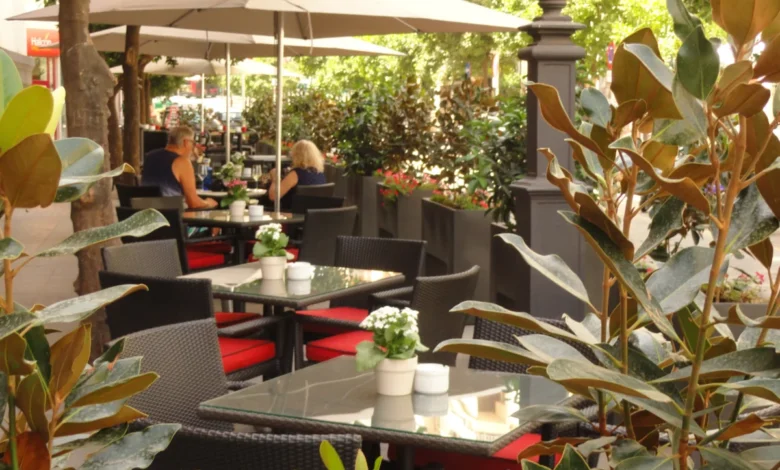
Plaza Nueva, once characterized by its traditional local establishments, now serves as a primary example of this shift. Infrastructure projects and the influx of foreign investment have led to a more polished, aestheticized urban center. While this has improved accessibility and comfort for tourists, urban sociologists note that such transformations often dilute the "authentic" neighborhood character, leading to a phenomenon where long-term visitors struggle to reconcile the city of their memory with the city of the present. Despite these physical changes, the sensory hallmarks of Seville—the scent of citrus trees, the tradition of the sobremesa (the social time spent at the table after a meal), and the communal nature of the local bar scene—remain deeply ingrained in the city’s social fabric.

The Psychology of Linguistic Hesitation
The challenge of language acquisition in a travel context is a well-documented psychological hurdle. Research in applied linguistics suggests that "language anxiety" often stems from a fear of negative evaluation, particularly when a learner attempts to communicate with native speakers in real-world scenarios. For years, the traveler’s experience in Spain was defined by a classic cycle of failure: the reliance on phrasebooks, the over-rehearsal of simple orders, and the inevitable pivot to English when faced with a native speaker’s unexpected response.
This dynamic creates a "confidence gap." In the past, when the interaction failed—often characterized by a waiter’s swift transition to English—the learner’s confidence plummeted, leading to a withdrawal from further attempts. This behavior is common among adult learners who fear losing their sense of agency or intelligence when they cannot express themselves as effectively in a second language as they can in their native tongue.

Overcoming the Barrier: A Case Study in Language Learning
The shift from academic study to functional fluency requires a bridge between controlled environments and the "wild" of authentic conversation. Recent pedagogical studies on language acquisition emphasize that one-to-one tutoring, such as that provided by platforms like Preply, plays a critical role in this transition. Unlike static language apps, which often focus on rote memorization, human-led tutoring forces the learner to navigate the unpredictability of dialogue—the stammering, the need to paraphrase, and the ability to recover from errors.
During a recent visit to Las Teresas, a historic establishment in the heart of Seville, this practical application was put to the test. The environment of a busy tapas bar provides the ultimate "stress test" for a language learner: high ambient noise, the rapid-fire pace of service, and the complexity of local idioms. The successful completion of a simple transaction—ordering in Spanish and responding to a follow-up question without retreating into English—marked a significant milestone. This is not merely a linguistic achievement; it is a psychological transition from a "performer" of a rehearsed script to an active participant in a social exchange.

Chronology of Linguistic Integration
The process of gaining fluency while traveling typically follows a distinct, if non-linear, timeline:
- The Pre-Trip Phase: Preparation through digital tools and formal tutoring sessions. This stage is focused on building foundational vocabulary and grammatical structures.
- The "Safe" Phase: Initial days in the destination, where the traveler sticks to predictable, low-stakes interactions like buying tickets or basic ordering.
- The Breakthrough Moment: A spontaneous, unscripted exchange that occurs in a natural setting, such as a market or a shop, where the speaker does not rely on pre-memorized sentences.
- The Integration Phase: The realization that the language has moved into the background. The focus shifts from "speaking a language" to "communicating an idea," signaling a transition toward true conversational fluency.
The Role of Cultural Immersion: Plaza del Museo
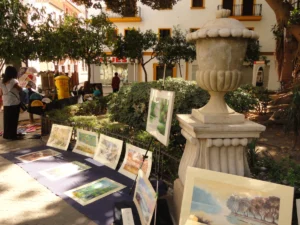
The art market at the Plaza del Museo serves as a microcosm for the cultural life of modern Seville. On a typical Sunday, the square transforms into an open-air gallery, providing an ideal setting for low-pressure, high-value linguistic interaction. Unlike a transactional shop setting, an art market encourages dialogue about aesthetics, personal taste, and interpretation.

When a traveler engages an artist about their work, the conversation inevitably moves beyond basic retail vocabulary. This environment necessitates a level of listening comprehension that goes beyond the "classroom" standard. The successful navigation of this exchange—understanding the artist’s description of their technique or their inspiration—demonstrates the efficacy of immersion-based learning. It confirms that once the fear of making mistakes is replaced by a genuine interest in the subject matter, the mechanics of the language become secondary.
Broader Implications for Adult Learners
The implications of this journey are twofold. First, it underscores that fluency is not an "all-or-nothing" destination but a process of incremental victories. The fear of being misunderstood is the greatest barrier to learning; once that fear is dismantled through repeated, safe, and successful interactions, the brain’s ability to process and produce language accelerates.

Second, the experience highlights the necessity of human interaction in the digital age of learning. While apps are useful for vocabulary acquisition, they cannot replicate the nuanced cues, the patience of a native speaker, or the confidence gained from surviving an unexpected conversation in a crowded, noisy bar.
Expert Perspective: The Value of Local Language
Linguists and travel experts consistently argue that learning even a rudimentary amount of a local language creates a "social currency" that significantly enhances the travel experience. It signals respect for the host culture and often invites a warmer, more authentic reception from locals.

In Seville, where the culture is deeply rooted in social interaction and the "art of living well," or la buena vida, being able to participate in a conversation—even if imperfect—is a key to unlocking experiences that are unavailable to the non-speaking tourist. It allows for a deeper appreciation of regional customs, such as the intricacies of the Triana district’s flamenco scene or the specific, storied history of the city’s tapas culture.
Conclusion
The evolution of the traveler’s relationship with Spanish in Seville is a testament to the resilience of the human learner. From the early days of "maternal pity" from service staff to the confidence of engaging a local artist in a meaningful discussion, the path to fluency is paved with the shedding of ego.

While the city continues to modernize, its essence remains reachable. For those willing to move beyond the safety of the phrasebook and the convenience of English, the experience of being understood in a foreign land is not just a triumph of communication—it is the very essence of what it means to be a traveler. The goal, ultimately, is not to reach a state of flawless, native-level perfection, but to reach a place where the language itself becomes invisible, allowing the traveler to connect fully with the heartbeat of the city.
Related posts: