Jurassic Quest Returns: How the Nationwide Drive-Thru Dinosaur Exhibition Reimagines Family Entertainment in the Post-Pandemic Era

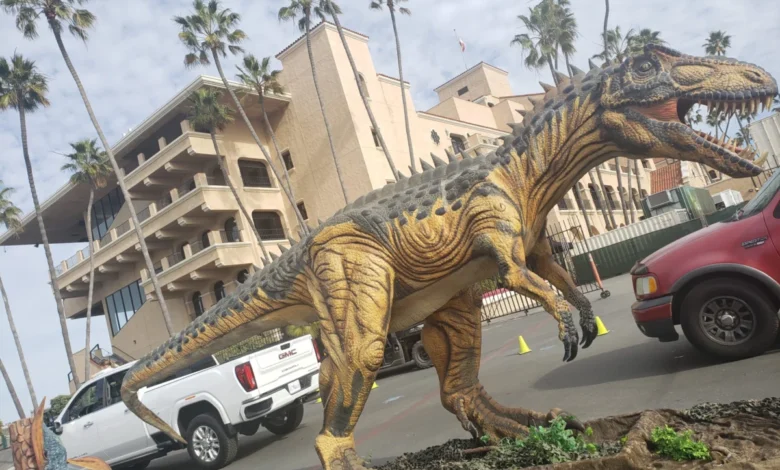
The roar of the prehistoric world is once again echoing across select fairgrounds and event centers nationwide as Jurassic Quest, North America’s largest and most realistic dinosaur exhibition, launches its highly anticipated return engagement. Following a massively successful run during the height of the COVID-19 pandemic, the touring attraction has adapted to changing public health landscapes while retaining the innovative drive-thru format that captivated hundreds of thousands of families seeking safe, immersive entertainment.
Originally conceptualized as a massive indoor walking tour featuring life-sized animatronic dinosaurs, fossil digs, and interactive science stations, Jurassic Quest underwent a radical transformation in 2020. Faced with sweeping indoor gathering restrictions and widespread venue closures, the production management team engineered a contactless, drive-thru adaptation. This pivot allowed the company to keep staff employed, continue educational outreach, and provide an essential outlet for cabin-fevered households. Following successful engagements at prominent venues such as the Del Mar Fairgrounds in Southern California, organizers have officially brought the mobile prehistoric safari back to select cities, proving that experiential entertainment can successfully evolve during times of crisis.
An Immersive Educational Journey on Four Wheels
At the core of Jurassic Quest’s enduring appeal is its commitment to combining large-scale spectacle with rigorous paleontology. As participating vehicles enter the exhibition perimeter, families tune into a synchronized, location-based audio tour designed to accompany them throughout the route.
Unlike rigid, linear tours where visitors must keep pace with a large crowd, the drive-thru format grants families complete control over their pacing. The audio guide is intentionally engineered with flexible prompts, allowing drivers to pause, idle, or move slowly as children marvel at the creatures or listen to detailed scientific descriptions. Developed in consultation with real paleontologists, the audio narrative introduces listeners to the specific scientific names, diets, geographic regions, and eras of each displayed creature. Children do not merely look at towering replicas; they absorb complex geological time scales, dietary classifications (herbivore versus carnivore), and behavioral theories, often leaving the venue equipped with a newfound vocabulary of prehistoric facts.
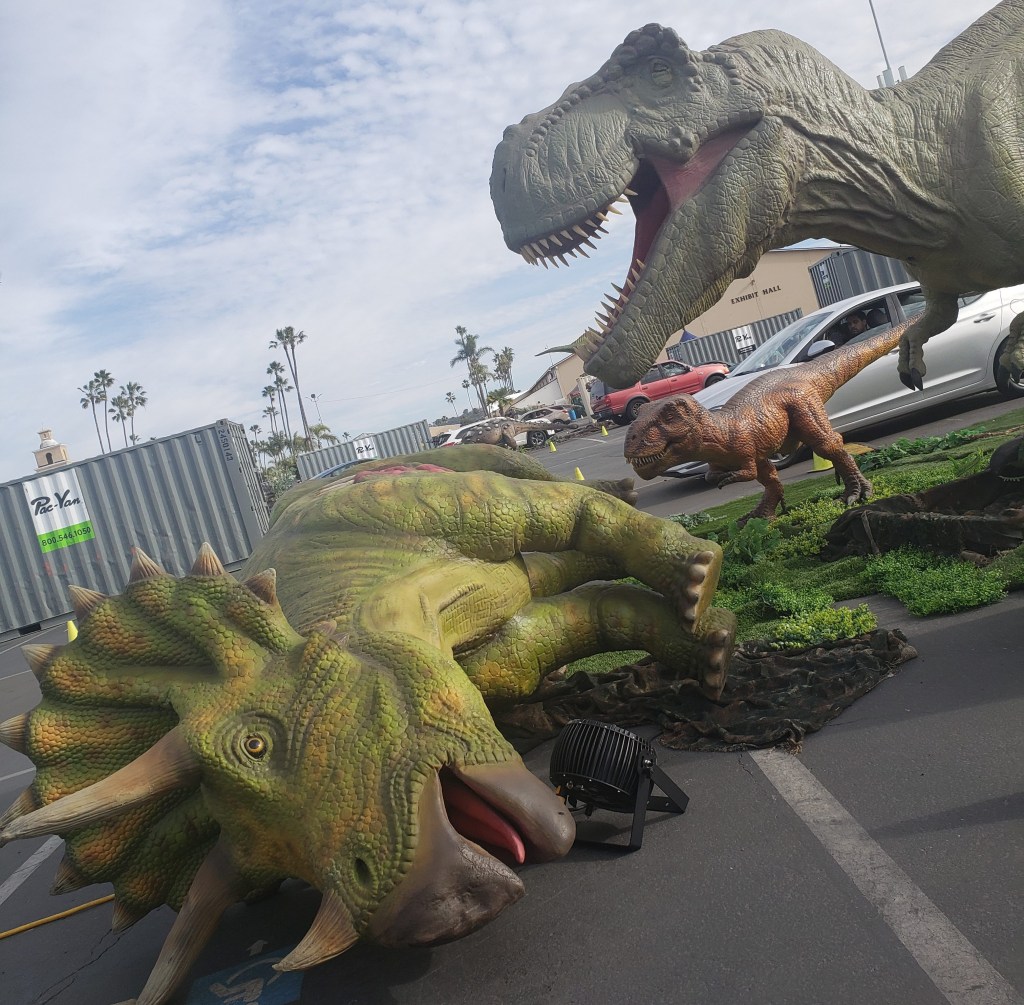
The educational impact is further enhanced by the sheer scale and realism of the exhibits. Rather than static fiberglass statues, the installation features more than 70 photorealistic animatronic dinosaurs. Crafted with meticulous attention to anatomical accuracy—ranging from skin texture and coloration to feather patterns on theropods—these creatures blink, breathe, swing their tails, and roar. Ranging from small-scale juveniles to towering, multi-ton apex predators like the Tyrannosaurus rex and Brachiosaurus, the animatronics utilize advanced pneumatic and hydraulic systems to produce fluid, lifelike movements. Organizers have even integrated playful narrative elements into the audio tour, such as tracking a "missing" T-Rex along the route, transforming a passive drive into an active, family-wide scavenger hunt that heightens engagement.
Economic Accessibility: Per-Vehicle Pricing Models
In an era where family entertainment costs can easily spiral into hundreds of dollars—particularly at major theme parks and amusement complexes—Jurassic Quest has maintained a distinct economic model that prioritizes household accessibility.
Admission is structured on a flat-rate fee per vehicle, typically starting at approximately $49, regardless of how many passengers are packed inside the car (up to the vehicle’s legal seatbelt limit). This pricing structure stands in stark contrast to per-person ticket pricing models common in the entertainment industry, providing significant cost savings for multi-child families, carpools, and extended family groups.
To enhance the experience further, organizers offer tiered add-on packages ranging from $15 to $50. These optional "Quest Packs" include physical souvenir bags filled with dinosaur-themed toys, activity books, 3D glasses, and excavation kits. For families celebrating milestones—such as socially distanced birthday parties, graduations, or family reunions—these supplementary packages provide a tangible keepsake of the event without inflating the base cost of admission. Furthermore, the inclusion of drive-up merchandise booths and themed food vendors at the perimeter of the exhibition allows visitors to round out their outing with carnival-style refreshments and memorabilia while maintaining operational efficiency and safety protocols.
Public Health Innovation and Logistics
The revival of the drive-thru format highlights a broader pivot within the live-events sector toward resilient, adaptable operating models. When event promoters faced unprecedented disruptions, the ability to pivot to a drive-thru architecture served as a blueprint for economic survival.

From a logistical standpoint, executing a multi-city tour of this magnitude requires extensive municipal coordination, traffic management, and crowd control. Venues such as the Del Mar Fairgrounds offer expansive asphalt grids capable of accommodating hundreds of vehicles per hour without causing severe congestion on surrounding public roadways. Timed-entry ticketing systems are strictly enforced, requiring visitors to pre-book their arrival windows online. This digital-first approach eliminates on-site ticket sales, minimizes physical contact between staff and attendees, and ensures a steady, controlled flow of traffic through the exhibition zones.
Additionally, the operational footprint is designed to be entirely self-contained. Sanitation stations, mobile restrooms strategically placed at the conclusion of the route, and contactless merchandise delivery systems ensure that health and safety standards are rigorously maintained. For public health officials and event industry analysts, Jurassic Quest represents a textbook case study in how large-scale entertainment can remain viable under shifting regulatory and safety frameworks.
Broader Impact on the Live Events and Tourism Sectors
The sustained popularity of Jurassic Quest underscores a fundamental shift in consumer preferences toward experiential, outdoor, and controlled-environment entertainment. As traditional indoor museums and science centers work to rebuild attendance numbers post-pandemic, mobile exhibitions that bring high-value educational content directly to suburban and regional markets have proven exceptionally resilient.
Economically, the tour generates a vital ripple effect for local host cities. By utilizing regional fairgrounds, convention centers, and speedways, Jurassic Quest drives localized traffic that benefits nearby hospitality, retail, and food service providers. Event staffing relies heavily on local labor markets, employing staging technicians, security personnel, ticketing agents, and guest services teams in every city the tour visits.
Moreover, the exhibition plays a critical role in informal STEM (Science, Technology, Engineering, and Mathematics) education. By presenting paleontology in a vibrant, accessible, and thrilling format, attractions of this caliber help spark lifelong scientific curiosity in young minds. Educators and child development specialists have long noted that experiential learning—where children can visualize, hear, and emotionally connect with subject matter—yields significantly higher retention rates than traditional classroom instruction alone.

Looking Ahead: The Future of Hybrid Exhibitions
As Jurassic Quest continues its nationwide rollout, the production company’s success points toward a permanent evolution in how traveling shows operate. The hybrid model—combining traditional physical installations with flexible, technologically integrated, and scalable viewing formats—is likely to remain a staple of the entertainment landscape for years to come.
Industry stakeholders and event planners are closely monitoring the operational strategies pioneered by Jurassic Quest, evaluating how similar concepts can be applied to art exhibitions, historical retrospectives, and technological showcases. By proving that families are eager to embrace innovative formats that prioritize convenience, economic value, and immersive storytelling, the exhibition has carved out a unique and enduring niche in the modern entertainment economy.
For families planning to attend the current tour, experts recommend booking tickets well in advance, as popular weekend time slots frequently sell out weeks ahead of schedule. As engines idle and the unmistakable roar of an animatronic Spinosaurus reverberates across the fairground asphalt, Jurassic Quest continues to prove that the fascination with Earth’s ancient past remains as powerful as ever.