Giving Back in a Big Way This Holiday Season: How One Community Initiative is Bridging the Literacy Gap in Title I Schools

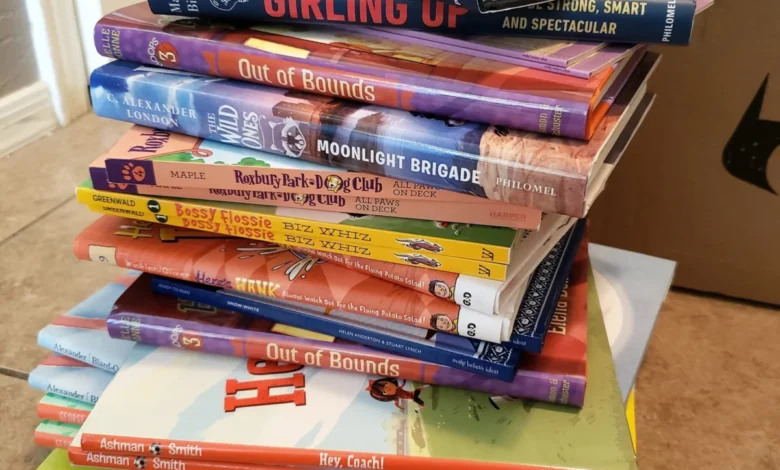
The holiday season traditionally prompts a surge in charitable giving, with individuals and corporations alike seeking ways to support vulnerable populations. While traditional philanthropic efforts often focus on holiday gift drives, winter clothing distributions, and seasonal food banks, educational equity frequently remains an overlooked area of need. Recent community-led initiatives are shifting this paradigm by targeting a fundamental resource: access to literature. Across various school districts nationwide, disparities in library funding have highlighted a critical gap in educational resources, inspiring grassroots campaigns to supply underfunded schools with essential reading materials.
The Genesis of the Initiative: Uncovering Library Deficits
The movement toward targeted book donations often begins far away from corporate boardrooms, stemming instead from grassroots observations by parents and parent-teacher organization (PTO) representatives. During a routine district-level PTO meeting, a stark disparity in resource allocation came to light when a representative for a Title I school—institutions that receive federal funding to assist low-income students—revealed that their campus library was virtually devoid of books.
Unlike more affluent schools within the same district that boast well-stocked libraries, active booster clubs, and robust community fundraising networks, this Title I institution faced severe financial limitations. The surrounding community’s economic constraints made it virtually impossible to raise funds locally for basic educational amenities, leaving students without access to independent reading materials outside of mandated classroom textbooks. This stark inequality serves as a microcosm of broader systemic funding challenges faced by low-income schools across the country, where foundational resources like library books are often treated as discretionary rather than essential.

Leveraging Budget-Friendly Procurement Strategies
Addressing educational disparities on a limited budget requires innovative procurement methods. Traditional retail pricing often prohibits families and educators from purchasing books in quantities large enough to make a substantial impact. To circumvent these financial barriers, community advocates have increasingly turned to specialized online liquidation platforms and discount book outlets.
Websites such as BookOutlet.com specialize in bargain literature, offering overstock inventory returned by major retailers to publishers, as well as inventory with minor cosmetic imperfections. Through these channels, new hardcover books can occasionally be purchased for a fraction of their retail value, with prices starting as low as $0.69. By utilizing these deep-discount platforms, organizers have demonstrated that charitable contributions can be scaled exponentially. For example, recent grassroots campaigns yielded purchases of 44 bargain books for a total expenditure of approximately $40, inclusive of free shipping thresholds. This cost-efficiency allows everyday citizens to act as major donors, transforming modest personal budgets into significant contributions of educational capital.
The Chronology of a Grassroots Book Drive
The execution of community-driven book donation campaigns typically follows a structured timeline designed to maximize educational impact and community engagement.

Phase 1: Identification and Planning
The process generally begins in the autumn months, coinciding with district administrative meetings and the planning phases for annual holiday charitable campaigns. Organizers identify target institutions—predominantly Title I schools or specialized youth centers—by consulting with district officials or PTO members to assess specific material deficits.
Phase 2: Procurement and Curation
Once the need is established, organizers leverage online discount platforms to select age-appropriate literature across diverse genres. In many instances, families involve their children in the selection process, providing young students with an opportunity to participate in philanthropic decision-making. Rather than keeping procured items for personal use, participating children frequently opt to direct the entire inventory toward disadvantaged peers.
Phase 3: Logistics and Delivery Challenges
Logistical hurdles often complicate seasonal charitable initiatives. Due to increased parcel volumes during the winter holiday shipping peak, deliveries occasionally experience delays. In several documented instances, donated book shipments arrived at organizers’ doorsteps immediately following the commencement of the winter school break. Consequently, distribution to students and library staff is rescheduled for the commencement of the spring academic term, serving as a welcome surprise for students returning from vacation.
Financial Technology and Matching Contributions
Modern philanthropic efforts increasingly leverage financial technology to amplify individual contributions. Cash-back browser extensions and loyalty rewards programs, such as Rakuten, have been integrated into grassroots fundraising models to generate supplemental donation revenue.

Participants who register for these platforms through designated referral links can earn initial sign-up bonuses—often averaging $10 in cash-back rewards—while securing ongoing rebates on retail purchases. Promoters of community book drives have repurposed these cash-back incentives by pledging to match every new sign-up with an additional $10 allocation of books for Title I school libraries. This mechanism transforms consumer spending habits into a sustainable funding stream for educational charities, demonstrating how digital tools can be harnessed for social good.
Broader Impact and Implications for Educational Equity
The implications of grassroots book drives extend far beyond the immediate delivery of reading materials. Educational researchers and literacy advocates have long documented the correlation between early access to diverse, engaging literature and long-term academic achievement. Students in low-income households frequently experience the phenomenon known as the "summer slide" or suffer from chronic book scarcity, where homes and neighborhood schools lack adequate reading resources.
By supplementing Title I library inventories with low-cost, high-interest literature, community initiatives help mitigate the resource gap that often impedes reading proficiency. Furthermore, these campaigns foster a culture of civic engagement and empathy among students who participate in the donation process. When children are empowered to evaluate resource disparities and choose to allocate resources to peers in need, it instills a lifelong commitment to community service.
Challenges and Limitations of Informal Philanthropy

While grassroots book drives provide critical stopgap relief for underfunded institutions, education policy experts emphasize that such initiatives cannot fully replace systemic educational funding. Relying on sporadic charitable donations leaves school libraries vulnerable to chronic supply deficits and creates an unequal landscape where the quality of a school’s library depends entirely on the proximity of active community volunteers or the success of private fundraising campaigns.
Moreover, donated books must meet specific curriculum and quality standards to be effectively integrated into school library catalogs. Librarians and media specialists must evaluate incoming materials to ensure they align with educational standards, age-appropriateness guidelines, and the diverse reading levels of the student body. Consequently, communication between donors and school administrators remains a vital component of successful literacy campaigns.
Call to Action and Future Outlook
As educational institutions continue to navigate budget constraints and shifting economic landscapes, the role of community-led support remains crucial. Organizers and literacy advocates are increasingly challenging individuals, families, and local businesses to look beyond traditional holiday-specific charity and adopt year-round models of educational support.
Whether through direct purchases from discount booksellers, participation in cash-back donation matching programs, or direct coordination with district PTOs, community members possess numerous avenues to contribute to school library enhancement. By systematically addressing the literacy gap one book at a time, these initiatives lay the groundwork for a more equitable educational future for students across all socioeconomic backgrounds.
Related posts: