Meet Bear 89 Backpack: The Gentle Giant Who Won Fat Bear Week By Choosing Peace Over Power

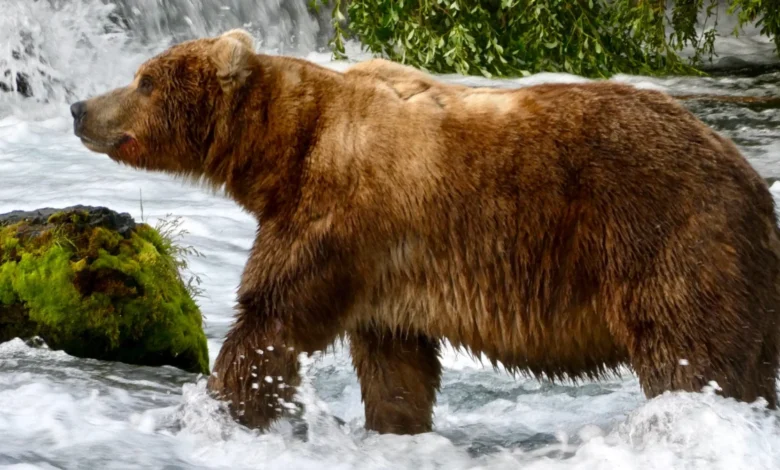
In an era dominated by relentless competition and high-stress societal friction, millions of wildlife enthusiasts around the globe turned their gaze toward Katmai National Park and Preserve in Alaska to find an unexpected champion. Bear 89, universally known as Backpack, secured the coveted title of Fat Bear Week champion by displaying a demeanor starkly different from his aggressive predecessors. Weighing in at an impressive 1,000 pounds, the 20-year-old male grizzly captured the public imagination not through violent dominance, but through a strategy of quiet resilience, strategic patience, and conflict avoidance.
The victory arrives at a critical juncture for the annual tournament, which has faced recent controversies and existential questions regarding nature, wildlife documentation, and human projection. As audiences continue to scrutinize the realities of apex predator behavior broadcasted live to the world, Backpack’s rise to ursine royalty offers a fascinating study in modern ecological tourism, public sentiment, and the enduring allure of America’s premier public lands.
The Mechanics of Survival: Understanding Fat Bear Week
To understand the cultural phenomenon of Fat Bear Week, one must first understand the biological imperative driving it. Administered collaboratively by Katmai National Park and Explore.org, the annual tournament serves as both a public engagement tool and a celebration of ecological success. Every autumn, brown bears converge on the Brooks River within the Alaska peninsula to gorge themselves on migrating sockeye salmon.
This hyperphagia phase is critical to survival. Bears must consume massive amounts of calories—often gaining several pounds of fat a day—to build the insulating reserves required to sustain them through months of winter denning. Those failing to accumulate adequate fat stores face diminished survival odds, frequently emerging from dens prematurely during periods of acute food scarcity.
What began in 2014 as a modest, local-focused bracket competition dubbed "Fat Bear Tuesday" has since exploded into a global internet sensation. Millions of voters now participate annually, tracking individual bears through high-definition livestream cameras positioned along the Brooks River. Participants evaluate contenders based on their visible transformations from lean, spring-emerged animals into formidable, spherical giants ready for hibernation.
However, the unscripted nature of wildlife broadcasting means that human observers are frequently confronted with the unvarnished realities of nature. The ecosystem of the Brooks River is a complex hierarchy where food resources are finite and prime fishing real estate is fiercely contested.
A History of Conflict: The Predecessor Era
For years, the tournament unfolded as a lighthearted celebration of animal husbandry and natural history. Yet, recent iterations of Fat Bear Week have forced organizers and audiences to grapple with the harsher aspects of grizzly bear behavior.
In 2024, the tournament was deeply shaken by televised acts of aggression. During the peak of the viewing season, a dominant bear named Chunk mortally injured the cub of another prominent contender, Grazer, after the young animal slipped near Brooks Falls. Shortly thereafter, cameras captured another fatal territorial interaction in which a rival bear was killed and partially consumed on livestream.
The graphic footage prompted immediate distress among viewers accustomed to viewing the tournament through a sanitized, purely whimsical lens. In response, Explore.org and National Park Service officials took the unprecedented step of pausing the contest and hosting a special public livestream to address viewer concerns and discuss the natural realities of brown bear ecology. Despite the dark turn, the 2024 tournament concluded with Grazer defeating Chunk in a dramatic finale. Chunk returned the following year, claiming the 2025 title despite sustaining a broken jaw during a territorial altercation with another large male.
These events highlighted a growing tension between the public’s desire for comforting animal narratives and the brutal, Darwinian competition that governs wild ecosystems. It was against this backdrop of brawling alpha males and high-stakes river politics that Backpack emerged as a viable and ultimately victorious candidate for the 2026 crown.
The Rise of Bear 89: Resilience and Quiet Strength
Backpack’s journey to the top of the Fat Bear Week bracket is rooted in a lifetime of adaptation. Born to Holly—a former Fat Bear Week champion who claimed the crown in 2019—Backpack earned his moniker as a dependent cub frequently observed riding safely upon his mother’s back.
His early life was far from guaranteed. As an adolescent in 2007, Backpack arrived at the Brooks River bearing a severe leg injury that led many park rangers and long-term observers to question whether he would survive to adulthood. Yet, through perseverance, he healed and grew into a massive 1,000-pound adult male.
Unlike contemporaries such as Chunk, who rely on active intimidation and physical confrontation to secure prime fishing spots, Backpack utilizes what wildlife experts define as a strategy of quiet strength. While he is entirely capable of defending himself when pressed, the 20-year-old bear consistently demonstrates an aversion to unnecessary brawling.
Official profiles published by Explore.org highlight this unique behavioral niche: "Although some bears are brawlers who thrive in the face of competition, others find a way to live within calmer niches. These bears, like Backpack, express their own versions of toughness, yet are no less successful than their more aggressive counterparts. Backpack’s quiet toughness has allowed him to find his niche alongside the biggest bears at Brooks River."
Rather than patrolling the river aggressively or challenging rivals for top-tier waterfall real estate, Backpack is frequently observed spending hours stationary on a favorite rock within the riverbed, displaying a demeanor that modern internet culture readily identifies as relaxed, contemplative, and unbothered.
Cultural Projection and the Zeitgeist of 2026
The landslide public support for Backpack offers sociologists and cultural commentators a compelling mirror reflecting human anxieties and desires. Wildlife biologists and park rangers are quick to remind the public that wild brown bears do not possess human moral frameworks, ethical philosophies, or conscious personality traits in the human sense. To view Backpack as a peaceful sage or an enlightened pacifist is a clear act of anthropomorphism.
Yet, the motivations driving the human electorate are deeply human. In a media ecosystem saturated by aggressive online influencers promoting hyper-masculine "alpha" archetypes, persistent geopolitical conflicts, and an influx of artificial intelligence tools promising relentless personal optimization and productivity, the public’s choice of a massive bear whose primary survival strategy is to sit quietly on a rock carries symbolic weight.
Voters did not choose the most dominant brawler or the most aggressive competitor. Instead, they elevated an animal defined by resilience, survival through hardship, and an preference for calm spaces over territorial warfare. The crowning of Backpack suggests a collective cultural fatigue with constant conflict and an ongoing yearning for stability, peace, and quiet endurance.
Ecological Implications and Conservation Impact
Beyond the internet memes and bracket pools, Fat Bear Week serves a vital conservation and educational mission. The millions of eyes trained on Katmai National Park each autumn generate unprecedented global awareness regarding the health of public lands, salmon fisheries, and intact wilderness ecosystems.
Katmai National Park and Preserve protects vital habitat for thousands of brown bears and vast runs of Pacific salmon, serving as an irreplaceable laboratory for ecological research. The visibility provided by Explore.org’s webcams allows scientists to monitor bear populations, track individual life histories over decades, and educate the public on the delicate interdependence of marine and terrestrial ecosystems.
As climate change, habitat fragmentation, and industrial pressures continue to threaten wildlife corridors across North America, events like Fat Bear Week bridge the gap between remote wilderness preservation and urban populations. By fostering a deep, personal connection to individual bears like Backpack, Holly, Chunk, and Grazer, the program inspires grassroots support for environmental conservation policies and public land protections.
Ultimately, Backpack’s 2026 victory solidifies his legacy not merely as a large animal that ate well, but as a cultural touchstone. Whether resting with his massive frame submerged in the cool waters of the Brooks River or simply waiting out the competition from his preferred boulder, Bear 89 stands as a testament to the fact that in the wild—much like in human society—survival and success do not exclusively belong to the loudest or the most aggressive. Sometimes, quiet strength is the most powerful force on the river.