Conquering Wat Phu Tok: Thailand’s Most Daring Cliffside Temple Rises from the Isan Wilderness

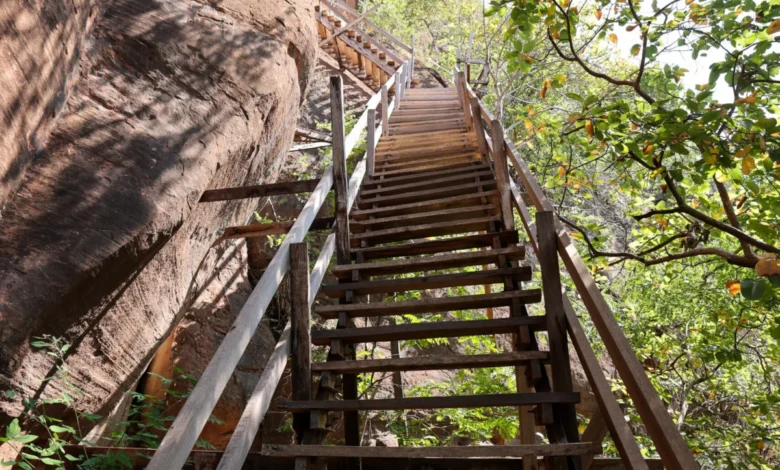
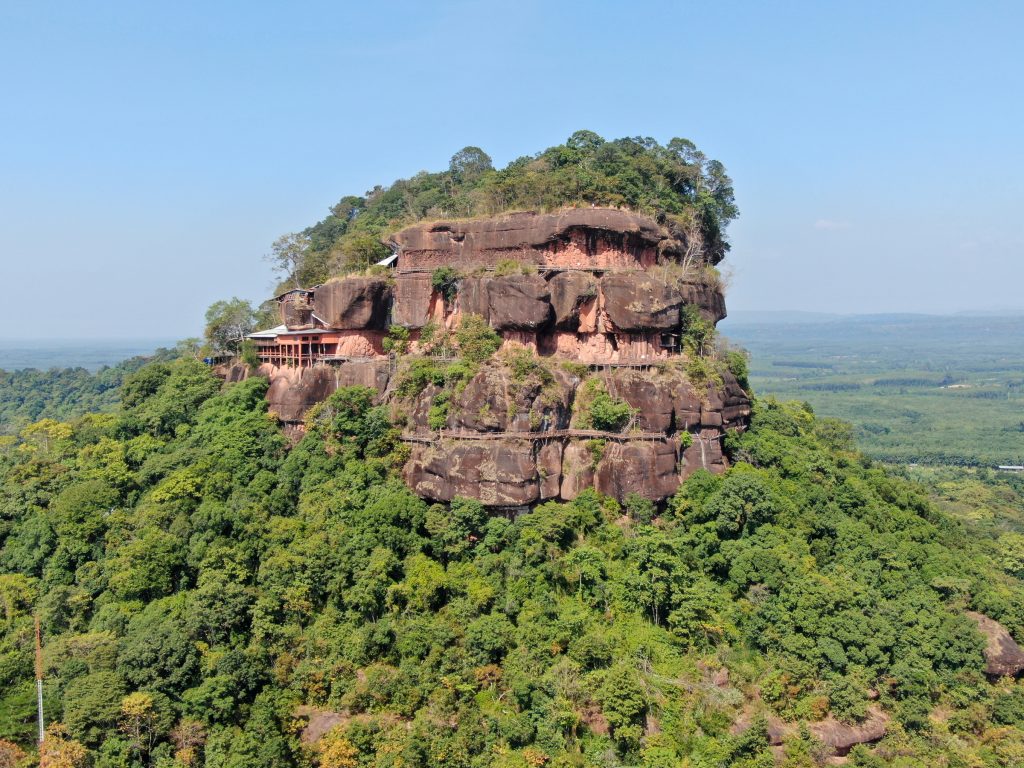
Situated in the remote and often overlooked northeastern province of Bueng Kan, Wat Phu Tok—officially designated as Wat Jetiyakhiri—stands as one of Thailand’s most architecturally astonishing and geographically isolated religious sites. Rising 359 meters above the flat agricultural plains of the Isan region, this striking sandstone monolith commands attention in a manner reminiscent of Sri Lanka’s famed Sigiriya fortress. Yet, the distinguishing feature of Wat Phu Tok is not merely its dramatic geological formation, but the intricate, hand-built network of wooden staircases, ladders, and cantilevered walkways that cling precariously to its sheer vertical cliffs. Constructed as a physical and spiritual metaphor for the path to enlightenment, the temple complex has evolved from a secluded monastic retreat into a major destination for intrepid travelers and Buddhist pilgrims alike.
Historical Origins and Architectural Philosophy
The origins of Wat Phu Tok are deeply intertwined with the region’s ascetic monastic traditions. Historically, the rugged terrain, dense vegetation, and dense populations of venomous snakes rendered the isolated sandstone mountain largely impassable. However, these very elements—remote isolation, raw wilderness, and inherent physical danger—made the site an ideal environment for monks seeking deep seclusion for meditation.

The transformation of the mountain began under the guidance of the revered meditation master Luang Pu Juan. Recognizing the potential for spiritual practice within the harsh landscape, the monk spearheaded the monumental engineering effort to construct a vertical pathway system. Over years of arduous labor, monks, local laborers, and devout volunteers anchored wooden beams, ladders, and scaffolding directly into the rock face.
Architecturally, the temple is meticulously structured around the core tenets of Buddhist philosophy. The mountain is divided into seven distinct levels, intentionally corresponding to the seven stages of spiritual awakening and liberation in Buddhist meditation. While the initial phases of the climb are relatively straightforward, subsequent tiers demand heightened physical exertion and mental focus, culminating in an immersive journey that challenges both vertigo and endurance. Tragically, the visionary founder, Luang Pu Juan, did not live to see the completion of the sanctuary’s long-term preservation; he perished in a heavily publicized historical aviation accident. Nevertheless, the monastic community and regional authorities have maintained the infrastructure, ensuring the structural integrity of the complex for future generations.

Geographical Context and Regional Significance
Wat Phu Tok is located approximately 30 minutes by road from the municipal center of Bueng Kan, a province established relatively recently in 2011 after separating from Nong Khai to improve regional administration and border security along the Mekong River. Positioned directly across the border from Laos, Bueng Kan remains one of Thailand’s least densely populated and commercially developed provinces.

The economic and infrastructural profile of the province is heavily agrarian, dominated by rubber plantations, rice paddies, and small-scale fishing along the Mekong basin. Consequently, the presence of a landmark of international tourism caliber such as Wat Phu Tok holds significant implications for the local economy. Regional tourism boards have increasingly highlighted off-the-beaten-path destinations in Isan to diversify the country’s tourism revenue, which has historically been concentrated in coastal provinces and major urban centers like Bangkok and Chiang Mai. The influx of visitors to Bueng Kan provides crucial financial support for local guesthouses, transportation services, and small businesses, while promoting sustainable, nature-oriented tourism models.
Navigating the Seven Levels of Ascent

The ascent of Wat Phu Tok is a rigorously structured spatial experience. Visitors arrive at the base of the mountain, where a sprawling temple complex, a serene lake, and landscaped parklands welcome travelers before the vertical journey begins. The trailhead initiates a gradual transition from traditional earthen paths to sturdy wooden staircases constructed from local timber.
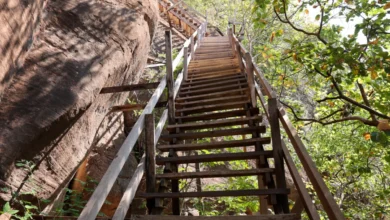
As climbers progress past the lower tiers, which house modest shrines and quiet resting points, the topography shifts dramatically. The stairs steepen into near-vertical wooden ladders that test physical stamina. Despite their daunting appearance, the walkways are engineered to distribute weight evenly, anchored securely into the sandstone cliffside.

The fifth level serves as the administrative and ceremonial heart of the mountain complex. Here, visitors encounter the primary ordination hall, alongside numerous secondary shrines, meditation cells, and expanded ground-level walking paths. This tier also acts as a gateway to secondary exploratory routes, including a notable detour leading to a secluded rock-cut shrine situated on an isolated spur of the mountain. This auxiliary path requires traversing a narrow suspension bridge and elevated rock pathways, offering visitors an intimate look at the symbiosis between sacred architecture and natural geography.
The sixth level represents the structural climax of Wat Phu Tok. Comprising a complete circumference around the upper precipice, roughly half of this tier consists of cantilevered wooden plank walkways bolted directly into the face of the sheer rock cliff. While engineered for safety and regularly inspected by monastic caretakers, the pathway offers unobstructed, panoramic views of the surrounding Mekong River basin and the unbroken canopy of the Bueng Kan forest. The sheer drop-offs demand absolute vigilance from visitors, as wind gusts and narrow passing spaces require careful navigation.

The seventh and final level represents the summit of the mountain. Historically avoided by casual visitors due to reports of high concentrations of venomous snakes inhabiting the undisturbed upper thickets, the summit is accessible via a final, demanding vertical climb. Unlike the lower tiers, the seventh level features no formal wooden walkways or architectural structures. It consists primarily of the natural rock plateau, offering expansive aerial vistas of the region for those who complete the ascent.
Safety, Infrastructure, and Visitor Protocols

Managing visitor safety on a vertical cliffside temple complex requires a delicate balance between historical preservation and modern safety standards. Monastic authorities, in cooperation with local municipal offices, conduct routine maintenance on the wooden infrastructure, replacing weathered planks and reinforcing steel anchoring cables to withstand regional monsoon seasons and shifting weather patterns.
Regional tourism authorities and park management issue explicit guidelines for visitors attempting the climb. Tourists are strongly advised to wear appropriate footwear with sufficient traction, carry adequate hydration, and exercise extreme caution along the narrow cantilevered sections of the sixth level. Individuals with severe vertigo, cardiovascular conditions, or mobility impairments are formally discouraged from attempting the upper tiers. Furthermore, because Wat Phu Tok remains an active place of worship and a functioning monastery, visitors are expected to adhere to standard Thai temple etiquette, including modest dress that covers the shoulders and knees, and the maintenance of a quiet, respectful demeanor suitable for a monastic meditation environment.

Implications for Sustainable Tourism in Isan
The enduring appeal of Wat Phu Tok highlights broader shifts in Thailand’s national tourism strategy. As international travelers increasingly seek authentic, less commercialized experiences away from overcrowded urban centers and beaches, northeastern provinces like Bueng Kan are experiencing a gradual transformation. Analysts note that while increased visibility brings necessary economic stimulus to rural economies, it also presents challenges regarding environmental conservation and infrastructural capacity.

Local authorities and community leaders face the ongoing task of managing visitor volume to preserve the tranquil, meditative atmosphere that defines the sanctuary. Ensuring that waste management, traffic control, and structural wear are carefully monitored will determine the long-term viability of Wat Phu Tok as both a spiritual sanctuary and a premier adventure tourism destination. By maintaining a strict focus on sustainable management, the province of Bueng Kan aims to protect its cultural and natural heritage while sharing the awe-inspiring architecture of the lonely mountain with the global community.