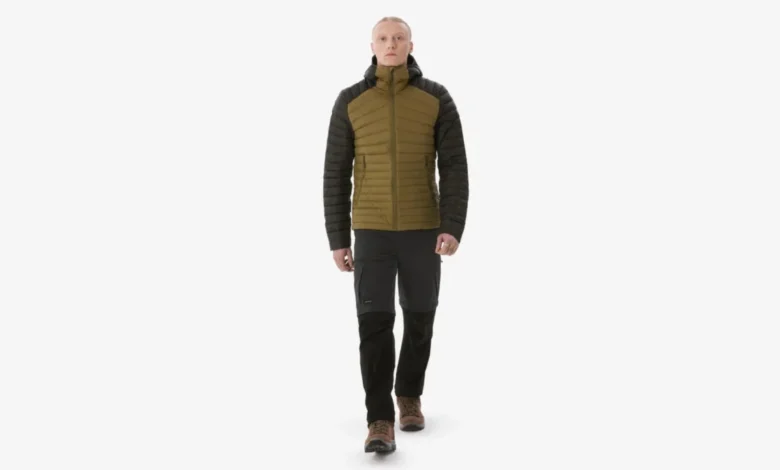
The outdoor apparel industry has long operated on an uncompromising economic scale: the lighter, warmer, and more compressible an insulated garment is, the more a consumer should expect to pay. High-end mountaineering and backpacking brands routinely charge hundreds of dollars for down jackets featuring premium fill powers, advanced technical fabrics, and ultralight designs. However, the direct-to-consumer and big-box outdoor retail market has increasingly disrupted this pricing model, forcing legacy manufacturers to reconsider how technical performance is priced. Among the most prominent disruptors is Decathlon, the massive French sporting goods retailer, through its specialized climbing and mountaineering brand, Simond. The newly released Simond Men’s Xplore MT100 Hooded Down Jacket enters this competitive landscape as an aggressively priced alternative, retailing at a fraction of the cost of traditional alpine insulation pieces while still claiming to deliver legitimate backcountry-ready performance.
Background Context of the Simond Xplore MT100 and Its Predecessor
To understand the positioning of the Xplore MT100, one must look at the evolution of Decathlon’s budget-friendly insulation lineup. For years, the original Simond MT100 down jacket served as a cult-favorite piece within the ultralight backpacking community. Budget-conscious hikers, thru-hikers attempting long-distance trails on tight finances, and minimalist backpackers routinely praised the original MT100 for offering high-end features—such as real down insulation and impressive packability—at an entry-level price point that defied industry norms.
The jacket built a strong reputation through word-of-mouth recommendations on online forums, Reddit’s ultralight communities, and independent gear review sites. Consumers discovered that they did not necessarily need to spend $300 to $400 on specialized alpine gear to stay warm during three-season backpacking trips or chilly evenings in camp. However, as supply chains evolved, manufacturing costs shifted, and material availability fluctuated, Decathlon initiated a redesign process. This corporate and design pivot ultimately led to the retirement of the older MT100 iteration and the introduction of the modernized Xplore MT100 line.
Detailed Specifications and Materials Analysis
The Simond Men’s Xplore MT100 Hooded Down Jacket is constructed using 700-fill power duck down. Fill power measures the fluffiness and insulating efficiency of down clusters; a higher fill power indicates that a given weight of down can trap more dead air, thereby providing superior warmth relative to its weight. While premium mountaineering jackets often utilize 800-fill or even 900-fill goose down, a 700-fill rating is widely considered a respectable standard for general-purpose outdoor recreation, offering a reliable balance of thermal efficiency, durability, and cost-effectiveness.
One of the standout characteristics of the Xplore MT100 is its exceptional compressibility. When not in use, the jacket can be stuffed neatly into its own integrated pocket, compressing down to approximately the physical dimensions of a standard grapefruit. For backpackers, bikepackers, and day hikers whose packs are severely constrained by space limitations, this high degree of packability is a critical operational advantage. A puffy that disappears into the bottom of a pack until evening temperatures drop is a valuable asset on any technical trail.
Weight-wise, the jacket remains remarkably light, though exact figures depend on the specific size chosen. The outer shell and inner lining utilize tightly woven synthetic fabrics designed to prevent down feathers from leaking through the seams—a common issue in lower-end insulated garments. The inclusion of a fitted hood further enhances its thermal retention capabilities, protecting the wearer’s head and neck from biting wind and radiant heat loss in alpine environments.
Thermal Performance Ratings and Layering Utility
Evaluating the warmth of an ultralight down jacket requires examining how it integrates into a broader cold-weather clothing system. Down insulation does not generate heat; rather, it traps the radiant heat generated by the human body while blocking cold ambient air from penetrating the fabric.
According to product testing data provided by Decathlon, the Xplore MT100 is engineered to keep an active wearer comfortable down to approximately 27 degrees Fahrenheit (-2.8 degrees Celsius). However, achieving this level of thermal comfort is contingent upon proper layering protocols. Decathlon’s thermal baseline assumes that the user is wearing the down jacket over a moisture-wicking synthetic baselayer and a light fleece mid-layer.
Furthermore, outdoor safety experts and veteran backpackers emphasize that down jackets lose their insulating properties when they become saturated with moisture—either from heavy external precipitation or internal perspiration. To maximize the utility of the Xplore MT100 in deep winter or volatile shoulder-season conditions, outdoor educators recommend pairing the puffy with a lightweight, waterproof, and windproof outer shell. When integrated into a classic three-layer system—baselayer, fleece, down insulation, and a weather-resistant shell—the Xplore MT100 can effectively serve as a reliable cold-weather component throughout the winter months.
Consumer Reception and the Ultralight Community Debate
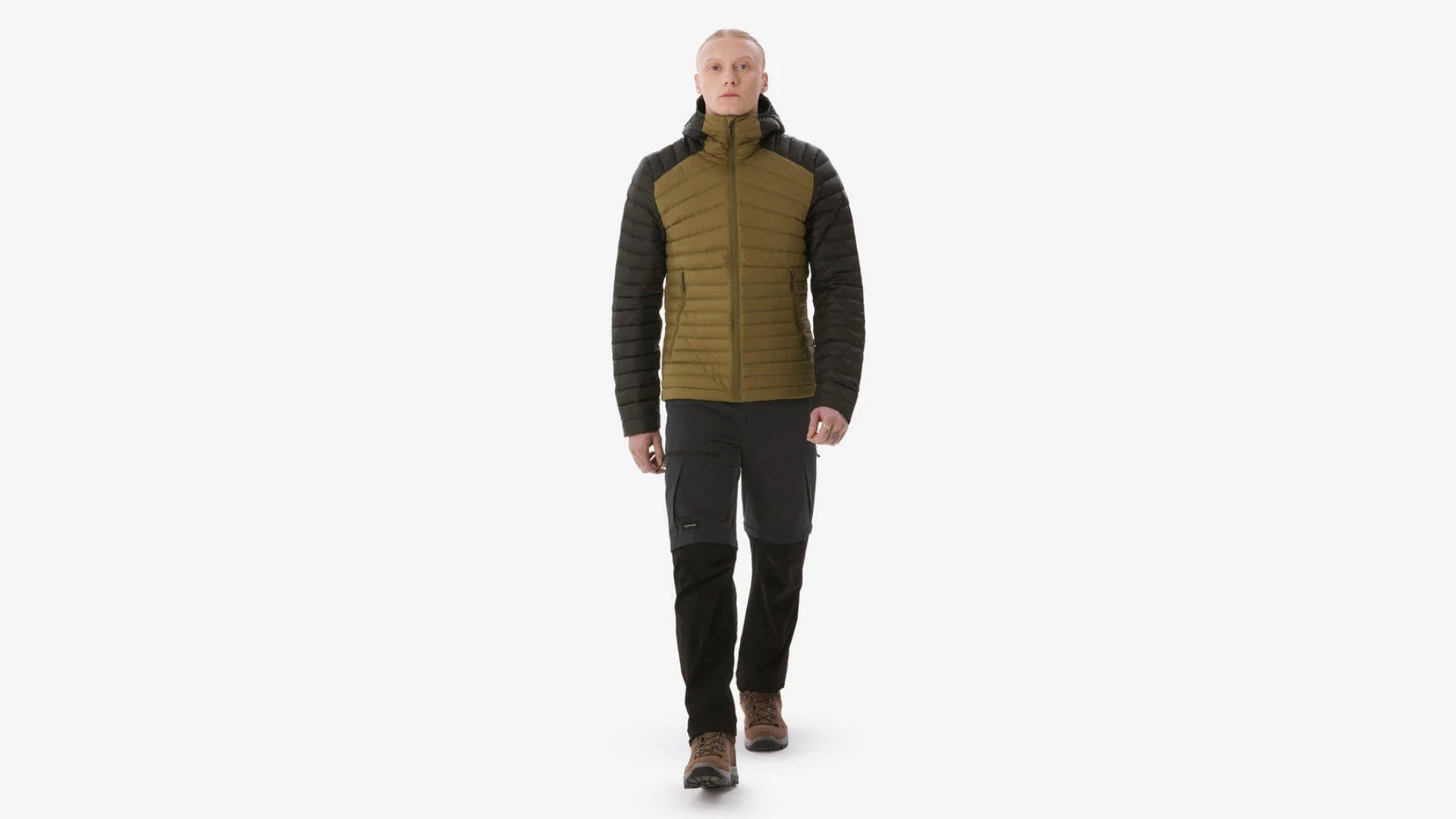
The transition from the older MT100 model to the newly designated Xplore version has not occurred without debate among gear enthusiasts. When Decathlon phased out the legacy MT100, observant members of the ultralight hiking community quickly noted a technical downgrade in the insulation specification: the company shifted from an 800-fill power down in the older model to a 700-fill power down in the new Xplore variant.
This specification change sparked considerable discussion across outdoor forums. Proponents of high-end ultralight gear argued that the reduction in fill power represents a step backward in thermal efficiency-to-weight ratios, as lower fill power requires more actual down weight to achieve the same level of warmth as higher-grade down. Conversely, pragmatic consumer advocates and budget-focused hikers defended the change, pointing out that the price differential and everyday usability remain overwhelmingly favorable for the average recreational user.
Industry analysts suggest that the average casual hiker is unlikely to notice a dramatic experiential difference between 700-fill and 800-fill down during standard weekend camping trips. However, for hardcore ultralight backpackers obsessed with shaving every possible gram of base weight from their packs, the shift has prompted some consumers to look toward alternative market options. For those willing to increase their budget to secure higher-end specifications, alternative gear sales—such as promotional discounts on the Mountain Hardwear Ghost Whisperer, which has historically retailed at significantly higher price points but occasionally drops during seasonal sales—remain tempting upgrades.
Broader Market Implications and Economic Dynamics
The introduction of the Simond Xplore MT100 highlights a broader economic trend within the outdoor retail sector: the democratization of technical gear. Historically, outdoor sports such as mountaineering, ice climbing, and multi-day backpacking carried a steep financial barrier to entry. High-performance garments were exclusively manufactured by heritage outdoor brands that invested heavily in proprietary fabric technologies, ethical down-sourcing certifications, and extensive field-testing expeditions.
While heritage brands still dominate the ultra-premium tier of the market, direct-to-consumer mega-retailers have successfully captured a massive share of the entry-level and intermediate consumer base. By leveraging massive global supply chains, centralized manufacturing facilities, and direct distribution channels, companies like Decathlon can offer technical down jackets at prices that traditional specialty outdoor retailers struggle to match.
This dynamic creates a competitive pressure cooker. Traditional outdoor brands are increasingly forced to justify their premium pricing structures through advanced sustainability initiatives—such as 100% Responsible Down Standard (RDS) certifications, recycled face fabrics, and complex body-mapped insulation zoning—while budget-focused competitors focus strictly on delivering functional utility at the lowest possible cost.
Fact-Based Analysis of Value and Limitations
A balanced assessment of the Simond Men’s Xplore MT100 Hooded Down Jacket reveals a clearly defined set of pros and cons for prospective buyers.
On the positive side, the jacket’s primary selling points are its affordability and packability. For individuals who only occasionally embark on cold-weather camping trips, or for students and young professionals entering the outdoor recreation space on a strict budget, spending hundreds of dollars on a branded alpine jacket is often financially impractical. The Xplore MT100 removes this financial obstacle, providing a functional, warm, and highly compressible garment without straining personal finances. Its ability to pack down to the size of a grapefruit makes it an effortless addition to a backpack, ensuring that safety insulation is never left behind due to space constraints.
On the negative side, the jacket’s thermal efficiency falls slightly short of its predecessor due to the downgrade from 800-fill to 700-fill down. Furthermore, ultra-budget down garments sometimes face scrutiny regarding long-term durability, feather containment over years of heavy use, and the environmental or ethical tracking of down supply chains—though Decathlon maintains compliance standards regarding animal welfare in its down sourcing. Additionally, the exterior fabrics on budget puffies are typically thinner and more susceptible to punctures, tears, or ember burns from campfires when compared to heavy-duty workwear or specialized alpine shell jackets.
Conclusion and Purchasing Outlook
The Simond Men’s Xplore MT100 Hooded Down Jacket occupies a very specific, highly practical niche in the modern outdoor gear marketplace. It is not designed to replace high-end, expedition-grade parkas engineered to withstand sub-zero Himalayan blizzards. Nor is it intended to satisfy the uncompromising demands of ultralight purists who meticulously calculate every single gram of pack weight.
Instead, the Xplore MT100 is tailored for the everyday backpacker, weekend camper, and casual hiker who desires reliable thermal performance, exceptional packability, and a lightweight design without incurring significant financial debt. As winter outdoor recreation continues to grow in popularity, accessible gear options like the Simond Xplore MT100 ensure that the backcountry remains open to individuals of all economic backgrounds, proving that high-altitude comfort does not necessarily require a luxury-tier price tag.
Related posts: