Oaxaca de Juárez, the capital of the southwestern Mexican state of the same name, has increasingly established itself as an essential destination for international travelers seeking a profound engagement with Mexican indigenous heritage, architecture, and gastronomy. Situated in a major valley surrounded by the Sierra Madre mountain range, the city presents a complex interplay of pre-Hispanic history, Spanish colonial influence, and contemporary artistic innovation. As global interest in regional Mexican cuisine and cultural tourism expands, Oaxaca has transitioned from a regional secret into an internationally recognized epicenter for culinary arts, historical preservation, and traditional craftsmanship.
Main Facts and Geographic Significance
Oaxaca spans a valley floor characterized by dry, mountainous terrain and a temperate highland climate that supports rich agricultural biodiversity. The city proper is defined by a grid of cobblestone streets, brightly painted facades, and grand religious structures dating back to the 16th century. Beyond the municipal boundaries, the geographic layout extends into sub-valleys historically inhabited by Zapotec and Mixtec civilizations.

Economically and culturally, the region operates as a primary custodian of indigenous languages, textile traditions, and agricultural practices native to Mesoamerica, including the cultivation of heirloom corn, agave, and artisanal cacao. The city’s status as a UNESCO World Heritage site, designated alongside the nearby archaeological zone of Monte Albán in 1987, underscores its universal value
in terms of architectural and historical preservation.
Chronology and Historical Context
The historical timeline of the Oaxaca Valley spans millennia, moving from early agricultural settlements to sophisticated pre-Columbian urban centers, colonial administration, and modern republican development.

The Pre-Columbian Era (c. 500 BCE – 1500 CE)
The foundational history of the region is anchored by Monte Albán, established around 500 BCE by the Zapotec civilization. Perched strategically on a flattened mountain top overlooking the valley floor, Monte Albán served for centuries as the dominant socio-political and economic hub of the southern highlands. By the late classic and post-classic periods, the Mixtec culture exerted significant influence over the region, contributing advanced metallurgical and artistic techniques that persist in local craftsmanship today.
The Colonial Period (1521 – 1821)
Following the Spanish conquest of the Aztec Empire, Spanish forces led by Francisco de Orozco arrived in the Oaxaca Valley in the 1520s. The city of Antequera—later renamed Oaxaca—was founded in 1529. During this era, monastic orders, particularly the Dominicans, embarked on an extensive campaign of evangelization and monumental construction, erecting structures such as the Templo de Santo Domingo. The synthesis of indigenous labor and European baroque design during this period generated the architectural identity that defines the historic downtown today.
The Modern Era and Tourism Transition (20th Century – Present)
Throughout the 20th century, Oaxaca maintained a distinct cultural identity largely insulated from rapid industrialization. The late 20th and early 21st centuries marked a significant shift as the region leveraged its cultural assets to develop sustainable tourism frameworks. infrastructural enhancements, combined with international media coverage focusing on Oaxacan culinary arts, transformed the city into a focal point for global gastronomy and cultural exchange.
Architectural Landmarks and Urban Geography

The architectural landscape of Oaxaca reflects centuries of layered history. Urban exploration typically centers around the Zócalo, the primary public plaza flanked by government buildings and shaded by laurel trees. Adjacent to the plaza stands the Cathedral of Our Lady of the Assumption, constructed over several centuries and marked by baroque stone facades that have withstood numerous seismic events.
North of the central plaza lies the Templo de Santo Domingo de Guzmán, initiated in 1572 and completed in the 18th century. The adjacent former monastery now functions as the Museo de las Culturas de Oaxaca, housing artifacts recovered from Tomb 7 at Monte Albán—a cache of pre-Columbian funerary offerings composed of gold, silver, amber, and turquoise.
Directly attached to the Santo Domingo complex is the Ethnobotanical Garden (Jardín Etnobotánico de Oaxaca). Spanning over two acres, the garden features an extensive collection of plant species native to the state, arranged to illustrate the ecological and cultural relationship between regional flora and indigenous human populations. Access to the garden is strictly regulated through guided tours to preserve the scientific integrity of the site.
Gastronomic Heritage and Culinary Infrastructure

Oaxaca’s designation as a premier culinary destination is supported by a deeply rooted food culture that relies on traditional ingredients, preservation methods, and communal preparation techniques. The city’s gastronomy is characterized by complex moles, hand-pressed tortillas, specialized cheeses such as quesillo, and an array of indigenous insects and herbs.
Central to the daily provisioning of the city are its municipal markets, most notably the Mercado 20 de Noviembre and the Mercado de Abastos. The Mercado 20 de Noviembre features the pasillo de humo (smoke aisle), a specialized section where vendors grill raw meats over open charcoal pits for immediate consumption with local accompaniments.
Beyond formal dining establishments, the local food ecosystem includes specialized street-food innovations. Among these is the local hamberguesa, a regional iteration incorporating standard burger patties combined with hot dogs, sliced ham, indigenous cheeses, and pineapple, reflecting a unique cross-cultural adaptation of fast-food concepts.
The regional agricultural economy is further tied to the production of mezcal, an agave-based distilled spirit regulated under strict Denomination of Origin (DO) standards. The surrounding valleys host numerous artisanal and ancestral distilleries (palenques) where agave hearts are roasted in subterranean pit ovens, crushed using stone mills, and fermented in wooden vats prior to distillation.

Archaeological and Regional Excursions
Beyond the urban center, the surrounding valleys offer significant archaeological and cultural sites accessible via regional transportation networks.
Monte Albán
Located approximately 15 minutes by vehicle from downtown Oaxaca, Monte Albán remains the most prominent archaeological site in the valley. The complex comprises large plazas, residential platforms, ball courts, and carved stone monuments depicting historical events and genealogical records of the Zapotec ruling class.
Tlacolula Market
Operating on a weekly schedule every Sunday, the Mercado Tlacolula represents one of the oldest continuously functioning markets in the region. Situated roughly 45 minutes east of the city, the market draws rural indigenous communities who travel to trade agricultural goods, textiles, and traditional pottery, maintaining commercial patterns established prior to the arrival of Spanish colonists.

Socio-Cultural Celebrations: Día de los Muertos
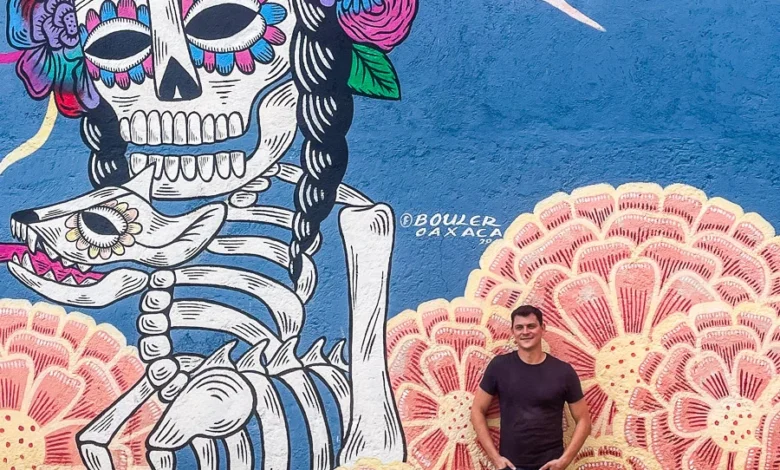
Oaxaca’s cultural calendar is punctuated by traditional festivals, none of which garner as much international attention as the Día de los Muertos (Day of the Dead) celebrations held annually from October 31 through November 2. The observance involves elaborate family altars (ofrendas), the distribution of marigold flowers (cempasúchil), and nighttime vigils in local cemeteries. The municipal government and local cultural organizations coordinate parades, artistic installations, and musical performances throughout the historic center, drawing thousands of domestic and international visitors.
Socioeconomic Implications and Urban Development
The rapid growth of tourism in Oaxaca presents both economic benefits and structural challenges for municipal administrators and residents. While the hospitality, culinary, and artisanal sectors provide employment and stimulate regional development, the influx of visitors has contributed to rising real estate costs and concerns regarding cultural commercialization.

Urban planners and community groups actively monitor the balance between tourism promotion and heritage preservation, focusing on sustainable infrastructure, water management, and the protection of residential neighborhoods such as Jalatlaco and the historic Centro. These areas continue to serve as residential communities while accommodating boutique hotels, mezcalerías, and art galleries, reflecting a dynamic adaptation to modern economic pressures while retaining historical continuity.