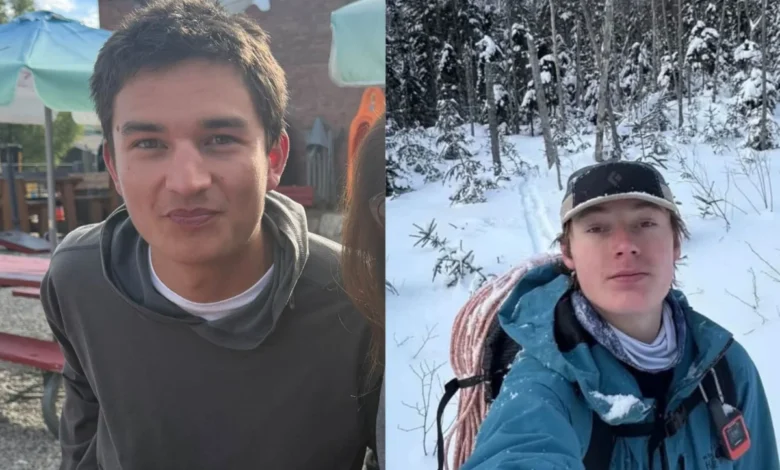
The recovery of two young men in the rugged backcountry of Colorado’s Sawatch Range has sent shockwaves through the outdoor community and the campus of Colorado Mountain College in Leadville. Kaden Matsuda, 19, and Jackson Donlon, 20, were discovered dead on October 28 near the base of West Apostle Mountain, concluding a harrowing multi-day search-and-rescue operation that highlighted the extreme volatility of high-altitude environments in late October. The loss of these two aspiring outdoorsmen—one training for a career in wildland firefighting and the other pursuing a professional path as a mountain guide—serves as a somber reminder of the unforgiving nature of Colorado’s 13,000-foot peaks.
Chronology of the Search and Rescue Operation
The incident began on October 23, when Matsuda and Donlon embarked on a trip intended to involve hiking and camping in the vicinity of Ice Mountain, a challenging 13,960-foot peak located in the Sawatch Range. By October 26, the absence of the two students prompted college administration to alert the Chaffee County Sheriff’s Office. Despite the men being described by their families as experienced and capable hikers, the timing of their expedition coincided with a significant shift in regional weather patterns.
Upon receiving the report, search-and-rescue (SAR) teams were immediately mobilized. The initial discovery of the men’s vehicle at the trailhead provided the first concrete lead for investigators. However, the search was complicated by a severe, localized weather system that dumped heavy snow across the Chaffee County high country.
On October 27, search teams made a grim discovery: the hikers’ tent, located near West Apostle Mountain (13,597 feet), had been crushed by the weight of the accumulating snow. Inside the collapsed shelter, authorities found essential survival gear, including sleeping bags and camp stoves, yet the site was abandoned. The search continued through the night and into the following morning, when the bodies of both men were recovered in the basin of the mountain. While the Chaffee County Sheriff’s Office has officially stated that no foul play is suspected, the exact medical cause of death remains a subject of investigation, likely pending autopsy results.
The Treacherous Environment of the Sawatch Range
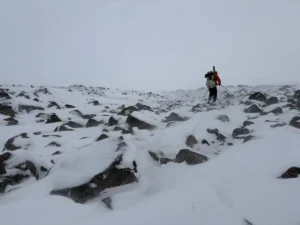
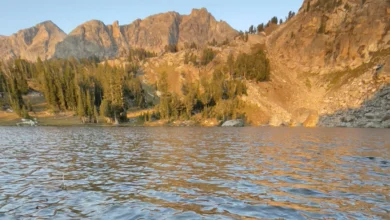
West Apostle Mountain and its neighbor, Ice Mountain, are part of a geographic cluster known for its technical difficulty. Unlike more accessible hiking trails, the terrain in this sector of the Sawatch Range is characterized by unstable boulder fields, steep scree slopes, and talus—a mixture of loose rock that becomes significantly more dangerous when coated in fresh snow.
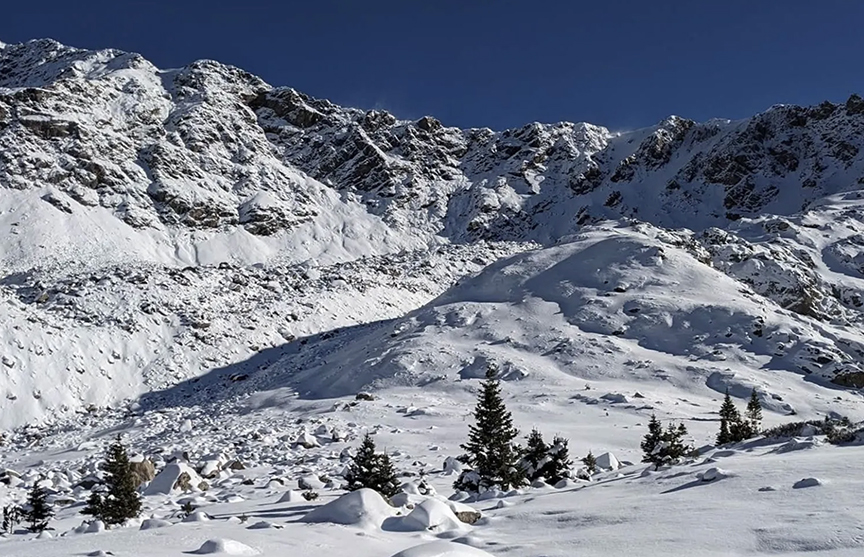
Local authorities noted that while the trailhead and lower basins may have seen only moderate snowfall, the high-altitude peaks were hammered by one to two feet of snow during the same window. For even the most seasoned mountaineers, a one-foot layer of snow can obscure essential trail markers, create hidden voids between rocks, and significantly increase the risk of slips or falls. The transition from a manageable autumn trek to a high-risk winter mountaineering scenario can occur in a matter of hours in the Rockies.
The technical nature of Ice Mountain, in particular, necessitates a high level of proficiency in route-finding and self-arrest techniques. The Chaffee County Sheriff’s Office emphasized that the route is intended for those with advanced skill sets, even under optimal, dry conditions. When weather degrades, the margin for error effectively vanishes.
Supporting Data and Statistical Context
The tragic deaths of Matsuda and Donlon reflect a broader trend in Colorado mountaineering. Data gathered over the last decade indicates that the Sawatch Range, which contains several of Colorado’s "14ers" (peaks exceeding 14,000 feet) and "13ers," is a frequent site for search-and-rescue interventions.
According to mountaineering statistics tracked by state agencies and independent research groups, the primary cause of fatalities in this region is accidental falls. These incidents are often precipitated by loose footing, sudden disorientation due to whiteout conditions, or exhaustion resulting from extreme cold. Between 2010 and 2017 alone, eight fatalities were recorded in the Sawatch Range, with many more near-misses requiring helicopter evacuations.
The combination of rapidly changing temperatures, the weight of winter gear, and the psychological fatigue of navigating high-exposure terrain creates a high-risk environment. The incident at West Apostle Mountain aligns with historical data suggesting that the late autumn transition period is particularly lethal, as hikers often underestimate the disparity between the weather at the trailhead and the conditions at the summit.
Official Responses and Community Impact
The loss has deeply affected the Colorado Mountain College community, an institution where students often train for careers in forestry, outdoor education, and emergency services. In a professional, yet grieving capacity, faculty and local officials have expressed their condolences. The Chaffee County Sheriff’s Office managed the multi-agency response with efficiency, utilizing a sophisticated array of search assets including drones, fixed-wing aircraft, and canine units.

While the Sheriff’s Office has refrained from speculating on the specific sequence of events that led to the collapse of the tent and the subsequent loss of life, the emphasis remains on the unpredictability of the wilderness. The incident has reignited local discussions regarding the necessity of mandatory check-in protocols for students participating in high-risk outdoor activities, as well as the imperative for real-time weather monitoring in mountainous regions.
Implications for High-Altitude Mountaineering
The incident carries significant implications for the broader mountaineering community. It serves as a stark reminder that even those with specialized training and high-level aspirations—such as future wildland firefighters and professional guides—are susceptible to the environmental hazards of the Rocky Mountains.
Industry experts often point to the "normalization of deviance" in the outdoors, where experienced hikers may gradually accept higher levels of risk due to past successes. In the case of Matsuda and Donlon, their status as experienced hikers underscores that technical skill alone cannot always overcome a catastrophic shift in weather. Moving forward, safety advocates are likely to reiterate the importance of the "turn-around time" principle—a rule where hikers commit to retreating if a summit is not reached by a certain hour, regardless of progress. Furthermore, the reliance on, and potential failure of, shelter in heavy snow conditions will likely be a topic of review for future wilderness safety courses.
The tragic passing of these two students is not merely a local news item but a profound loss for the future of the outdoor industry. Their commitment to learning the skills required to navigate and protect the environment is a testament to their character. As the investigation into the specific circumstances concludes, the memory of the two men serves as a solemn call to vigilance for all who venture into the high country. It is a reminder that the mountains do not distinguish between the amateur and the expert; they demand respect, preparation, and an ever-present awareness of the thin line between a successful expedition and a life-ending tragedy. The wilderness, while a place of profound beauty and professional calling, remains a landscape where the smallest miscalculation, compounded by the volatility of nature, can lead to devastating consequences.