The Grandeur of the European Winter Ball Season: A Guide to Continent’s Most Prestigious Social Rituals

As the winter chill descends upon Europe, a centuries-old cultural machinery stirs into motion. Across the continent, historic opera houses, imperial palaces, and grand concert halls transition from centers of artistic performance into settings for one of the world’s most enduring social traditions: the formal ball. These events serve as a living bridge to a bygone era of aristocracy and ceremony, offering a rare opportunity for contemporary participants to engage with the refined rituals of the 18th and 19th centuries. From the precision of the Viennese waltz to the theatrical masquerades of Venice and the debutante traditions of London, the European ball season represents a significant intersection of history, diplomacy, and high-stakes social performance.
The Epicenter: Vienna’s Ball Culture
While grand celebrations occur in various European capitals, Vienna remains the undisputed global capital of the ball. According to Thomas Schäfer-Elmayer, the director of the Elmayer Dance School—an institution synonymous with Viennese etiquette—the city hosts approximately 520 balls during the winter season. This staggering figure reflects the depth of the tradition, which is deeply embedded in the Austrian social fabric.
Among these hundreds of gatherings, roughly 50 are categorized as "traditional," held in the city’s most significant architectural landmarks, including the Vienna State Opera, the Musikverein, the Konzerthaus, and the Hofburg Imperial Palace. The historical significance of these venues is profound; they were the sites where the Congress of Vienna and other imperial gatherings solidified the city’s reputation as the heartbeat of European high society. Today, these events are not merely nostalgic reenactments; they are vibrant, modern gatherings that maintain strict adherence to historical protocol while evolving to incorporate contemporary social dynamics.
Despite the imposing architecture and the rigid dress codes, the atmosphere is notably buoyant. Schäfer-Elmayer emphasizes that the hallmark of the Viennese ball is not solemnity, but rather a unique blend of elegance and good-humored revelry. The objective is to sustain a cultural legacy while ensuring that participants—both local and international—experience the genuine joy that characterizes the city’s social spirit.
Distinguishing the Most Prestigious Events

For the uninitiated, navigating the sheer volume of invitations can be complex. Theo Germain, founder and CEO of the luxury concierge service TGZ, suggests that the selection of a ball should be dictated by the specific cultural experience the guest seeks.
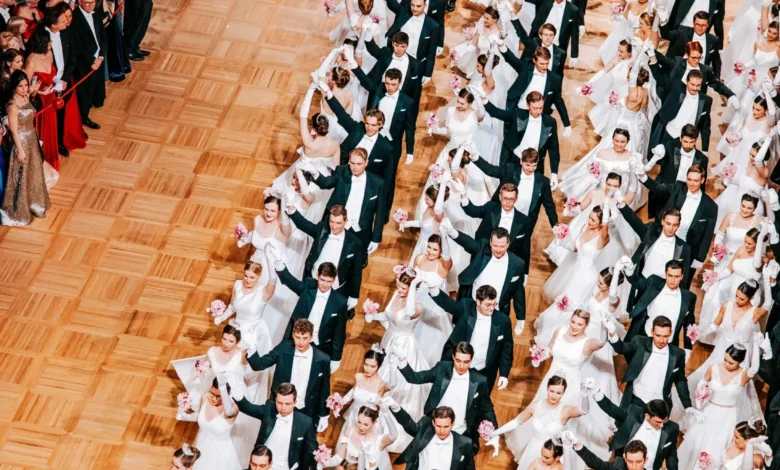
The Vienna Opera Ball stands as the definitive event on the calendar. Held at the Vienna State Opera, the auditorium is meticulously transformed into a grand ballroom, with the parterre floor elevated to the level of the stage. With tickets beginning at approximately €435, the event is a masterclass in ceremony. The opening committee, featuring debutantes in white gowns and tails-clad gentlemen, performs a choreographed entrance that sets the tone for the entire evening.
For those whose interests lean toward musicology, the Vienna Philharmonic Ball at the Musikverein is widely considered the superior choice. The venue, globally renowned for its acoustic perfection, provides a backdrop that is arguably unmatched for lovers of classical music. Alternatively, the Coffeehouse Owners’ Ball at the Hofburg offers a more localized, yet equally opulent, immersion into the city’s historic social traditions. This event serves as a tribute to the legendary Viennese coffeehouse culture, which was recognized by UNESCO as an Intangible Cultural Heritage.
Beyond Austria, the European landscape offers distinct variations on the theme:
- London: The Queen Charlotte’s Ball, established in 1780, remains the gold standard for debutante traditions. As the oldest of its kind, it preserves a specific lineage of British aristocratic practice, focusing on the formal presentation of young women to society.
- Paris: Le Bal des Débutantes, often referred to as "Le Bal," offers a modern, high-fashion-centric interpretation of the tradition. It is a cosmopolitan event that draws international participants and serves as a premier networking opportunity for the global elite.
- Venice: Il Ballo del Doge is arguably the most theatrical. Set in a Venetian palace, it requires full period costume and offers an immersive, immersive experience that prioritizes spectacle over the traditional waltz-heavy format of the Austrian balls.
Chronology and Protocol: The Anatomy of a Ball
The structure of a traditional European ball is highly standardized. The evening invariably begins with the "Opening Ceremony." This is not a casual arrival; it is a meticulously choreographed sequence involving a debutante committee and, often, a professional dance troupe or opera performance. The transition from the formal opening to the social segment is marked by the phrase "Alles Walzer!"—the command that officially opens the floor to all attendees.
A central, often overlooked element of these evenings is the quadrille. Unlike the waltz, which is improvisational in nature, the quadrille is a communal dance performed to specific, time-honored instructions. It is a highly social activity that requires participants to coordinate with others, often resulting in moments of lighthearted chaos for those unfamiliar with the steps. Experts strongly advise first-time attendees to book private lessons in the weeks leading up to the event, as the ability to participate in the quadrille significantly elevates the guest experience.

The Importance of Etiquette and Dress Codes
The expectation of formal attire is perhaps the most visible barrier to entry. Schäfer-Elmayer is explicit: the dress code is not a suggestion, but a requirement. For gentlemen, the gold standard is the "Frack" (white tie), though a dinner jacket (black tie) is accepted at many of the less strictly ceremonial events. For ladies, the mandate is a floor-length evening gown. Failure to adhere to these standards can result in exclusion or social discomfort.
In Venice, the requirements shift from "formal" to "costumed," necessitating a more significant investment of time and resources to secure authentic period attire. In the context of the London debutante season, the requirements are even more nuanced, often involving specific historical decorations and accessories that signify a connection to the British aristocracy.
Strategic Planning and Logistical Realities
The common mistake made by international visitors is to treat the ball as a standalone event. Industry experts recommend a lead time of six to 12 months for proper planning. This duration is necessary not just for securing tickets—which are frequently allocated via subscription or invitation—but for arranging the necessary support infrastructure.
Logistics include, but are not limited to:
- Wardrobe: Coordination with high-end ateliers (such as the Juergen Christian Hoerl atelier in Vienna) for gown fittings, tailcoat rentals, or alterations.
- Beauty: Pre-scheduling in-suite hair and makeup services.
- Etiquette: Private dance lessons to master the waltz and the quadrille.
- Documentation: Hiring professional photographers or videographers, where permitted by the venue’s specific policies.
Furthermore, attendees must distinguish between basic admission and the various tiers of service. A general admission ticket may not include a reserved seat, which is essential for observing the opening ceremonies. Private boxes and table reservations are often separate transactions and represent the core of the social experience, providing a "home base" from which to move through the event.

Broader Implications: The Preservation of Social Heritage
The continued success of the European ball season highlights an interesting trend: in an increasingly digitized and fast-paced world, there is a sustained, if not growing, demand for slow-paced, highly ritualized, and analog social experiences. These balls function as a repository for cultural memory, preserving etiquette, dance forms, and musical traditions that might otherwise fade into obsolescence.
From an economic perspective, the season is a vital component of the winter luxury travel market in cities like Vienna and Venice. It sustains a localized economy of artisans—tailors, dance instructors, florists, and event planners—who specialize in maintaining the high standards required for these occasions.
However, the future of these events relies on their ability to remain relevant. While the core of the tradition remains firmly rooted in the 18th century, the organizers have shown a pragmatic approach to inclusion. By balancing the "spectacle" for the observer with the "participation" for the enthusiast, the ball season ensures that it is not merely a museum piece, but a functional social space.
For the attendee, the final takeaway is simple: research and preparation are the keys to enjoyment. As Theo Germain notes, the most famous event is not necessarily the best fit for every guest. By identifying whether one is primarily interested in the musical performances, the social networking, or the sheer spectacle of the pageantry, a visitor can transform a potentially overwhelming evening into an immersive engagement with history. The European ball season is, at its heart, an invitation to step out of the contemporary moment and into a world where grace, timing, and tradition are the highest currencies.