Navigating Norwegian Cruise Line’s Free at Sea and Free at Sea Plus Programs: A Comprehensive Cost and Value Analysis


The modern cruise industry has evolved far beyond the traditional all-inclusive model popularized in decades past, shifting instead toward a la carte pricing strategies supplemented by customizable bundled packages. Among these industry offerings, Norwegian Cruise Line (NCL) has long distinguished itself through its signature promotional tier: the Free at Sea program. Designed to give passengers granular control over their onboard expenditures, the program allows travelers to selectively opt into or remove bundled amenities—ranging from beverage packages to specialty dining credits—in an effort to tailor both the experience and the final ticket price. However, as ancillary spending continues to represent an increasingly vital revenue stream for major cruise lines, understanding the precise financial mechanics, operational limitations, and true intrinsic value of these promotional add-ons has become essential for cruise passengers.
Understanding the Standard Free at Sea Framework
To evaluate the utility of Norwegian’s promotional packages, one must first examine the baseline inclusions and structural exclusions of the standard Free at Sea tier. Marketed as a value-add perk for bookings made across NCL’s modern fleet, the standard package is not an all-inclusive pass in the literal sense. Rather, it functions as a consolidated voucher system for four primary onboard commodities: Wi-Fi connectivity, shore excursions, alcoholic and non-alcoholic beverages, and specialty dining.
Under the parameters of the standard package, each registered guest in a stateroom receives a complimentary 150-minute Wi-Fi package intended to last the duration of the sailing. While adequate for checking essential emails or touching base with family onshore, modern digital travelers often find this minute-capped restriction insufficient for remote work or continuous social media usage. For shore excursions, the program awards a $50 credit applicable toward eligible port activities, though this credit is strictly restricted to the first guest listed on the stateroom reservation.
The beverage component of the standard package delivers an unlimited open bar covering a wide array of spirits, draft beers, wines by the glass, and fountain sodas up to a specified monetary threshold. Premium beverages, specialty coffees, energy drinks, and entire bottles of wine or champagne remain excluded, requiring out-of-pocket payment or the payment of a price-difference surcharge. Similarly, complimentary specialty dining meals are factored into the reservation, with the total number of allotted visits scaling upward in direct correlation to the overall length of the cruise itinerary.
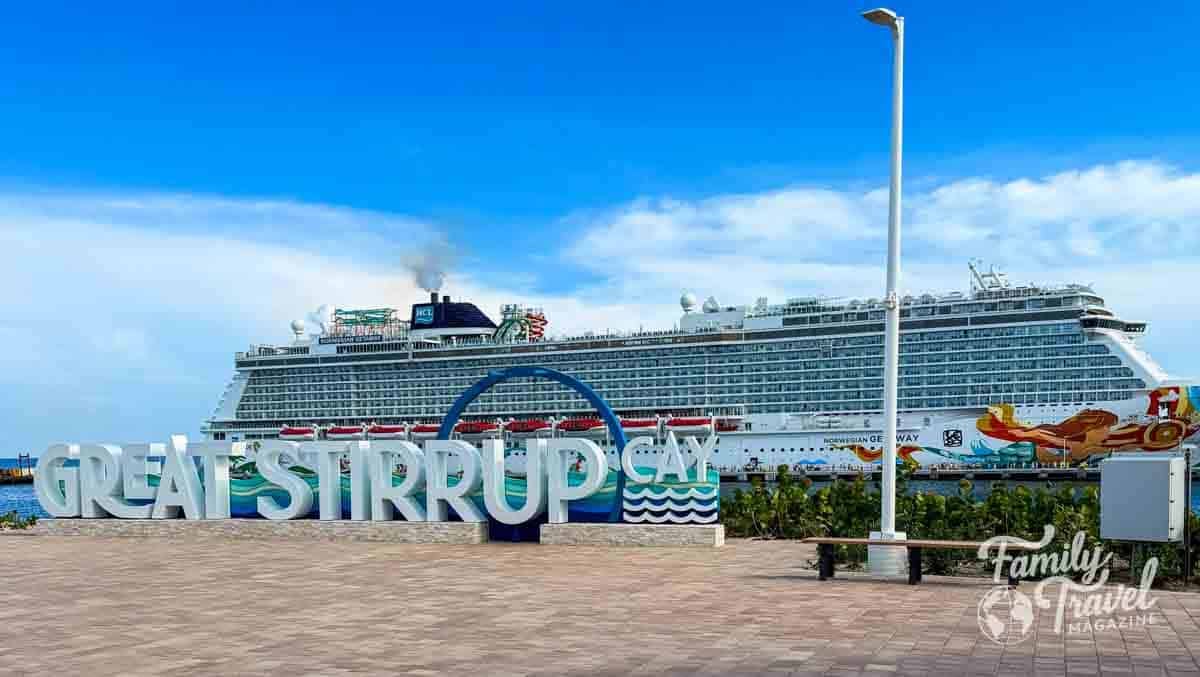
Crucially, while the standard package bundles mandatory gratuities associated with the open bar and specialty dining services into its baseline cost, it expressly excludes daily hotel service charges and room steward gratuities. These hotelier tips continue to accrue on a per-person, per-day basis and must be settled separately by the passenger unless covered by a distinct travel agency promotion or subsequent upgrade tier. Furthermore, specific onboard venues and attractions—such as independent concessionaires, arcade games, casino play, spa treatments, and select newly developed island amenities like the Great Tides Waterpark at NCL’s private destination, Great Stirrup Cay—fall outside the scope of the standard package, though the $50 shore excursion credit can occasionally be leveraged toward qualifying private island rentals, such as beachside cabanas.
Evolution of the Product: The Introduction of Free at Sea Plus
As consumer demands shifted toward frictionless, fully inclusive vacation experiences, Norwegian Cruise Line introduced an enhanced iteration of its promotional lineup: the Free at Sea Plus tier. Positioned as a comprehensive premium upgrade, this supplementary tier addresses many of the common limitations, restrictions, and out-of-pocket incidental expenses associated with the standard package.
Priced at a flat rate of $49.99 per person, per day, the Free at Sea Plus add-on requires explicit operational compliance from travelers: it must be purchased for every occupant assigned to a specific stateroom and must be secured no later than 72 hours prior to the scheduled departure date. Reduced pricing structures, age-based restrictions, and specific beverage limitations apply to minor children sharing the cabin.
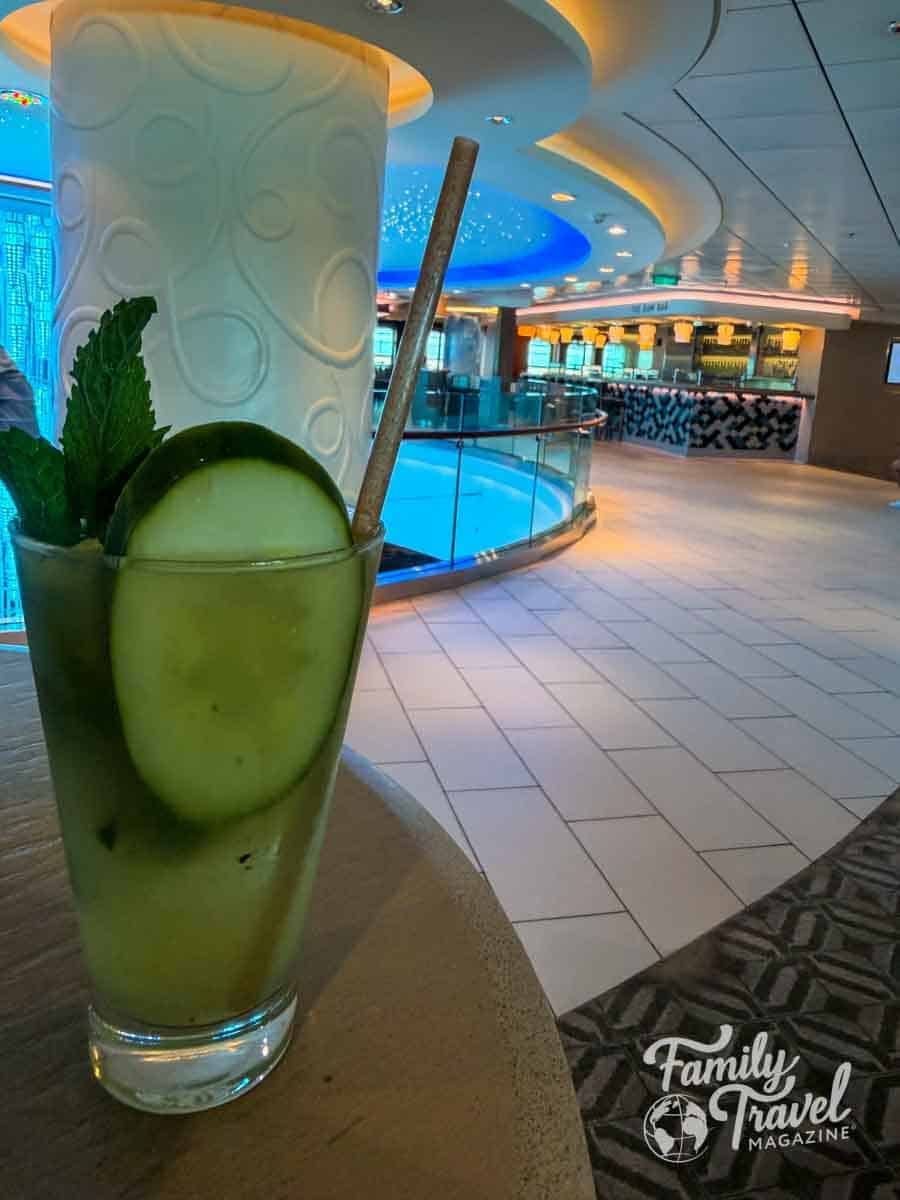
The operational scope of the Free at Sea Plus package significantly expands upon its predecessor. Instead of a restricted minute-based Wi-Fi allowance, guests receive unlimited, unrestricted Wi-Fi access for the duration of the voyage, often including streaming capabilities depending on the ship’s technological infrastructure. The beverage program is likewise elevated, removing the strict price caps on the open bar to encompass top-shelf liquor brands, a broader selection of premium wines by the glass, and specialty artisan cocktails.
Furthermore, the Plus tier integrates daily access to specialty coffee venues such as onboard Starbucks locations, unlimited still and sparkling bottled water throughout all bars and dining rooms, and an expanded specialty dining allocation. Rather than limiting guests to a select number of complimentary meals based on itinerary length, the Plus package frequently expands dining flexibility or stacks additional percentage discounts onto subsequent specialty restaurant bookings. Most notably, the Free at Sea Plus upgrade absorbs the cost of prepaid daily service charges (hotel and gratuity fees), consolidating what is traditionally the largest post-booking surprise expense into a single upfront price point.
Financial Analysis and Methodology for Determining Value
Determining whether the standard Free at Sea program or the enhanced Free at Sea Plus upgrade represents a sound financial investment requires a rigorous, data-driven budgeting approach. Because NCL frequently advertises these packages as promotional incentives during the booking process, passengers must calculate the true net value by comparing the incremental package fees against estimated independent a la carte expenditures.
Financial analysts specializing in the travel sector recommend a step-by-step valuation methodology:
- Baseline Assessment: Review the base cruise fare with and without the promotional Free at Sea package attached. While NCL occasionally structures promotions where opting out lowers the base ticket price, the absolute price differential reveals the baseline monetary value assigned by the cruise line to the package elements.
- Utilization Audit: Objectively audit personal consumption habits. Quantify the expected number of alcoholic and specialty beverages consumed per day, the actual volume of specialty dining meals desired, the necessity of continuous internet connectivity, and the likelihood of booking eligible shore excursions.
- Incidental Accounting for Plus Upgrades: When analyzing the $49.99 per-person, per-day cost of the Free at Sea Plus tier, passengers must first subtract the baseline cost of mandatory daily service charges (hotel tips), which typically range between $20 and $25 per person daily depending on stateroom category. The remaining marginal cost—roughly $25 per person per day—must then be weighed against the value of unlimited Wi-Fi, premium coffee consumption, unlimited bottled water, and top-shelf liquor selections.
- Cabin-Wide Multipliers: Factor in that upgrades like Free at Sea Plus mandate participation by all guests in the stateroom. For families or couples where one traveler consumes significantly less alcohol or coffee than the other, the cumulative cabin cost must be averaged across both individuals to determine true economic viability.
Industry Context and Competitive Landscape
Norwegian Cruise Line’s reliance on structured promotional bundles is emblematic of a broader macroeconomic strategy within the contemporary cruise sector. Following the operational and financial disruptions of the early 2020s, major cruise operators—including Royal Caribbean International, Carnival Cruise Line, and Celebrity Cruises—increasingly leaned into pre-cruise ancillary sales to stabilize forward revenue streams and lock in consumer spending before passengers ever step foot on a vessel.
Programs such as Celebrity Cruises’ "Always Included" framework, Princess Cruises’ "Princess Plus," and Virgin Voyages’ inherently inclusive fare structure reflect differing philosophies on how to market transparency to consumers. NCL’s dual-tier approach (Free at Sea paired with the Plus upgrade) targets a psychographic profile of traveler that values customization. By allowing consumers to subtract unwanted perks or scale up into all-inclusive luxury, the cruise line captures price-sensitive bargain hunters while simultaneously monetizing convenience-driven travelers who prefer avoiding on-board incidental charges.
Industry observers note that ancillary spending accounts for a substantial percentage of total cruise line revenues, encompassing everything from specialty dining surcharges and shore excursions to internet packages and premium beverages. By bundling these services into predictable, pre-purchased tiers, NCL mitigates the risk of on-board sticker shock—a phenomenon historically known to dampen overall passenger satisfaction ratings—while smoothing out cash flow prior to embarkation.
Operational Implications and Consumer Takeaways
For prospective cruisers, navigating the intricacies of Norwegian’s promotional packages underscores the importance of pre-trip planning. Failing to evaluate these options prior to the 72-hour cutoff window for the Plus upgrade can result in missed savings, particularly for travelers who subsequently purchase expensive individual internet plans, premium coffees, or top-shelf drinks on a daily a la carte basis.
Ultimately, neither the standard Free at Sea nor the Free at Sea Plus package is universally optimal for every demographic. Budget-conscious travelers who rarely consume alcohol, maintain minimal digital connectivity needs while at sea, and prefer the main dining rooms over specialty venues may find greater economy in opting out of promotional tiers where permitted, or sticking strictly to the baseline standard package. Conversely, remote professionals, culinary enthusiasts, and multi-generational families seeking absolute financial predictability often find that the comprehensive nature of the Plus upgrade neutralizes the anxiety of unexpected onboard incidental bills. As cruise pricing models continue to evolve, conducting a personalized, mathematically grounded cost analysis remains the single most effective tool for optimizing value at sea.