MakeMyTrip Acquires Majority Stake in Quick Ride to Dominate India’s Shared Mobility Market

MakeMyTrip, India’s leading online travel aggregator, announced on Friday that it has secured a majority stake in Quick Ride, a prominent Bengaluru-based ride-pooling platform. This strategic acquisition marks a significant pivot for the Nasdaq-listed travel giant, signaling its aggressive entry into the daily commute and shared mobility ecosystem. While the financial specifics of the deal remain undisclosed, the move consolidates MakeMyTrip’s position in the ground transportation sector, creating a robust service portfolio that now spans intercity bus travel, car rentals, and now, intracity ride-sharing.
The acquisition comes at a time when MakeMyTrip is increasingly looking to diversify its revenue streams beyond the volatile aviation and hotel booking sectors. By integrating Quick Ride into its expansive infrastructure, the company is positioning itself to capture a larger share of the "everyday traveler’s wallet," moving beyond leisure and business tourism into the realm of daily urban transit.
The Strategic Rationale Behind the Acquisition
Quick Ride has carved out a unique niche in the Indian mobility landscape. Unlike traditional ride-hailing services such as Uber or Ola, which operate primarily as on-demand taxi aggregators, Quick Ride focuses on ride-pooling. By connecting commuters traveling along similar routes, the platform allows individuals to share rides and split fuel costs, addressing both traffic congestion and the rising cost of urban mobility.
For MakeMyTrip, the value proposition is twofold. First, it provides immediate access to a captive audience of daily commuters, particularly within the high-traffic IT corridors of Bengaluru, Pune, and Hyderabad. Second, Quick Ride’s business model is inherently "asset-light" and scalable. By fostering a community of verified users—many of whom are corporate employees—the platform offers a layer of safety and reliability that is highly valued in the Indian market.
The acquisition was preceded by a critical internal restructuring at Quick Ride. To facilitate the deal, the company transitioned its core ride-pooling business and brand identity into a new corporate entity, Co Ride M. This move suggests that the ride-pooling division was the primary asset of interest for MakeMyTrip, potentially leaving room for the original entity to pursue other ventures or logistics-based initiatives independently.
A Chronology of MakeMyTrip’s Ground Transport Expansion
MakeMyTrip’s journey into ground transportation has been a decade-long evolution defined by strategic consolidation and aggressive M&A activity.
- 2019: MakeMyTrip significantly bolstered its ground transport division by acquiring a majority stake in Savaari Car Rentals, an intercity cab service. This allowed the company to offer a seamless "end-to-end" booking experience for travelers moving from airports to smaller towns or satellite cities.
- 2020-2022: Despite the pandemic-induced slowdown in the travel sector, MakeMyTrip doubled down on its redBus subsidiary, which it had acquired earlier. redBus solidified its position as the market leader in the Indian bus ticketing industry, integrating digital payment solutions and enhanced tracking features.
- 2023: MakeMyTrip reported record growth in its "others" category, which includes ground transport, as domestic travel in India witnessed a post-pandemic surge. During this period, the company began exploring synergies between its flight/hotel customers and local ground transport needs.
- 2025: The acquisition of Quick Ride marks the first major move of the year, signaling an intent to capture the lucrative intracity commute segment, which remains largely fragmented and dominated by informal ride-sharing groups.
Market Data and the Mobility Landscape in India
The Indian shared mobility market is projected to reach significant valuations by 2030, driven by rapid urbanization and the rising cost of private vehicle ownership. According to industry reports from firms like Mordor Intelligence and RedSeer, the ride-sharing sector in India is expected to maintain a compound annual growth rate (CAGR) of over 15% through the end of the decade.
Quick Ride’s success lies in its penetration of the corporate sector. The platform currently works with over 1,000 corporate partners, IT parks, and business campuses. This B2B2C (business-to-business-to-consumer) model is highly attractive to MakeMyTrip, as it offers a recurring customer base rather than the one-off transactional nature of leisure travel.
Data from the Ministry of Road Transport and Highways indicates that the number of registered vehicles in India’s top eight metropolitan areas continues to outpace infrastructure development. This has led to a surge in demand for carpooling as a sustainable, cost-effective alternative. With fuel prices remaining elevated, the incentive for commuters to use platforms like Quick Ride has never been higher, providing MakeMyTrip with a massive, ready-to-scale user base.
Institutional Responses and Corporate Outlook
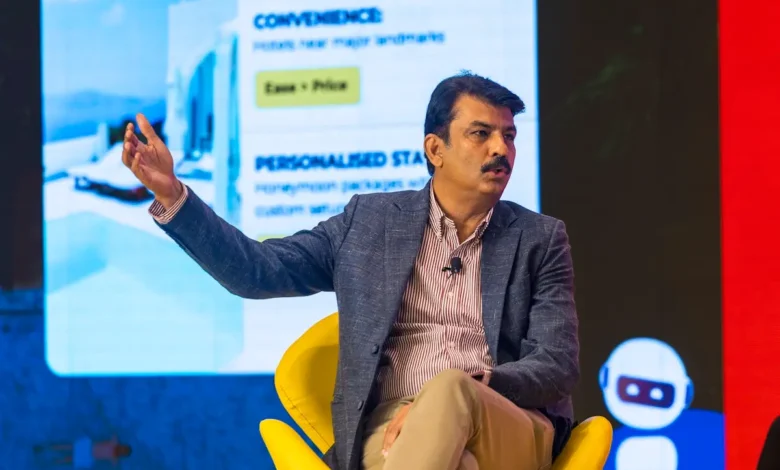
During the recent Skift India Forum, MakeMyTrip Co-founder and Group CEO Rajesh Magow emphasized the company’s vision to become a "full-stack" travel provider. While specific comments on the Quick Ride deal were kept within the framework of long-term strategy, Magow noted that the company’s focus is on removing friction from the entire travel journey—from the moment a user leaves their home to the moment they reach their destination.
"Our goal is to be the platform of choice for every type of travel," a company spokesperson stated in a follow-up briefing. "By integrating Quick Ride, we are addressing the pain point of urban commuting, which is a natural extension of our current service offerings. We see a significant opportunity to cross-pollinate our massive user base with the commute-focused offerings of Quick Ride."
While the startup community in Bengaluru has reacted with cautious optimism, analysts suggest that the integration of a ride-pooling platform into a traditional travel aggregator will require careful execution. The regulatory landscape for ride-sharing in India is still evolving, with various state governments having differing stances on private carpooling and fuel-cost sharing.
Implications for the Competitive Landscape
The acquisition sets the stage for a new competitive dynamic in the Indian transport sector. By adding Quick Ride to its ecosystem, MakeMyTrip is effectively creating a "super-app" for travel that covers everything from international flight bookings to the daily commute to the office.
This puts increased pressure on competitors like EaseMyTrip and Yatra, which have historically focused on the air and hotel segments. Furthermore, it creates a potential point of tension with traditional ride-hailing giants like Uber and Ola. While those companies focus on on-demand, professional driver-based models, Quick Ride’s peer-to-peer model offers a lower price point, potentially siphoning off price-sensitive daily commuters who are currently using cab services.
The broader implication is that the "travel" industry in India is no longer just about tourism. It is about mobility. As urban density increases, the lines between "traveling" and "commuting" are blurring. MakeMyTrip is betting that a customer who uses their platform for their daily office commute will be more likely to use it for their next vacation booking, creating a high-frequency engagement cycle that is the "holy grail" of the internet economy.
Challenges Ahead: Regulatory and Operational Hurdles
Despite the clear synergies, the integration of Quick Ride will not be without challenges. The primary obstacle is the regulatory gray area regarding carpooling. Several state transport departments have periodically scrutinized carpooling apps, questioning whether they violate commercial vehicle permit regulations. MakeMyTrip will need to leverage its substantial legal and government relations resources to navigate these local compliance requirements.
Additionally, there is the challenge of brand integration. Quick Ride has built a loyal user base that values its specific interface and community-driven features. Maintaining this identity while folding it into the larger MakeMyTrip corporate structure will require a delicate balance. If the user experience is compromised by over-monetization or overly aggressive cross-selling, there is a risk that the existing community might migrate to other niche players or return to informal WhatsApp-based ride-sharing groups.
Conclusion
The acquisition of a majority stake in Quick Ride by MakeMyTrip is a calculated, strategic move that reflects the shifting priorities of India’s travel sector. By diversifying into daily mobility, MakeMyTrip is building a moat around its business, ensuring that its platform remains indispensable to the Indian consumer throughout the year, not just during the holiday season.
As the integration progresses, industry observers will be watching closely to see if this model can be replicated in other major cities across the country. If successful, it could signal a wave of further consolidation in the mobility space, with traditional travel companies seeking to capture the "last mile" and "daily mile" of the modern Indian traveler. For now, MakeMyTrip has secured a vital piece of the urban puzzle, positioning itself for a future where travel and commute are increasingly viewed as a singular, unified experience.