The Great Thanksgiving Turkey Debate: Analyzing the Cultural Shift Against a Traditional Centerpiece

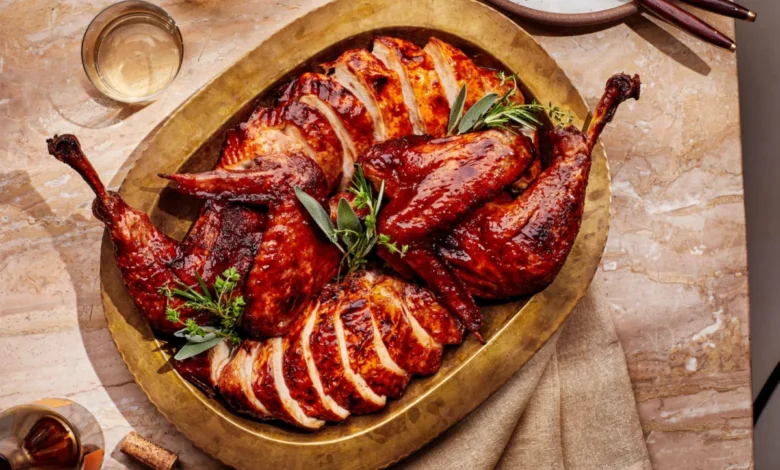
The Thanksgiving turkey has long served as the symbolic anchor of the American holiday table, yet in recent years, this culinary tradition has faced an unprecedented wave of public criticism. What was once considered the indisputable centerpiece of the harvest feast is increasingly being challenged by food critics, lifestyle publications, and home cooks who argue that the bird is inherently dry, flavorless, and logistically impractical. This shift in sentiment reflects a broader cultural trend toward contrarianism in food media, where rejecting established traditions has become a mechanism for establishing individual culinary identity.
A Chronology of the Anti-Turkey Sentiment
The discourse surrounding the suitability of turkey for Thanksgiving has evolved significantly over the last decade. Historically, the bird’s presence was rarely questioned, rooted in the mid-19th-century efforts of Sarah Josepha Hale, who campaigned for Thanksgiving to become a national holiday. As the holiday standardized, so did the menu.
However, the late 2010s marked a pivot point. As digital food media expanded, publications began to challenge the "hegemony" of the turkey. In 2020, during the height of the pandemic—a time when smaller gatherings necessitated smaller, more practical meals—outlets like Business Insider explicitly suggested abandoning the traditional roast turkey in favor of more manageable alternatives. By 2023 and 2024, the critique had sharpened. Vox and Milk Street, among others, began publishing features characterizing the bird as a "flavorless" relic, with some commentators suggesting that anyone who claims to enjoy the traditional preparation is merely performing a social obligation. This trend mirrors the "cake vs. pie" debates of the early 2010s, where consumer preference became inextricably linked to social signaling and the pursuit of digital engagement through controversial opinions.
The Anatomy of the Culinary Critique
The primary arguments against the Thanksgiving turkey are centered on chemistry and logistics. Culinary critics frequently point to the difficulty of roasting a large bird—a centerpiece that often exceeds 15 pounds—without compromising the texture of the meat. Because the breast and the legs cook at different rates, amateur home cooks often find themselves with a bird that is simultaneously overcooked in one area and undercooked in another.
From a technical perspective, turkey is a lean meat with very little intramuscular fat. Without proper brining or specific roasting techniques, such as the en papillote method or spatchcocking, the muscle fibers are prone to rapid moisture loss. When the internal temperature reaches the USDA-recommended 165°F, the window for maintaining juiciness is narrow. Skeptics argue that this technical difficulty makes the turkey an inefficient choice for a celebratory meal, especially when compared to more forgiving proteins like beef tenderloin, prime rib, or even glazed ham.
Supporting Data and Consumption Trends
Despite the vocal opposition in the media, market data suggests that the turkey remains the dominant preference for the majority of American households. According to the National Turkey Federation (NTF), approximately 88% of Americans report eating turkey on Thanksgiving. While consumption rates have seen minor fluctuations due to supply chain issues and outbreaks of Highly Pathogenic Avian Influenza (HPAI), which have occasionally driven up retail prices, the demand remains robust.
The economic implications of the turkey industry are substantial. The U.S. turkey industry generates billions of dollars annually, with a significant percentage of total yearly sales occurring in the two months surrounding the Thanksgiving holiday. Furthermore, the "leftover economy" plays a critical role in the holiday’s appeal. Consumer surveys indicate that a majority of households view the versatility of leftover turkey—utilized in soups, stews, pot pies, and congee—as a primary benefit of the initial purchase. The argument for the turkey is often an argument for efficiency; it provides a multi-day culinary resource that smaller, single-meal proteins cannot match.
The Role of Modern Culinary Techniques
The disconnect between the "turkey is bad" narrative and the reality of the feast often stems from a lack of technical application. Culinary professionals argue that the failure of the turkey is not a failure of the bird itself, but a failure of methodology. The rise of accessible kitchen technology has significantly lowered the barrier to entry for cooking a high-quality bird.
- Meat Thermometers: The widespread adoption of digital, probe-based meat thermometers has allowed home cooks to track internal temperatures with precision, eliminating the guesswork that leads to "powdery" meat.
- Spatchcocking: By removing the backbone and flattening the bird, the surface area increases, allowing the skin to crisp evenly while ensuring the dark and white meat reach their respective optimal temperatures simultaneously.
- Dry Brining: The process of salting the bird 24 to 48 hours in advance draws moisture into the muscle fibers, significantly enhancing the bird’s ability to retain juices during the roasting process.
When these techniques are applied, the argument that turkey is "flavorless" is often neutralized. The "wild" or "gamey" notes that distinguish turkey from chicken—often cited as a drawback by critics—are viewed by proponents as a unique sensory profile that makes the holiday meal distinct from everyday dining.
The Broader Impact: Performance vs. Preference
The current trend of decrying the turkey can be categorized as a form of "contrarian consumption." In an era where food identity is a significant part of personal branding on social media, aligning oneself with the "hater" consensus provides a quick way to signal sophistication or a departure from "stuffy" traditions. This, however, risks overshadowing the communal aspects of the holiday.
The Thanksgiving meal is one of the few remaining domestic rituals where the labor of the host is central to the event. The criticism of the turkey often ignores the symbolic value of the labor involved. The act of preparing a large, complex bird is a ritualistic marker of the holiday; it designates the meal as an event, rather than a standard dinner. When media outlets encourage abandoning the turkey, they are effectively encouraging the abandonment of the specific, labor-intensive rituals that define the holiday’s structure.
Conclusion: Bridging the Gap
The debate over the Thanksgiving turkey is less about the quality of the poultry and more about the evolving nature of American holiday traditions. While the critique highlights legitimate technical challenges, the persistence of the turkey in the American diet confirms its status as a cultural staple.
For the average consumer, the path forward is not necessarily the abandonment of the tradition, but rather an elevation of the technique. As the culinary landscape continues to evolve, the turkey remains a focal point of debate, serving as a reminder of the intersection between food, heritage, and the modern urge to redefine tradition. Whether one chooses to embrace the bird or seek an alternative, the discourse surrounding the centerpiece has become as much a part of the modern Thanksgiving experience as the meal itself. Ultimately, the survival of the turkey as a holiday fixture depends not on its universal appeal, but on the continued commitment of home cooks to master the preparation of a meal that has defined American festivities for generations.