Nasi Lemak Tanglin stands as a preeminent culinary landmark in Kuala Lumpur, Malaysia, representing a traditional breakfast and lunch institution that has continuously served patrons since its establishment in 1948. Operating out of the Kompleks Makan Tanglin food complex, this heritage stall has earned a distinguished reputation for serving what many culinary historians and local gastronomes consider one of the finest iterations of Malaysia’s undisputed national dish. While variations of the fragrant rice dish stretch from Southern Thailand through Malaysia and into Singapore, the operational longevity, adherence to traditional preparation methods, and immense daily demand cement Nasi Lemak Tanglin’s status as a vital component of the nation’s gastronomic heritage.
Historical Context and Chronology of a Heritage Brand
The post-World War II era in British Malaya saw the proliferation of roadside food stalls and communal eating spaces, laying the foundation for modern Malaysian street food culture. Founded in 1948, Nasi Lemak Tanglin emerged during a period of urban development in Kuala Lumpur when open-air food complexes began organizing itinerant hawkers into centralized hubs. Over more than seven decades of continuous operation, the stall has transitioned from a modest neighborhood breakfast vendor into a widely recognized culinary destination, surviving significant socio-economic shifts, rapid urbanization, and the modernization of the capital city’s food and beverage sector.
Despite decades of culinary evolution in the Klang Valley, the kitchen staff at Nasi Lemak Tanglin maintains strict adherence to foundational preparation techniques. The operational day begins in the pre-dawn hours, long before the stall opens its service windows at 7:00 AM. The entire inventory of rice, curries, and accompaniments is prepared fresh daily, with a rigid operational policy: once the provisions are exhausted, the stall closes its shutters. Historically, this sell-out phenomenon occurs reliably by 11:30 AM or noon, requiring patrons—ranging from local office workers and civil servants to international food tourists—to arrive early to secure a plate.
Anatomical Breakdown of the Dish: Ingredients and Preparation

At its core, Nasi Lemak translates literally from Malay as "fat rice," a descriptor referring to the rich rice cooking process that forms the foundation of the meal. The preparation begins with long-grain rice steeped and simmered in fresh coconut milk, which imparts a rich, creamy texture and distinct flavor profile. Pandan leaves (screwpine leaves) are introduced during the steaming process, releasing aromatic compounds that give the rice its characteristic gentle fragrance.
Accompanying the rice are mandatory traditional elements designed to balance texture and flavor profiles:
- Ikan bilis (crispy fried anchovies) and roasted peanuts, which provide essential salinity and crunch.
- Fresh cucumber slices, offering a crisp, cooling textural contrast to the spiced elements.
- Sambal, a complex chili paste considered the literal and figurative glue of the dish. Unlike commercial variants, authentic Tanglin sambal requires hours of slow reduction involving shallots, garlic, chili varieties, and sometimes fermented shrimp paste (belacan), resulting in a balanced flavor profile that blends heat, sweetness, and subtle tanginess.
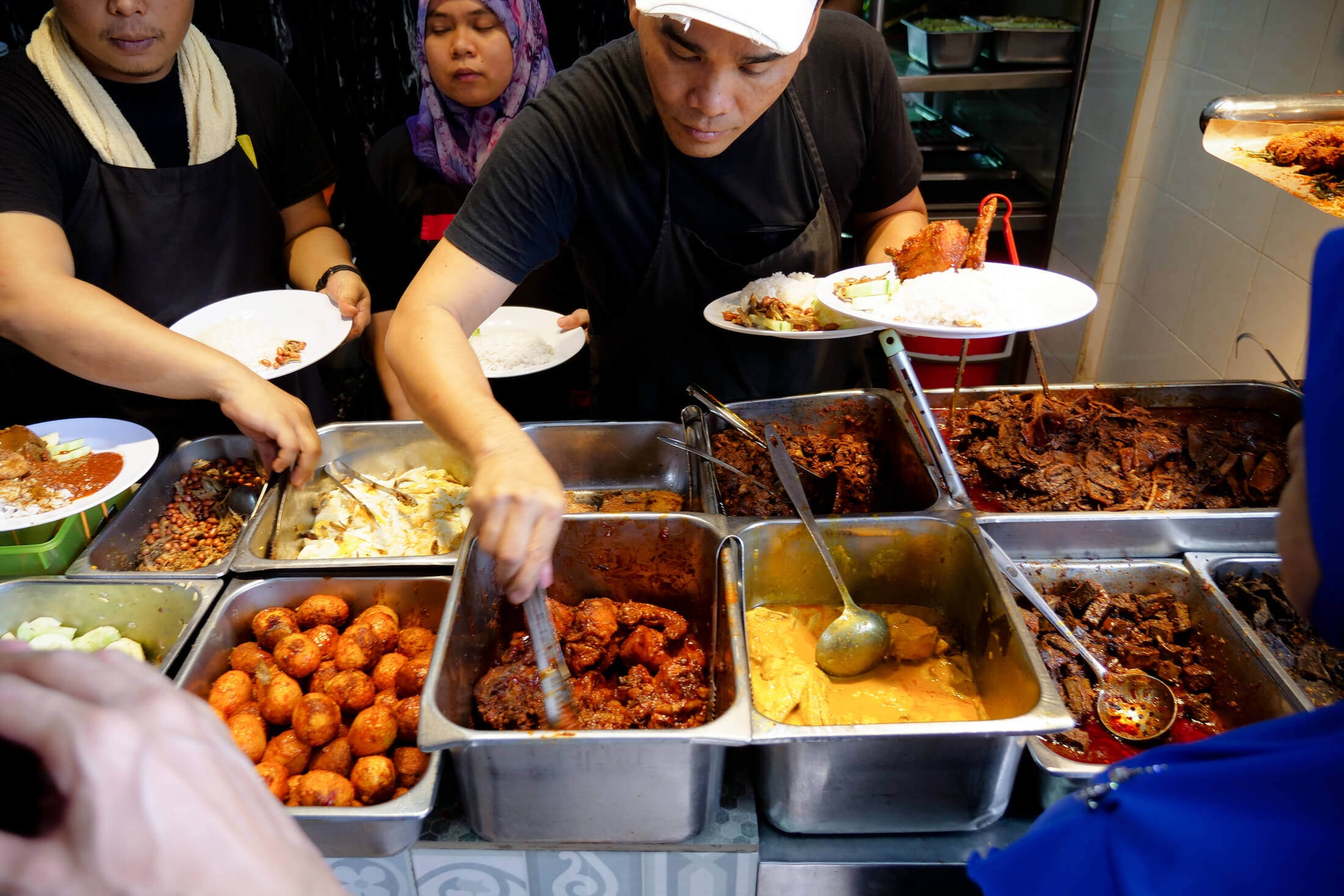
Beyond the baseline components, patrons customize their plates with an array of proteins and heavily spiced gravies ladled directly over the food. Signature options include beef rendang—slow-cooked in coconut milk and spices until tender—and traditional offal preparations such as beef spleen (sotong/paru) and intestines (kolong), which absorb the complex flavors of dark, aromatic curry sauces. A staple hard-boiled or fried chicken egg completes the standard assembly.

Logistics, Patronage, and the Dining Experience
Located within the Kompleks Makan Tanglin food hall, the establishment operates in an open-air environment surrounded by lush greenery characteristic of the capital’s older administrative and residential districts. Weekend and weekday rushes alike present notable logistical challenges, particularly regarding vehicular access; patrons frequently report circling the adjacent parking infrastructure multiple times during peak breakfast hours between 9:00 AM and 11:00 AM.
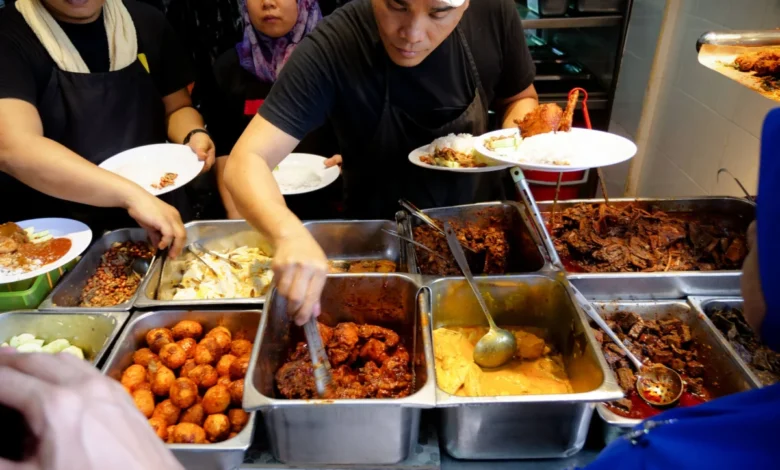
To accommodate the steady stream of diners, the management utilizes a streamlined assembly-line ordering system. Customers queue at the primary counter, receive a base portion of coconut rice, and verbally select their desired curries, proteins, and vegetables. Staff members rapidly ladle the selections onto reusable plates, execute immediate point-of-sale transactions, and direct guests to communal seating areas.

The dining atmosphere is further defined by cultural amenities common to traditional Malaysian food complexes, such as live musical performances featuring genres like "Pop Yeh Yeh"—a localized synthesis of Western rock and roll and traditional Malay pop music popular in the 1960s. This integration of local arts creates a relaxed, community-centric environment that transcends a purely transactional dining experience.
Socio-Economic Significance and Modern Adaptation
In recent years, Nasi Lemak Tanglin has adapted to broader environmental and infrastructural policies enacted by the Malaysian government. While historical purists often favor traditional packaging methods—such as wrapping individual portions in banana leaves and newspaper—the establishment utilizes reusable plates within its seating precinct. This operational choice aligns with national initiatives aimed at curbing single-use plastic waste and mitigating the environmental degradation associated with the over-harvesting of banana leaves from protected jungle ecosystems.

Economically, Nasi Lemak remains one of the most accessible and egalitarian culinary categories in Malaysia. Base pricing for a standard plate of Nasi Lemak at Tanglin is maintained at approximately 2 Malaysian Ringgit (RM), with customized protein additions ranging from 1 to 5 RM per item. A comprehensive meal for a group of four diners typically averages around 35 RM (approximately $8.50 USD), underscoring the dish’s role in providing affordable, calorie-dense nutrition across diverse socioeconomic demographics.
Broader Impact on Tourism and Culinary Diplomacy
As culinary tourism continues to drive significant international travel to Southeast Asia, establishments like Nasi Lemak Tanglin serve as informal ambassadors of Malaysian culture. Tourism boards and gastronomic researchers frequently highlight heritage hawker complexes as critical repositories of intangible cultural heritage. By maintaining historical recipes through generations of cooks, Nasi Lemak Tanglin exemplifies the preservation of traditional foodways in a rapidly globalizing metropolitan landscape.

For travelers and researchers examining the sociology of Malaysian food culture, the site offers a clear window into how communal dining spaces foster cross-cultural dialogue. The shared experience of queueing, selecting regional delicacies, and consuming meals communally reinforces the social cohesion inherent in Malaysia’s multicultural society. Nasi Lemak Tanglin continues to operate daily from 7:00 AM to 1:00 PM at Kompleks Makan Tanglin, remaining an essential point of study and consumption for those seeking to understand the authentic culinary identity of Kuala Lumpur.