Wat Phu Tok: Thailand’s Adventurous Temple Offers a Thrilling Ascent Through Buddhist Meditation Levels

Bueng Kan province, nestled in the remote northeastern Isan region of Thailand, is a sanctuary for those seeking tranquility, expansive natural beauty, and attractions beyond the typical tourist trails. Among its most distinctive offerings is Wat Phu Tok, officially known as Wat Jetiyakhiri, a temple that has captivated visitors with its unique architecture and spiritual significance, perched dramatically on a rocky outcrop. This "lonely mountain," as its local Isan name translates, presents a challenging yet rewarding pilgrimage, drawing both spiritual seekers and adventure enthusiasts to its seven levels, each symbolizing a stage of Buddhist meditation. The temple’s most talked-about feature, the precarious wooden walkways clinging to sheer cliff faces, particularly on the sixth level, offers a breathtaking, albeit nerve-wracking, experience.
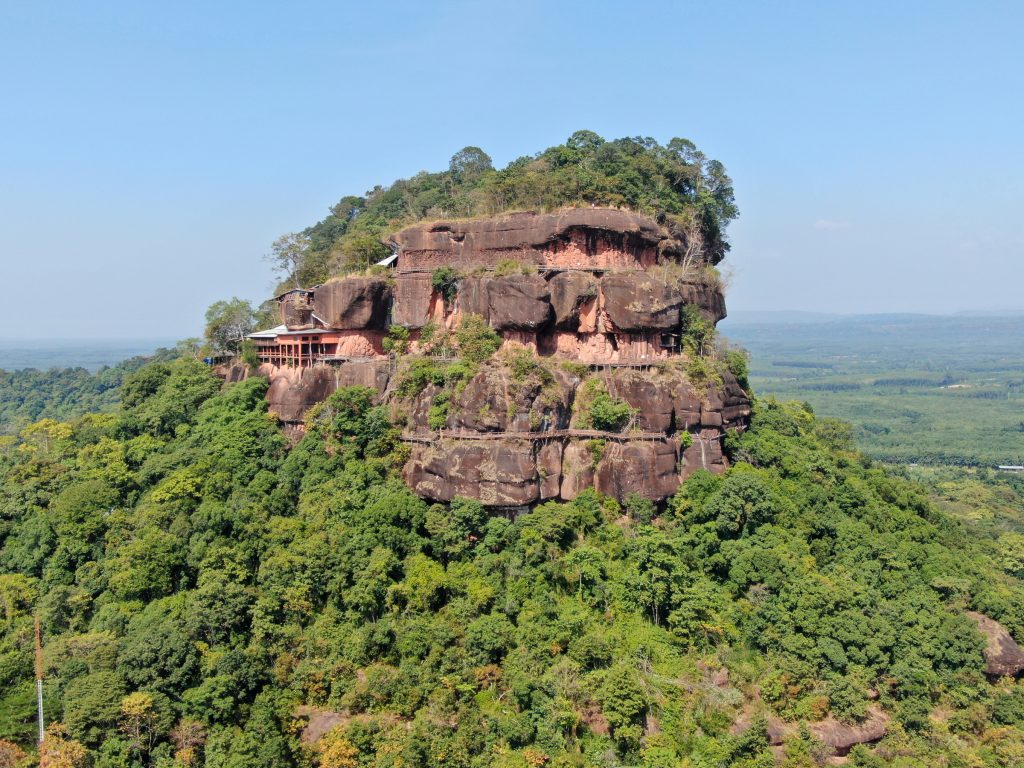
The journey to Wat Phu Tok begins with a sense of stepping into a different Thailand, far removed from the bustling cities and crowded beaches. Bueng Kan province is characterized by its vast, open landscapes, lush greenery, and a slower pace of life. The approach to Wat Phu Tok itself is striking; a solitary, imposing red rock mountain emerges from the otherwise flat terrain, an anomaly that immediately sparks curiosity. Its resemblance to Sigiriya in Sri Lanka, a UNESCO World Heritage site famous for its ancient palace and gardens atop a colossal rock, is often noted, though Wat Phu Tok possesses its own distinct charm and spiritual aura. Standing 359 meters tall, the "lonely mountain" earns its name not just from its isolated location but from the introspective journey it inspires.
A Foundation Built on Faith and Resilience

The history of Wat Phu Tok is deeply intertwined with the vision of its founder, the revered Monk Luang Pu Juan. Recognizing the mountain’s rugged terrain and remote setting as an ideal environment for contemplation, he began the arduous task of transforming it into a spiritual haven. The mountain, historically a habitat for wildlife, including snakes, presented both challenges and opportunities for a monk seeking to overcome worldly distractions and cultivate inner peace. Luang Pu Juan’s ambitious project involved constructing a network of wooden staircases, ladders, and walkways that would ascend the mountain, connecting various shrines and meditation spots. This intricate construction was not merely architectural; it was designed to embody the seven stages of Buddhist meditation, with each level representing a step in the practitioner’s spiritual ascent. Tragically, Luang Pu Juan’s life was cut short in an airplane accident, but his legacy endures through the continued maintenance and spiritual significance of Wat Phu Tok, which remains a testament to his dedication.
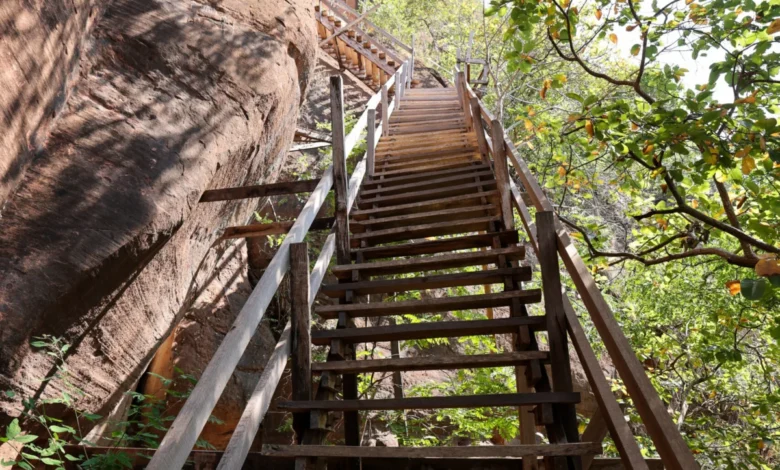
The temple complex at the base of the mountain provides a serene starting point, featuring a large temple building, a tranquil lake, and extensive park grounds, offering ample parking for visitors. The entrance to the ascent is clearly marked, leading pilgrims and tourists towards the formidable red rock. The initial stages of the climb are relatively gentle, with well-maintained wooden stairs providing a comfortable introduction to the mountain’s vertical challenge. However, as one progresses, the incline steepens considerably, with sections that transition into near-vertical ladders, demanding both physical exertion and a steady nerve. Despite the apparent precariousness of the wooden structures, many visitors report a surprising sense of stability and security in their construction, a testament to the meticulous craftsmanship involved.

Navigating the Seven Levels of Spiritual Ascent
The ascent through Wat Phu Tok is a structured experience, with each level offering distinct characteristics and spiritual insights.

-
Lower Levels (1-4): The initial levels are characterized by a more straightforward climb, with fewer prominent structures. While some small shrines may be present, the primary focus at this stage is the physical journey upward. Visitors are encouraged to continue their ascent to reach the more developed and significant areas of the temple complex.
-
The Fifth Level: This level marks a significant shift in the visitor experience, revealing a more developed spiritual landscape. Here, numerous temples, shrines, and halls are scattered across the mountain’s surface. Much of the trail on the fifth level is at ground level, offering a respite from the steep climbs. This section is home to what is believed to be the largest ordination hall within the temple complex, a substantial structure that serves as a focal point for religious activities. A notable highlight on this level, and indeed for many visitors, is a small rock temple accessible via an elevated rock walkway and a wooden bridge. This secluded sanctuary, perched on the side of the mountain, offers a sense of discovery and provides a unique perspective, making it a worthwhile detour from the main circumambulation path.

-
The Sixth Level: The Pinnacle of Thrill and Awe: The famed sixth level is where Wat Phu Tok truly earns its reputation for being one of Thailand’s most adventurous destinations. Approximately half of this level is comprised of narrow wooden plank walkways, ingeniously anchored directly into the sheer rock cliff face. The remaining portion of the level is accessible via solid ground. The walkways, suspended over dramatic drops, create a thrilling and somewhat terrifying experience, particularly for those with a fear of heights. The views from this level are spectacular, offering panoramic vistas of the Mekong River basin and the verdant landscape of Bueng Kan province. The breeze is invigorating, and the 360-degree views are breathtaking. While the construction appears precarious, most visitors find the walkways to be surprisingly stable and well-maintained. The inherent danger, however, is undeniable, with a constant reminder to tread carefully.
-
The Seventh Level: The Summit of Mystery: The final level, the seventh, is shrouded in a degree of mystery and caution. It is widely known for being the domain of venomous snakes, and visitors are advised to ascend at their own risk. Unlike the previous levels, the seventh level does not feature extensive wooden walkways or elaborate shrines. Instead, it represents the very summit of the mountain. For those who venture to the top, particularly if they find the correct access point, the reward is continued expansive views. However, many consider the sixth level, with its dramatic cliffside walkways, to be the quintessential and most memorable experience Wat Phu Tok has to offer.

Visitor Experience and Practical Considerations
The drive from Bueng Kan city to Wat Phu Tok typically takes around 30 minutes, a journey that builds anticipation for the unique destination. Upon arrival, the scale of the temple complex at the base is immediately apparent, with its spacious grounds providing a calm prelude to the challenging ascent.

For visitors planning a trip, several practical tips are advisable:
- Footwear: Comfortable and sturdy walking shoes are essential for navigating the varied terrain, from gentle paths to steep stairs and narrow walkways.
- Hydration: Carrying sufficient water is crucial, especially during the hotter months, as the climb can be physically demanding.
- Respect: As a place of worship, visitors are expected to dress modestly and behave respectfully. This includes refraining from loud noise and ensuring appropriate attire, particularly when visiting the temple buildings at the base or on the lower levels.
- Time Allocation: To fully experience the temple and its seven levels, it is advisable to allocate at least half a day. The climb itself, coupled with time spent exploring each level and taking in the views, requires a significant investment of time.
- Weather Preparedness: The weather in northeastern Thailand can be unpredictable. It is advisable to check the forecast and be prepared for potential rain, especially during the monsoon season.
Broader Impact and Significance

Wat Phu Tok represents more than just a tourist attraction; it is a significant spiritual site deeply embedded in the cultural fabric of Bueng Kan province. Its unique construction and the challenging ascent have made it a symbol of perseverance and spiritual dedication. The temple’s remote location has contributed to its status as an "off the beaten path" destination, attracting travelers seeking authentic cultural experiences and a connection with nature.
The temple’s existence also highlights the ingenuity and resilience of local communities in adapting their environment for spiritual and cultural purposes. The intricate wooden structures, built and maintained over decades, are a remarkable feat of engineering, reflecting a deep understanding of the local topography and a commitment to preserving the founder’s vision.

The increasing recognition of Wat Phu Tok as a unique adventure destination, coupled with its spiritual significance, contributes to the local economy by attracting visitors to Bueng Kan province. This, in turn, can foster greater appreciation for the region’s natural beauty and cultural heritage. The temple’s story is a compelling narrative of faith, dedication, and the human spirit’s ability to create profound spaces for reflection and awe amidst challenging natural landscapes. The integration of the seven levels of Buddhist meditation into the physical structure of the mountain provides a tangible and deeply symbolic representation of the spiritual journey, making Wat Phu Tok a truly remarkable and unforgettable destination in Thailand.