Capturing Grace: Nyancho NwaNri Wins the 2026 Flickr x Black Women Photographers Grant for Defining Lagos Ballet Scene

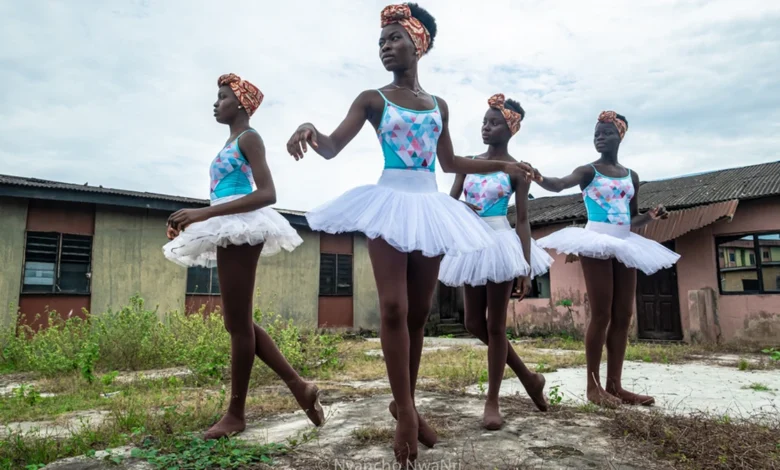
The journey from a viral internet moment to a landmark artistic triumph reached its apex when Nigerian documentary photographer Nyancho NwaNri secured the 2026 Flickr x Black Women Photographers grant. Her winning image, titled "Of Grace and Concrete," depicts five young ballerinas standing on a weathered concrete platform in an underserved neighborhood of Lagos, Nigeria. Selected from an international pool of candidates, NwaNri’s photograph earned her the program’s largest financial award to date—$10,000—alongside professional memberships designed to propel her multi-disciplinary practice forward.
The announcement, delivered in person at the inaugural MODE by Flickr festival in Minneapolis, underscores the rapid evolution of a grant initiative that began modestly in 2020 to counteract systemic underrepresentation in visual media. By pairing financial resources with global visibility, the partnership between Flickr and the Black Women Photographers (BWP) community continues to dismantle barriers for practitioners operating outside traditional Western art markets.
Anatomy of an Award-Winning Frame
The genesis of "Of Grace and Concrete" traces back to June 2020, when international media fixated on an 11-year-old boy named Anthony Mmesoma Madu dancing ballet barefoot in the rain outside the Leap of Dance Academy in Lagos. The footage garnered millions of views, thrusting the tuition-free institution into the global spotlight. Eager to document the reality behind the viral phenomenon, NwaNri visited the school, initially capturing standard indoor lessons.
However, recognizing that ballet is frequently perceived in Nigeria as an elite, foreign discipline inaccessible to impoverished communities, NwaNri sought a more resonant backdrop. Rejecting staged compositions, she invited the students to choose their own environment for outdoor portraits. The children led her to a battered concrete platform—a communal space they frequented independently.
The resulting composition captures a profound cultural intersection: five young ballerinas in pristine white tutus and traditional Ankara headwraps, their postures converging toward an unseen focal point. Behind them, a neglected structure bearing the scars of broken glass and weathered walls yields to resilient patches of grass pushing through the concrete. According to BWP founder Polly Irungu, the judging panel evaluated submissions based primarily on storytelling, originality, authenticity, and emotional resonance rather than technical execution alone. NwaNri’s photograph succeeded by leaving a lasting impression through its stark juxtaposition of youthful grace against structural decay.
Evolution of the Flickr x Black Women Photographers Grant
Launched in 2022, the Flickr x Black Women Photographers grant program has experienced exponential financial growth over its four operational cycles, reflecting an escalating commitment to substantive industry investment.
The grant trajectory highlights a steady scaling of resources:
- 2022: Inaugural grant of $1,200 awarded to Birmingham-based self-taught photographer Naomi St Juste.
- 2023: Award increased to $2,500, granted to Chicago portrait photographer Genesis Falls.
- 2025: Funding elevated to $5,000, awarded to Montreal portrait and documentary photographer Éléonore Menga.
- 2026: Award doubled to $10,000, accompanied by two-year Flickr Pro and one-year SmugMug Pro memberships, alongside similar software perks for ten runners-up.
This financial scaling arrives at a critical juncture for creative industries. Despite corporate rollbacks on Diversity, Equity, and Inclusion (DEI) initiatives across various sectors, Irungu emphasizes that creative careers demand tangible material support rather than superficial gestures. By removing spending restrictions on the $10,000 award, the organizers acknowledge that independent artists possess the autonomy to determine their precise operational needs—whether upgrading equipment, funding long-term research, or achieving financial sustainability.
Cultivating Trust Through Presence
NwaNri’s approach to documentary photography relies heavily on human connection and protracted fieldwork. Before lifting a camera, she frequently embeds herself within a community, engaging in casual conversations over tea and establishing rapport without the mediating presence of a lens. This methodology—honed partly through her early career in broadcast production design—yields deep narrative authenticity by allowing subjects to acclimate to her presence.
Her most recent long-term documentary project spanned three and a half years, during which she integrated deeply into the daily rhythms of her subjects. While the Lagos ballet shoot deviated from this slow-journalism model due to time constraints, NwaNri maintained her philosophy of active participation. By lowering her camera to adjust a dancer’s headwrap or simply observing the scene, she transitioned from an objective observer to an active participant in the shared memory of the community.
Allocating Resources and Expanding Horizons
NwaNri plans to deploy the $10,000 grant toward professional development courses in creative direction, equipment upgrades, website redesigns, and the continuation of her rigorous independent research. A significant portion of the funds will also offset personal investments made in past self-funded projects.
Currently based in Brazil, NwaNri is developing an ambitious comparative project exploring the historical and ecological ties between Brazil and Nigeria. Linked by the transatlantic slave trade, both nations share profound cultural lineages encompassing spiritual traditions, language, and gastronomy, alongside contemporary challenges with severe deforestation. Her research investigates how indigenous Nigerian, Afro-descendant Brazilian, and indigenous Brazilian traditions can inform modern ecological stewardship.
Concurrently, NwaNri intends to rebalance her artistic output by dedicating more time to video installation art, leveraging her expertise in African spiritual traditions and exploring interactive display technologies. Born and raised in Nigeria to a Gambian mother and Nigerian father, she consistently foregrounds her dual heritage to ensure representation for underrepresented nationalities within the global contemporary art market. Her work has previously appeared in major outlets including The New York Times, The Guardian, Al Jazeera, and Reuters, and she received the prestigious Reuters Yannis Behrakis Photojournalism Grant in 2021.
Systemic Impact: Turning Visibility Into Paid Work
Founded in 2020 by Polly Irungu, Black Women Photographers has expanded from a simple digital directory into a comprehensive support ecosystem boasting more than 2,100 members across over 60 countries. The organization actively bridges the gap between raw talent and institutional commissioning through grants, educational programming, free software access, and portfolio reviews with major media entities.
The impact of these interventions is measurable. For instance, Lagos-based documentary photographer Taiwo Aina secured her first major assignment with The New York Times—which subsequently ran as a front-page story—following a portfolio review facilitated by BWP. Similarly, strategic partnerships with organizations like TrackTown USA have enabled Black women creatives to cover premier athletic events at Hayward Field, subsequently leading to high-profile commercial opportunities with brands such as Nike.
To date, BWP has distributed over $230,000 in direct grants and more than $80,000 in camera equipment. Irungu’s stated five-year objective includes surpassing $1 million in total grant funding and expanding professional support to members transitioning into directing and cinematography roles.
Broader Implications for the Visual Arts Industry
The recognition of Nyancho NwaNri and the expansion of the Flickr x Black Women Photographers grant reflect a broader structural shift within photojournalism and commercial media. By institutionalizing mentorship, eliminating restrictive grant parameters, and creating direct pipelines to major editors, the initiative challenges traditional gatekeeping models that have historically marginalized African and minority perspectives.
As traditional media outlets navigate economic pressures and shifting commissioning strategies, networks like BWP demonstrate that systemic diversification relies on sustained financial investment and deliberate institutional risk-taking. For independent artists operating globally, programs offering substantial unrestricted capital provide the critical infrastructure required to sustain rigorous, long-form documentary storytelling and preserve independent artistic vision.