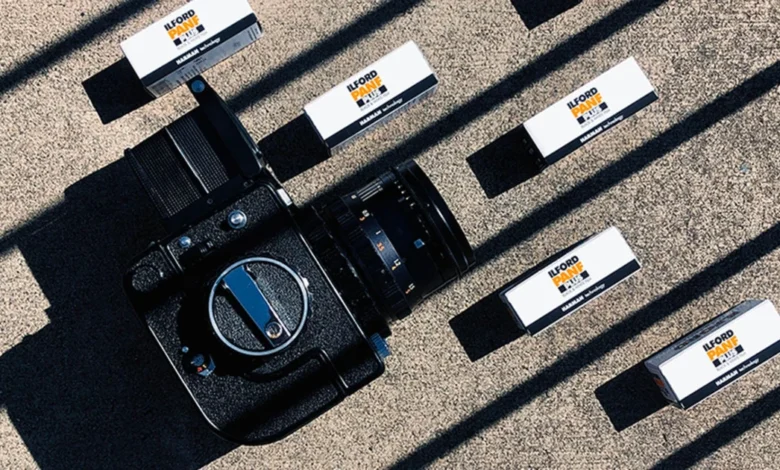
Within the specialized niche of analog photography, a distinct category of emulsions has emerged, colloquially referred to by enthusiasts as the Sub-100 Club. This designation encompasses black-and-white films with an ISO rating below 100, characterized by their exceptional resolution, fine grain structure, and a distinct aesthetic that sets them apart from high-speed counterparts like the Ilford Delta or Kodak T-Max 3200. Among these low-speed films, Ilford Pan F+ occupies a storied position as the longest-running, continually produced iteration of the original Pan F emulsion.
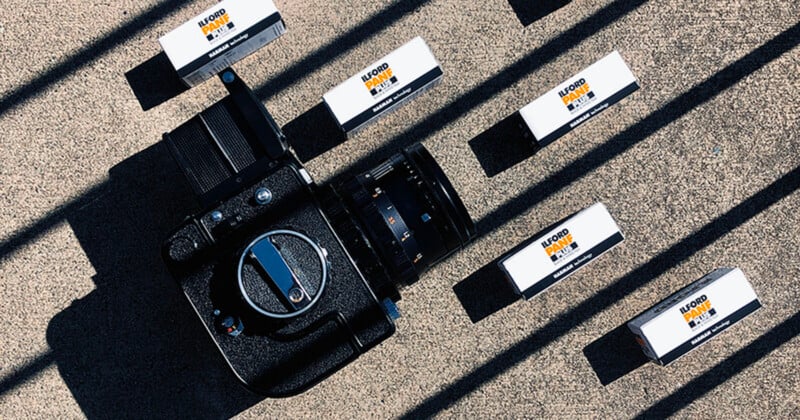
A Legacy of Panchromatic Innovation
The history of Ilford Pan F is inextricably linked to the evolution of black-and-white film manufacturing in the 20th century. First introduced in 1948, the film was designed to provide photographers with a medium capable of rendering extreme detail, catering primarily to studio, architectural, and landscape work where light levels could be controlled or where long exposure times were feasible.

The emulsion has undergone several significant technological transitions throughout its nearly 80-year lifespan. The most notable milestone in its modern history occurred in 1992, when the film was reformulated and rebranded as Pan F Plus. This update was intended to modernize the film’s chemical structure to meet the demands of contemporary darkroom practices and high-resolution scanning. Since the 1990s, Ilford Photo, now under the parent company Harman Technology, has continued to implement incremental improvements to the emulsion’s base and coating, ensuring that Pan F+ remains a viable tool for modern practitioners.

Technical Specifications and Performance
Ilford Pan F+ is a slow-speed, panchromatic black-and-white film with a nominal ISO of 50. Its primary appeal lies in its extremely fine grain structure, which, when paired with high-quality optics, provides a level of clarity often associated with larger film formats. In 35mm, it is frequently cited for its ability to produce negatives that mimic the resolution of medium format, making it an ideal choice for high-detail enlargements or mural-sized prints.

The film’s sharpness is derived from its high acutance—the ability to render distinct edges between areas of different tonal values. By increasing local contrast at these boundaries, the film produces a crisp, high-definition appearance. While this characteristic is inherent to the film’s chemical design, it is frequently enhanced through the use of high-acutance developers such as Rodinal or FX-2. However, this level of detail comes with a trade-off: the film is unforgiving in portraiture, as its sharpness tends to highlight skin texture, wrinkles, and blemishes, a quality that many photographers choose to leverage for high-drama, character-focused portrait work.

The Role of Reciprocity and Latent Image Stability
A critical consideration for any photographer utilizing low-speed film is the phenomenon of reciprocity failure. When light levels are low and exposure times exceed one second, the film’s response to light becomes non-linear. According to current technical data, Pan F+ requires a 1/2 to 1 stop compensation for exposures between 1 and 10 seconds. For longer exposures, such as those reaching 60 seconds, a compensation of two full stops is recommended to ensure proper density. This is a significant improvement over earlier formulations, which were notably more sensitive to light-level fluctuations during long exposures.

Furthermore, Pan F+ requires a specific workflow regarding development. Unlike more modern, tabular-grain films that may exhibit greater shelf stability once exposed, Pan F+ is known for poor latent image retention. Manufacturer guidelines suggest that exposed film should be developed within three months to prevent the formation of thin, underdeveloped negatives. This characteristic necessitates a disciplined approach to shooting, particularly for those working in remote locations or on long-term projects.

Recent Developments in Availability
A significant development in the film’s history occurred in 2026, when Ilford expanded the availability of Pan F+. Historically restricted to 35mm and 120 formats, the film was officially released in 4×5 and 8×10 sheet film formats. This expansion reflects a broader market trend toward large-format photography, driven by a resurgence in interest among fine art photographers and high-end commercial studios seeking the extreme detail and tonal range that only large-format negatives can provide.

The Aesthetic Impact of High-Contrast Emulsions
The visual signature of Pan F+ is frequently described as "brooding" or "dramatic." The film exhibits a naturally high-contrast curve, producing deep, inky blacks and bright, clean whites. While this provides the film with its signature film-noir aesthetic, it also requires a nuanced approach to exposure and development.

Photographers who master the film often utilize it to create images with significant mood and atmosphere. However, the learning curve is steeper than that of more forgiving emulsions. Because of its contrast, Pan F+ can be a challenging medium; improper exposure or over-development can lead to blocked highlights and crushed shadows. Conversely, when managed correctly, the film offers a tonal depth that is difficult to replicate with digital sensors or higher-speed film stocks.

Industry Implications and Market Position
The continued survival and expansion of Pan F+ in an increasingly digital imaging landscape highlight the enduring relevance of specialized analog tools. While digital sensors have surpassed film in terms of convenience and low-light performance, they often lack the distinct tonal character and high-acutance rendering that film provides.

The decision to release Pan F+ in large-format sizes underscores the strategy of manufacturers like Ilford to cater to the "prosumer" and professional segments of the analog market. These photographers are not merely seeking a nostalgic experience but are actively choosing the medium for its specific technical capabilities. By providing these formats, Ilford is effectively future-proofing a legacy product for a new generation of fine-art photographers.

Conclusion
Ilford Pan F+ remains a staple for those who prioritize image quality, resolution, and aesthetic drama above speed. Its status as the "elder" member of the Sub-100 Club is well-earned, supported by decades of chemical refinement and a loyal user base. As the analog community continues to evolve, the availability of such specialized films provides a necessary bridge between historical photographic practices and modern artistic expression. Whether used for the precise documentation of architecture or the creation of moody, high-contrast landscapes, Pan F+ offers a unique, albeit demanding, path for the serious photographer.