Slothee Still Wants Coffee Expands Global Children Literature Series with Cultural Exploration and Coffee Traditions

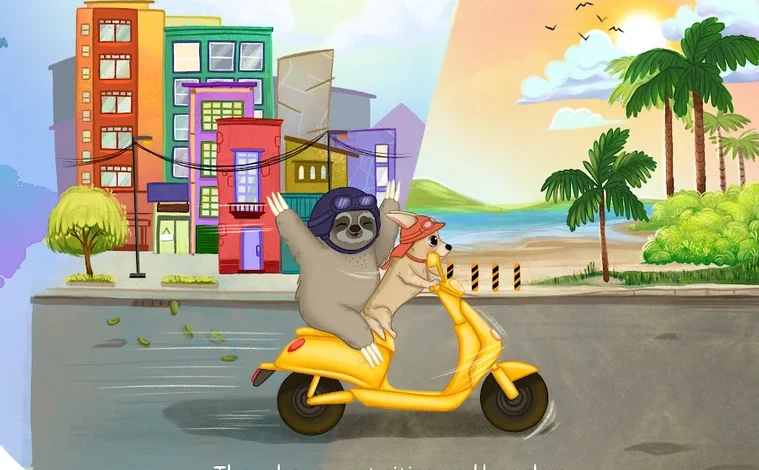
The landscape of children’s educational literature is experiencing a notable expansion with the official release of Slothee Still Wants Coffee, the second installment in the globally focused Slothee and Friends series. Authored to engage young readers and their families in geographical discovery, cultural appreciation, and the diverse traditions surrounding the global coffee industry, the book follows the endearing sloth protagonist, Slothee, as he embarks on an extensive international voyage. Spanning multiple continents, the narrative transcends traditional storytelling by integrating geography, social studies, and agricultural awareness into an accessible format designed for early childhood development and family reading initiatives.
Background and Context of the Slothee and Friends Series
The inception of the Slothee and Friends franchise stemmed from a recognized gap in contemporary children’s literature regarding geography-based storytelling that introduces complex global industries in simplified, digestible terms. While children’s books frequently explore domestic settings or fantasy realms, serialized stories that map real-world trade, agriculture, and cultural anthropology remain comparatively scarce in mainstream publishing.
The first book in the series established Slothee’s foundational quest for the ideal brew, laying the groundwork for a broader educational curriculum embedded within the narrative structure. According to educational publishing analysts, the integration of real-world commodities—such as coffee, which represents one of the most widely traded agricultural commodities globally—provides a practical anchor for teaching children about international trade routes, farming communities, and environmental stewardship. By utilizing an animal protagonist with a famously slow demeanor, the authors intentionally contrast Slothee’s pace with the fast-moving global supply chain, creating humorous and thought-provoking narrative dynamics.
Chronology of Slothee’s Global Itinerary
In Slothee Still Wants Coffee, the protagonist’s itinerary is meticulously mapped across seven distinct countries, reflecting real-world coffee-producing regions renowned for their specific bean varieties, roasting methods, and cultural coffee consumption habits. The chronological progression of Slothee’s journey takes young readers across the globe in a structured sequence:
- Costa Rica: The journey commences in Central America, highlighting the nation’s rich volcanic soil, high-altitude shade-grown coffee farming, and the cultural significance of the "chorreador" brewing method.
- Peru: Slothee then transitions to South America, exploring the cooperative farming models of the Andes and the growing prominence of organic, Fair Trade certified coffee beans.
- Mexico: Moving north, the narrative showcases the diverse microclimates of regions like Chiapas and Veracruz, emphasizing indigenous farming traditions and local culinary pairings.
- Jamaica: The expedition extends to the Caribbean, where Slothee investigates the prized Blue Mountain coffee, notable for its stringent quality controls and unique mist-shrouded mountain cultivation.
- Uganda: Crossing the Atlantic, the journey enters East Africa, the birthplace of the Robusta bean and a vital hub for diverse agricultural landscapes, community-centric farming, and rich harvesting ceremonies.
- Vietnam: The itinerary shifts to Southeast Asia, exploring the bustling coffee culture of Vietnam, the dominance of robusta production, and traditional preparation methods involving sweetened condensed milk and specialized drip filters.
- Australia: The voyage concludes in Oceania, where Slothee encounters the sophisticated café culture of cities like Melbourne and Sydney, highlighting modern barista artistry, flat whites, and contemporary urban coffee innovations.
Supporting Data and Industry Relevance
The decision to center an educational children’s book series around the global coffee industry aligns with significant economic and cultural data regarding the commodity. According to international trade organizations, global coffee consumption exceeds three billion cups daily, making it a cornerstone of international commerce and daily human routine. Over 125 million people globally depend on coffee farming for their livelihoods, predominantly in developing nations across Latin America, Africa, and Asia.
Literary and educational experts note that introducing these economic and agricultural realities to young audiences fosters early global citizenship. By contextualizing where everyday consumer goods originate, children develop an enhanced appreciation for international labor, environmental sustainability, and cultural diversity. Studies in early childhood education consistently indicate that geography and cultural studies integrated into narrative fiction yield higher retention rates and stimulate curiosity about foreign languages, traditions, and geography.
Statements and Industry Reactions
While specific direct quotes from the authors remain focused on the overarching mission of fostering empathy and cross-cultural understanding, literary critics and early childhood educators have offered positive evaluations of the series’ pedagogical approach.
Dr. Elena Vance, a specialist in children’s literature and literacy development at the Institute for Global Educational Research, remarked on the structural value of commodity-based storytelling: "When children’s literature successfully bridges the gap between a daily household routine—such as parents drinking morning coffee—and the vast, international network of hands that produce it, learning becomes inherently personal. Books like Slothee Still Wants Coffee provide parents and educators with an effective toolkit to discuss geography, economics, and cultural diversity without overwhelming young minds with dry academic data."
Furthermore, independent bookstore owners and children’s librarians have noted an increased demand for titles that move beyond Western-centric narratives. The deliberate inclusion of nations spanning four continents allows educators to use the book as a springboard for classroom mapping exercises, tasting sessions of non-coffee related regional foods, and discussions on international friendship.
Broader Impact and Implications for Future Publications
The publication of Slothee Still Wants Coffee marks a critical milestone for the publishing house as it scales its operations to meet the growing demand for globally conscious educational media. Plans for future installments in the Slothee and Friends universe are already underway, with prospective titles projected to explore alternative global beverages, such as tea variations originating from China, India, Japan, and the United Kingdom, alongside expanded explorations of international ecosystems and wildlife conservation.
As educational frameworks increasingly emphasize global competence—the capacity to understand and act on issues of global significance—literary contributions that entertain while educating hold a distinct value in modern curricula. By transforming a simple quest for a beverage into a comprehensive exploration of human geography, Slothee Still Wants Coffee establishes a benchmark for how modern children’s literature can address complex global systems. Through engaging illustrations, character-driven storytelling, and geographical accuracy, the series ensures that the next generation of readers approaches the world with heightened curiosity, respect for diverse cultures, and an understanding of the interconnected nature of global society.