Beyond Sustainability: The Shift Toward Regenerative Tourism at the Regenerative Travel Asia Symposium in Singapore

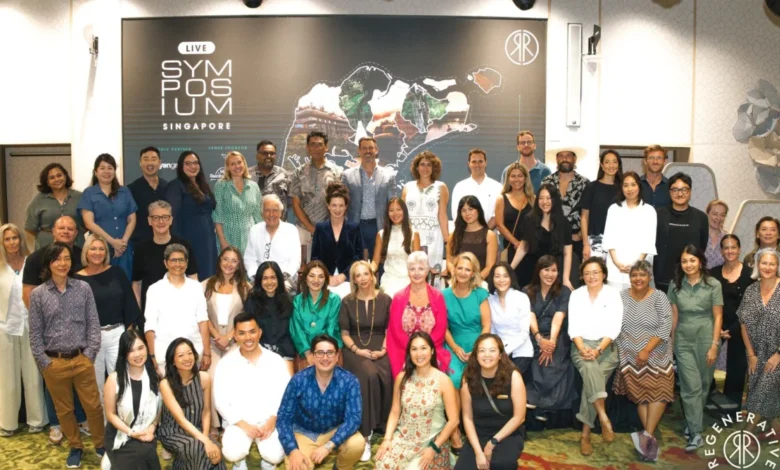
The global travel industry is undergoing a fundamental paradigm shift, moving away from the traditional "sustainable" model of minimizing harm toward a "regenerative" framework that seeks to actively improve the destinations, ecosystems, and communities it touches. This evolution was the central focus of the recent Regenerative Travel Asia Symposium held in Singapore, where industry leaders, environmentalists, and hospitality innovators gathered to redefine the relationship between tourism and the planet. For decades, the sustainability movement in travel focused on reduction: using less plastic, lowering carbon emissions, and minimizing the footprint of visitors. While these efforts remain critical, the symposium highlighted a growing consensus that "doing less harm" is no longer sufficient in an era of accelerating climate change and biodiversity loss. Instead, the industry is being challenged to adopt a restorative approach—one where tourism acts as a catalyst for environmental healing and social equity.
The symposium, organized by Regenerative Travel, brought together a diverse cohort of stakeholders to discuss how the industry can transition from an extractive economy to a circular and relational one. The event underscored that while sustainability is often a technical or logistical goal, regeneration is a cultural and philosophical shift. It requires rethinking the very purpose of travel, moving from a model of consumption to one of contribution. As global tourism prepares for a projected return to pre-pandemic levels, with the World Travel & Tourism Council (WTTC) forecasting record-breaking growth in the coming years, the urgency of implementing these regenerative practices has never been higher.
The Philosophical Shift: From Head to Heart
The symposium opened with a compelling call to action from Amanda Ho, co-founder and CEO of Regenerative Travel. Ho described the transition to regenerative tourism as a shift from "head to heart," moving from the scarcity-based logic of individual competition to an abundance-based logic of collective wellbeing. In her address, she challenged participants to view tourism not merely as a commercial sector but as a complex web of relationships between people, places, and nature. This perspective reframes the traveler not as a consumer of experiences, but as an active participant in the health of a destination.
Keynote speaker Juliet Kinsman, a prominent sustainability editor and consultant, reinforced this idea by addressing the psychological and biological dimensions of travel. Kinsman argued that humans are not separate from biodiversity but are integral parts of an interconnected living system. In a world increasingly dominated by digital interactions and artificial intelligence, she emphasized the concept of "regenerating humanity." According to Kinsman, travel provides a unique opportunity to rebuild lost connections with the natural world and with fellow human beings, provided it is approached with intentionality rather than as a transactional exchange.
Data-Driven Demand for Change
The push for regeneration is not merely a top-down initiative from industry leaders; it is increasingly driven by consumer demand. Jeremy Tran from Sustainable Travel Asia presented research from Booking.com that highlights a significant shift in traveler priorities. According to the data, 85% of global travelers express a desire for more sustainable travel options, while 69% specifically want to leave the places they visit better than they found them. This "intent-to-action" gap, however, remains a hurdle. While travelers want to make ethical choices, the complexity of the travel supply chain often makes it difficult for them to identify truly regenerative options.
Tran also analyzed the role of social media in shaping modern travel behaviors. Platforms like Instagram and TikTok have created a phenomenon where destinations become viral trends overnight, leading to sudden surges in foot traffic that can overwhelm local infrastructure and ecosystems. The symposium participants discussed the need for "slow travel" and "intentional travel," urging consumers to move beyond the desire for a curated photograph and instead consider the long-term impact of their presence. The challenge lies in moving from "trend-following" to "place-based" engagement, where the traveler’s itinerary is shaped by the needs of the destination rather than the algorithm of a social platform.
Case Studies in Active Restoration
A significant portion of the symposium was dedicated to showcasing real-world examples of regeneration in action across the Asia-Pacific region. These case studies served as a blueprint for how luxury and boutique hospitality can lead the way in environmental stewardship.
One of the most notable examples discussed was Song Saa Private Island in Cambodia. Built on what was once degraded land, the resort was founded with a specific vision to restore the local environment rather than simply develop it. Through the Song Saa Foundation, the resort was instrumental in establishing Cambodia’s first Marine Protected Area (MPA). Today, the resort employs approximately 75% of its staff from surrounding local communities, ensuring that the economic benefits of tourism are distributed locally. Furthermore, the property utilizes advanced rainwater harvesting, on-site waste management, and food waste reduction systems. Guests are not merely passive observers; they are invited to participate in coral restoration and community outreach, bridging the gap between luxury and activism.
Other industry leaders, including Banyan Group, The Datai Langkawi, and Potato Head Bali, shared their respective journeys toward regeneration. Banyan Group has long been a pioneer in this space, with its "Rooted in Heritage" programs and extensive reforestation efforts. The Datai Langkawi, situated in a pristine rainforest in Malaysia, has implemented a "Zero Waste to Landfill" policy and created a dedicated Nature Centre to educate guests on the local flora and fauna. Potato Head Bali was highlighted for its innovative approach to waste, transforming what would be trash into high-end furniture and building materials, effectively turning a resort into a circular economy laboratory.
The Community as the Core of Regeneration
A recurring theme throughout the symposium was the necessity of community agency. For tourism to be truly regenerative, local communities cannot be treated as mere backdrops or "hosts" who receive the crumbs of tourism revenue. Instead, they must be active participants and decision-makers. The symposium emphasized that regeneration is relational; it is about creating an exchange of wisdom and culture rather than an extraction of resources.
Maitri Fischer from Eco-Mantra, a leader in environmentally sustainable design, provided a sobering look at the tensions that arise when tourism growth outpaces local capacity. Using Bali as a case study, Fischer described the pressures created by rapid over-development, including critical waste management issues, the depletion of water tables, and the strain on local infrastructure. He argued that regenerative travel must involve "balancing the scales," ensuring that the growth of the tourism sector does not come at the expense of the residents’ quality of life. This requires a shift in how success is measured, moving away from simple metrics like "arrival numbers" toward more holistic indicators like community health and ecosystem resilience.
Challenges: Accessibility and the Risk of Greenwashing
Despite the enthusiasm surrounding regenerative travel, two major challenges were identified: accessibility and the risk of greenwashing. Currently, many regenerative initiatives are housed within the luxury sector, where higher margins allow for investment in expensive sustainability technologies and community foundations. However, if regeneration is to address the global climate crisis, it must be scalable across all segments of the market, including budget and mid-range travel.
The speakers noted that affordability remains a primary concern for the average traveler. For regeneration to become the industry standard, it must be integrated into the business models of large-scale tour operators and mainstream hotel chains. This democratization of regenerative travel is essential to ensure that "doing good" is not a privilege reserved for the wealthy.
Furthermore, as "regenerative" becomes the new buzzword in travel marketing, there is a significant risk of greenwashing. Similar to how the term "eco-friendly" was often co-opted by businesses with minimal environmental commitments, "regenerative" could be used to mask business-as-usual practices. The symposium concluded that the only antidote to greenwashing is transparency, third-party certification, and measurable long-term impact. Both travelers and industry watchdogs must demand data-backed proof of a company’s claims.
The Path Forward: Connection as the Catalyst
As the climate crisis intensifies, the role of tourism in the global healing process becomes more vital. Nick Hardman, a marine biologist and Head of Sustainability at Banyan Group, reminded the audience that the industry possesses an immense power to foster connection. Hardman noted that people are far more likely to protect what they feel connected to. By facilitating meaningful encounters—whether through a coral restoration dive or a deep cultural exchange with Indigenous communities—tourism can create a global network of environmental advocates.
The Regenerative Travel Asia Symposium served as a critical milestone in the regional dialogue on tourism. It established that the future of the industry lies not in expansion for the sake of profit, but in restoration for the sake of survival. As travelers begin to make more intentional choices, and as businesses begin to place nature and community at the center of their operations, the travel industry has the potential to transform from a source of environmental pressure into a powerful engine for global renewal. The journey from consumption to contribution is not a simple one, but as the symposium demonstrated, it is the only viable path forward for an industry that depends entirely on the beauty and health of the world it showcases.