Beyond the Basilica: A Second-Timer’s Guide to Experiencing the Undiscovered Depths of Barcelona

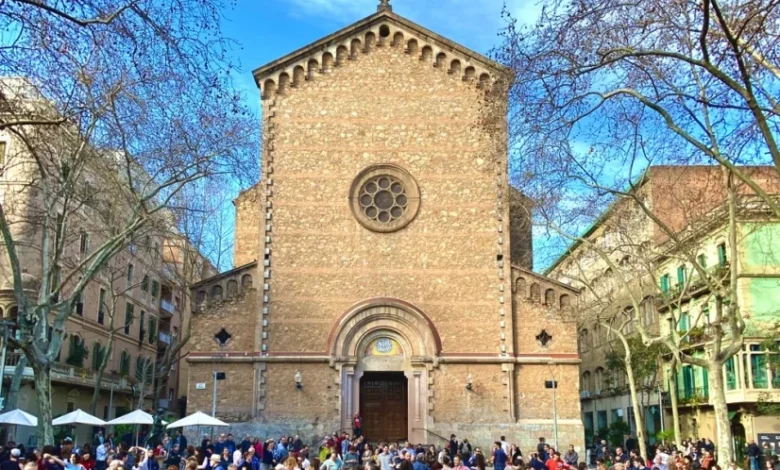
The itinerary for a first-time visitor to Barcelona is almost universally codified: a pilgrimage to Antoni Gaudí’s sweeping architectural masterpieces, including the still-unfinished Sagrada Família and the mosaic-laden Park Güell; a congested stroll down La Rambla; and a venture into the labyrinthine alleys of the Gothic Quarter. While these marquee attractions form the foundational tourism pillars of Catalonia’s vibrant capital, they represent only a fraction of the city’s complex urban ecosystem. For the returning traveler, Barcelona offers a secondary horizon—one defined by residential authenticity, localized culinary traditions, industrial heritage, and accessibility to the broader Catalan region.
Shifting Focus from Mass Tourism to Neighborhood Identity
Tourism boards and urban planners have long wrestled with the dichotomy of destination marketing: how to manage the staggering volume of visitors concentrated in historic districts while distributing economic benefits to peripheral neighborhoods. According to municipal tourism data, a significant percentage of first-time visitors rarely venture beyond District 1 (Ciutat Vella) and the Eixample.
For returning travelers, the imperative shifts from ticking off checklist monuments to cultural immersion. Urban analysts note that repeat visitors serve a crucial economic role by decentralizing tourism pressure. By spending time in districts that resisted hyper-commercialization, travelers support local commerce, independent artisans, and neighborhood-scale gastronomy. This decentralized approach aligns with modern sustainable tourism frameworks, reducing infrastructural strain on heritage sites while fostering a more nuanced understanding of Catalan society.
Traversing the Cultural Tapestry of El Raval
Situated directly across La Rambla from the Gothic Quarter, El Raval offers a stark contrast to the medieval postcard aesthetic of its neighbor. Historically working-class and shaped by successive waves of migration, El Raval is today recognized for its multicultural dynamism, dense artistic community, and eclectic streetscape.

The neighborhood houses the Museu d’Art Contemporani de Barcelona (MACBA), designed by Richard Meier, which anchors a sprawling public plaza—Plaça dels Àngels—internationally renowned as a hub for urban skate culture. Urban historians point out that El Raval’s architectural juxtaposition—where centuries-old tenements sit adjacent to modernist cultural institutions—reflects Barcelona’s broader industrial and social evolution. Rather than monumental sightseeing, experiencing El Raval requires slow exploration: browsing independent vintage boutiques, observing community life in neighborhood squares, and engaging with the area’s robust culinary diversity.
The Village Autonomy of Gràcia
Long before its absorption into the expanding metropolitan grid during the late 19th-century Cerdà Plan, Gràcia was an independent municipality. Over a century later, this historical separation remains palpable. Unlike the rigid grid system of the Eixample, Gràcia is characterized by a warren of narrow streets and an interconnected network of lively public plazas, such as Plaça del Sol.
Sociologists studying urban morphology frequently cite Gràcia as a prime example of human-centric city planning. Vehicular traffic is heavily restricted, prioritizing pedestrian movement and community interaction. The neighborhood’s commercial landscape is dominated by small-scale, independent merchants—bakers, cheesemongers, and bookstore owners—who have largely resisted the encroachment of multinational retail chains. For visitors, an afternoon in Gràcia involves minimal itinerary planning: securing a terrace table at a local café, observing daily neighborhood rituals, and wandering without a fixed destination.
Gastronomic Evolution in Sant Antoni
While La Boqueria remains the most famous culinary market in Barcelona, its status as a primary tourist attraction has altered its day-to-day functionality. For a more localized market experience, culinary enthusiasts turn to Sant Antoni.
The Mercat de Sant Antoni, housed in a striking wrought-iron structure dating back to the late 19th century, underwent a monumental, decade-long renovation before reopening in 2018. The restoration successfully balanced modern architectural preservation with community utility, housing fresh produce and meat vendors alongside archaeological remains discovered during excavation. The surrounding neighborhood mirrors this balance, offering an array of traditional bodegas, modern bakeries, and avant-garde dining establishments. On Sundays, the market perimeter transforms to host a traditional book and collector’s fair, drawing bibliophiles and local families in a weekly civic ritual.

Uncovering the Layered History of Montjuïc
Rising sharply above the southwestern edge of the city, Montjuïc is frequently treated by tourists as a transient viewpoint accessible via cable car. However, allocating a full day to the hill reveals a dense accumulation of political history, architectural milestones, and ecological spaces.
At the summit sits Castell de Montjuïc, a military fortress with a complex and often somber history. Constructed in the 17th century and later utilized as a political prison and execution site—notably during the Francoist regime—the fortress now operates as a municipal facility offering panoramic views of the port and Mediterranean. Beyond the castle, Montjuïc preserves the legacy of the 1929 Barcelona International Exposition through monumental structures like the Palau Nacional (now home to the Museu Nacional d’Art de Catalunya) and serves as a sporting hub following its integration into the 1992 Summer Olympic venues. Interspersed among these installations are botanical gardens and extensive pine groves, providing a tranquil escape from the urban density below.
Industrial Heritage and Modern Renaissance in Poblenou
Poblenou shatters the preconceived notions of what a Mediterranean neighborhood should look like. Formerly the epicenter of Catalonia’s Industrial Revolution—earning the moniker the "Catalan Manchester"—Poblenou was defined by textile mills, brick chimneys, and manufacturing warehouses.
As deindustrialization reshaped Europe in the late 20th century, Poblenou faced economic decline before undergoing a radical reinvention. Through municipal regeneration initiatives, former factories were repurposed into design studios, tech incubators, loft apartments, and contemporary art spaces, culminating in the 22@ innovation district project. Despite this modernization, the neighborhood retains its industrial skeleton and a distinct village-like core centered around Rambla del Poblenou. Cultural historians note that guided walking tours through Poblenou provide essential context on how Barcelona successfully transitioned from a smoky manufacturing center into a global capital of design and technology.
Tapas Culture and Pintxos in Poble Sec

As evening descends, travelers seeking an alternative to the crowded dining rooms of the historic center often head to Poble Sec. Nestled at the foot of Montjuïc, this neighborhood is celebrated for its unpretentious culinary scene, particularly along Carrer de Blai.
Carrer de Blai is renowned for its high concentration of Basque-style pintxos bars. Unlike traditional sit-down dining, the culinary culture here encourages mobility: patrons sample small, toothpick-secured bites displayed along the bar counters, pair them with a local beverage (such as a zurito of beer or regional cider), and transition to the next venue. Urban hospitality analysts view this pedestrian-friendly, highly social dining format as a vital expression of contemporary Mediterranean leisure culture, prioritizing shared experiences over formal service.
Navigating the Maritime Horizon from the Water
The relationship between Barcelona and the Mediterranean Sea is foundational to its identity, yet most visitors experience the coastline strictly from the shoreline of Barceloneta. Viewing the metropolis from the water provides structural and geographical clarity.
Chartered boat trips and sailing excursions operating from Port Vell and Port Olímpic offer a panoramic vantage point of the city’s architectural evolution. From the sea, the alignment of the Cixample grid, the curve of the Barceloneta coastline, the silhouette of Montjuïc, and the modern towers of the Olympic port become immediately legible. Marine tourism operators note an increasing demand for late-afternoon and sunset excursions, as travelers seek quieter, more contemplative perspectives of the metropolitan coastline away from the crowded beaches.
Venture North: Viticulture in Alella
For travelers looking to expand their geographic scope beyond municipal boundaries, the surrounding region of Catalonia offers deep agricultural and historical roots within a short transit window.

Located just north of Barcelona between the coastal mountain ranges and the Mediterranean, the D.O. Alella is one of Spain’s smallest and most historic wine appellations. Specializing primarily in crisp, aromatic white wines produced from the native Pansa Blanca (Xarel·lo) grape, Alella has maintained winemaking traditions dating back to Roman times. Several boutique wineries within the region offer structured tours and tastings, making it an accessible half-day excursion for those seeking an immersion in Catalan agritourism without enduring long-distance transit.
Expanding Horizons: Day Trips to Montserrat, Girona, and Sitges
When a full day is dedicated to regional exploration, Catalonia’s robust high-speed rail and regional transit networks provide seamless connections to destinations of profound historical and cultural significance.
To the northwest, the jagged, multi-peaked mountain of Montserrat rises dramatically from the landscape, housing the Benedictine abbey of Santa Maria de Montserrat. Home to the revered Black Madonna (La Moreneta), the site combines spiritual pilgrimage with extensive mountain hiking trails and geological formations.
Alternatively, a 40-minute high-speed train journey north brings travelers to Girona. Defined by its remarkably preserved medieval walled Old Town (Barri Vell), a sprawling Gothic cathedral, and the colorful houses suspended over the River Onyar, Girona offers a dense historical narrative.
To the south lies Sitges, a coastal town accessible via a scenic commuter rail line. Renowned for its modernist architecture, long beachfront promenades, and vibrant cultural calendar, Sitges provides a quintessential Mediterranean coastal experience distinct from the urban scale of Barcelona.
The Enduring Appeal of Return Travel

Ultimately, exhausting a standard travel checklist does not signify the completion of a destination. Rather, it marks the beginning of a deeper relationship with a city. As returning travelers bypass the logistical hurdles of navigating a new environment, they gain the cognitive bandwidth to appreciate the subtleties of local life—the cadence of neighborhood markets, the architecture of forgotten industrial corridors, and the rhythm of coastal life.
By decentralizing their itineraries, embracing urban exploration without a rigid agenda, and venturing into the broader Catalan countryside, visitors discover that Barcelona is not a static museum piece to be consumed, but a living, evolving metropolis capable of surprising even the most seasoned traveler.