The Digital Gaze and the Ethics of Indigenous Tourism Navigating the Intersection of Cultural Preservation and Social Media Representation

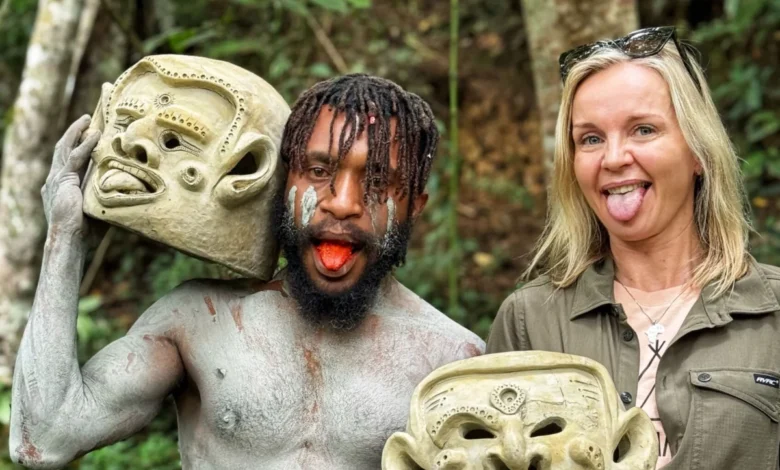
When Anniina Sandberg, a seasoned cultural anthropologist and the founder of Visit Natives, shared her experiences documenting a visit with the Hadzabe hunter-gatherers in Tanzania, she expected a dialogue rooted in cultural curiosity and respect. Instead, she encountered a digital environment where the responses shifted toward the voyeuristic. Many observers viewed the Hadzabe not as a complex society with a rich history and sophisticated survival skills, but as a source of amusement—a curated spectacle designed for the entertainment of a global audience. This realization served as a catalyst for a broader discussion on the ethics of modern travel, particularly in an era dominated by ubiquitous smartphone cameras and the relentless demand for viral social media content.
The central tension in Sandberg’s work revolves around a critical ethical boundary: the line between meaningful cultural exchange and the commodification of Indigenous peoples into tourism products. As the CEO of Visit Natives, Sandberg has spent over two decades navigating these complexities. Her professional journey has taken her from the plains of Tanzania to the highlands of Papua New Guinea, and from the Arctic reaches of Sápmi to the mountains of Morocco. Throughout this tenure, she has observed a shifting landscape where the rise of the "attention economy" poses a direct threat to the dignity and autonomy of the world’s most vulnerable communities.
The Evolution of Indigenous-Led Tourism: A Twenty-Year Chronology
To understand the current state of ethical tourism, it is necessary to examine the trajectory of Sandberg’s work and the broader shifts in the industry. Sandberg’s career began in the early 2000s, focusing on the Maasai and Hadzabe in Tanzania. During this period, her work was primarily academic, living among the Maasai for over a year to conduct deep-field research. This immersive approach allowed her to witness the nuances of daily life that are often invisible to the casual visitor.
By the mid-2010s, as global travel became more accessible and digital platforms like Instagram began to redefine the "traveler’s gaze," Sandberg recognized a gap in the market. Conventional tourism often relied on "day trips"—staged visits where Indigenous people performed traditional dances or crafts for an hour before the tourists retreated to luxury lodges. In response, Sandberg founded Visit Natives, a social enterprise designed to pivot away from performance-based tourism toward community-led, immersive experiences.
In the subsequent years, Sandberg expanded her network to include Sámi families in Norway, Berber communities in Morocco, and the Asaro Mudmen of Papua New Guinea. The timeline of her work reflects a growing global movement toward "slow travel" and "decolonized tourism," where the focus is shifted from the traveler’s convenience to the host community’s wellbeing. However, the rapid expansion of social media during the 2020s has introduced a new variable that threatens to undo much of this progress.

The Impact of the Attention Economy: Data and Trends
The concerns raised by Sandberg are supported by broader trends in the global tourism industry. According to the United Nations World Tourism Organization (UNWTO), Indigenous tourism is one of the fastest-growing sectors in the industry, driven by a growing demographic of travelers seeking "authentic" experiences. However, this demand often creates a market for "staged authenticity," where cultures are simplified to meet the expectations of tourists.
Data from digital marketing analysts suggests that travel content featuring "exotic" or "tribal" imagery receives significantly higher engagement rates on platforms like TikTok and Instagram compared to standard landscape or urban photography. This algorithmic preference incentivizes content creators to seek out the most visually striking and "different" aspects of a culture, often at the expense of accuracy and respect.
Sandberg notes that this trend has created a vulnerability within Indigenous communities. "When we talk about sustainable tourism, we have focused on environmental issues and social issues, but we rarely talk about the impact of social media," she stated. The "flattening" of culture—reducing a complex history of land rights, spiritual beliefs, and social structures into a 15-second video—risks reinforcing harmful stereotypes that Indigenous peoples have spent decades trying to dismantle.
The Complexity of Consent in a Hyper-Connected World
One of the most significant challenges identified by Sandberg is the evolving nature of informed consent. In the context of ethical tourism, consent is often viewed as a binary "yes" or "no" regarding a photograph. However, Sandberg argues that true consent requires a level of transparency that is often missing in the digital age.
Many Indigenous communities, particularly those in remote areas, may have a limited understanding of the global reach of the internet. They may agree to a photo being taken without realizing that the image could be seen by millions of people, used to sell products, or framed in a way that makes them appear primitive or "othered."
"When communities don’t know their rights, or don’t fully understand how their images might be used, it becomes much more complicated," Sandberg explained. For Sandberg, informed consent must involve a mutual understanding of the platform, the audience, and the potential long-term implications of the content. This includes ensuring that Indigenous people have the agency to decide how they are represented and that they receive fair compensation when their image or culture is used for commercial gain.

Deconstructing the "Human Zoo" Model vs. Meaningful Exchange
The history of Indigenous tourism is unfortunately marred by the legacy of "human zoos"—19th and early 20th-century exhibitions where Indigenous people were displayed for the entertainment of Western audiences. While modern tourism is far more regulated, Sandberg warns that the "day-trip" model often mirrors these historical injustices.
In many conventional tourism scenarios, Indigenous cultural activities are adapted to fit a visitor’s itinerary. This creates a transactional relationship where the community is essentially "on the clock," performing their identity for a fee. Visit Natives explicitly rejects this model. Instead of day trips, the organization facilitates multi-day stays where travelers live alongside their hosts.
Sandberg compares this approach to being invited into someone’s home. By sharing meals, participating in daily chores, and sleeping under the same roof, the power dynamic shifts from "spectator and performer" to "host and guest." This model prioritizes the community’s natural rhythm over the traveler’s schedule. There is no fixed itinerary; instead, encounters unfold organically, allowing for a deeper level of human connection that transcends the superficiality of a photo opportunity.
The Responsibility of Tourism Operators and Policy Makers
While individual travelers bear some responsibility, Sandberg emphasizes that the tourism industry at large must adopt a more rigorous code of conduct. Indigenous communities are often in a position of economic vulnerability, which can lead them to accept tourism opportunities that do not serve their long-term interests or cultural preservation goals.
Industry analysts suggest that a standardized ethical framework is needed to protect Indigenous rights in tourism. This would include:
- Community-Led Initiatives: Ensuring that tourism projects are owned and managed by the Indigenous communities themselves.
- Educational Mandates: Requiring operators to provide travelers with cultural sensitivity training before their visit.
- Transparency in Revenue: Clearly outlining how much of the tourism revenue stays within the community.
- Digital Ethics Standards: Guidelines for how images and stories of Indigenous peoples are shared online by both operators and tourists.
Sandberg argues that operators have a duty to educate travelers on the difference between being a guest and being a consumer. "There should be some code of conduct," she asserted, noting that many communities face ongoing struggles regarding land rights and livelihoods that make them susceptible to exploitation.

Broader Implications for Global Heritage and Cultural Preservation
The stakes of this debate extend far beyond the travel industry. The way Indigenous cultures are portrayed and interacted with has a direct impact on their political and social standing. When Indigenous people are portrayed solely as historical relics or "exotic" entertainment, it undermines their contemporary struggles for land rights, self-governance, and cultural survival.
Ethical Indigenous tourism, when done correctly, can be a powerful tool for cultural preservation. It provides an economic incentive for younger generations to maintain traditional skills and languages, and it offers a platform for Indigenous voices to reach a global audience on their own terms. However, this is only possible if the interactions are grounded in dignity and reciprocity.
Sandberg’s work with Visit Natives serves as a blueprint for a future where travel is a force for good. By focusing on the "mosaic of cultures" and the "core of humanity," she advocates for a return to the fundamentals of travel: the simple act of spending time with one another.
The final takeaway from Sandberg’s decades of experience is that the issue is not the presence of cameras or the existence of social media, but the intent behind their use. Meaningful travel requires an open mind and a willingness to move beyond the screen. As Sandberg concludes, the most valuable experiences do not come from luxury or curation, but from the raw, human connection of sharing everyday life. For the global tourism industry to move forward, it must prioritize the rights and humanity of the host communities over the digital cravings of the traveler.