As the autumn climbing season descends upon the Himalayas, the vast majority of commercial expeditions have pivoted toward the hyper-popular slopes of Manaslu, seeking the relative stability of established trade routes. However, a distinct shift in focus is emerging from two small, independent Russian teams. These climbers are turning their gaze toward the high-altitude isolation of Everest (8,848m) and the formidable technical challenge of Jannu (7,710m), signaling a rare return to pure, unguided mountaineering in the post-monsoon period.
Everest: A Quest for Autonomy and Innovation
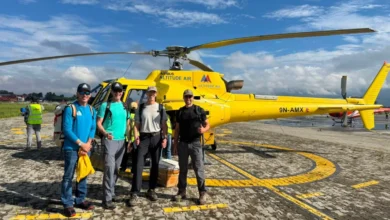
For the four-person team consisting of Andrei Vasiliev, Sergey Kondrashkin, Vitaly Shipilov, and Natalya Belyankina, the path to the base of the world’s highest peak has been anything but straightforward. Following a series of urgent meetings in Kathmandu last weekend, the team secured the necessary funding to proceed with their expedition. The logistics of organizing an Everest summit attempt in the fall—a season characterized by shorter days, colder temperatures, and lingering post-monsoon snow instability—presents a stark contrast to the infrastructure-heavy spring season.
The team’s primary objective is twofold: to test their specialized equipment in the unforgiving conditions of the Khumbu Glacier and to scout a potential new line on the mountain. While the team initially considered the standard South Col route, logistical and strategic considerations have shifted their focus toward alternative, unclimbed, or less-trafficked lines.
This decision is driven in part by the economics of high-altitude mountaineering. Under current permit regulations, the Nepalese government mandates a fee of $7,500 per climber for the standard Everest route during the autumn season. Conversely, climbing via a non-standard route reduces this fee to $5,000 per person. While the financial incentive is a pragmatic factor, Vasiliev emphasized that the ultimate decision regarding their specific route will be finalized upon their arrival at Base Camp, contingent on current snowpack conditions and localized risk assessments.
The team intends to climb without the assistance of supplemental oxygen. This "pure" style of ascent is a hallmark of their mountaineering philosophy, having previously completed a new route on Manaslu last year and undertaken two rigorous attempts on the South Face of Cho Oyu. By eschewing oxygen, they aim to push their physiological limits on a peak that exceeds the 8,000-meter mark, testing their endurance against the extreme hypoxia of the Death Zone.
The Challenges of a Solitary Ascent
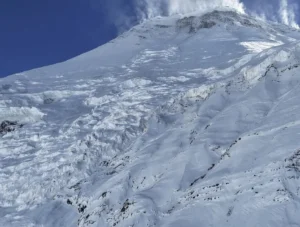
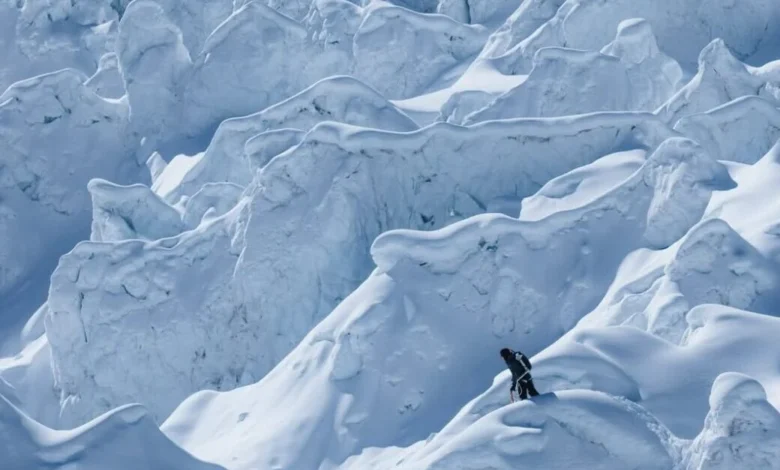
Climbing Everest in the autumn provides a radically different experience compared to the bustling, fixed-rope-dominated spring season. The absence of commercial operators means the team will face the mountain in its rawest state. They will be responsible for navigating the Khumbu Icefall—a notoriously unstable and dangerous maze of shifting seracs—without the benefit of pre-installed ladders or fixed lines maintained by local "Icefall Doctors."
The recent weather patterns have left the mountain heavily laden with snow, increasing the risk of slab avalanches. Navigating the Khumbu Glacier and the subsequent transit through the Western Cwm will require the team to exercise extreme caution, as they will be effectively alone in a high-risk environment where rescue assets are not immediately available. This autonomy is the defining characteristic of their expedition, marking a return to the ethos of the mid-20th-century pioneers who prioritized self-reliance over industrial-scale support.
Jannu: A Technical Masterpiece in the Making
Parallel to the Everest expedition, a separate six-member Russian team led by Sergey Romanenkov has mobilized for an ambitious technical ascent of Jannu (7,710m), located in the rugged Kangchenjunga region. This peak is widely regarded as one of the most difficult in the world due to its immense vertical relief and complex, exposed faces.
According to reports from Anna Piunova of the Mountain Club, the team’s itinerary is complex and multi-phased. Their plan involves a linked ascent of Langchung Khang (6,786m) and the adjacent Langpo Peak (6,965m) as a means of acclimatization. Following these summits, the team intends to establish a new route up the southeast face of Jannu. The route involves navigating a labyrinthine system of icefalls to reach the summit ridge, eventually intersecting with the historic line established by the legendary French climber Lionel Terray in 1962.
The team, which includes Ivan Artemov, Ivan Volkov, Artem Zhdanov, Konstantin Neumoin, Roman Shilin, and Vasily Yagodin, brings a significant pedigree to the climb, having successfully summited Gasherbrum II in 2024. Their 40-day window in the mountains, beginning with their arrival in Nepal next week, will be a critical test of their technical climbing capacity in extreme, high-altitude alpine conditions.
Contextualizing the Fall Season on Jannu
The selection of Jannu as a target is consistent with the recent history of elite alpine-style mountaineering. In recent years, Jannu has become the focal point for groundbreaking, lightweight expeditions that emphasize style over speed.
In 2023, the American team of Alan Rousseau, Matt Cornell, and Jackson Marvell completed a stunning alpine-style ascent of the mountain’s North Face. Their success was followed in 2024 by French climbers Benjamin Védrines and Nico Jean, who reached the East Summit (7,468m) via the North Face, also employing a minimalist, fast-and-light strategy. Both of these expeditions were recognized with the prestigious Piolet d’Or, an accolade that celebrates the most significant and innovative ascents in the world. The current Russian expedition will be measured against this high bar of technical achievement, as the global climbing community continues to monitor how these small teams navigate the inherent risks of the Kangchenjunga massif.
Broader Implications for Himalayan Mountaineering
The presence of these two teams serves as a reminder of the dichotomy in modern Himalayan mountaineering. While the commercial sector continues to expand, catering to clients seeking assisted summits on the "eight-thousanders," there remains a vibrant, albeit small, segment of the community committed to traditional, autonomous, and exploratory climbing.
The fiscal reality of these expeditions—often relying on personal savings and crowdfunding—highlights the growing cost-prohibitive nature of mountaineering in Nepal. The tiered permit structure, while intended to encourage the exploration of new routes, also places a significant burden on teams that are not backed by corporate sponsors.
Furthermore, the meteorological instability of the post-monsoon period serves as an important reminder of the environmental challenges posed by climate change in high-mountain regions. Increased snowfall and fluctuating temperatures have made the management of objective hazards, such as icefall collapse and avalanches, significantly more unpredictable. The success or failure of these two Russian teams will be closely watched, not only for the novelty of their routes but as a case study in how small, unsupported groups manage risk in an era where Himalayan conditions are becoming increasingly volatile.
As the teams transition from the planning phase to the reality of the approach marches in the coming days, the climbing world remains focused on these two distinct objectives. Whether they achieve their specific routes or are forced to adapt to the shifting realities of the high mountains, their efforts represent a vital continuation of the spirit of exploration that has defined mountaineering for generations.