Nestled in the Maghreb region of North Africa, Tunisia bridges the Mediterranean basin and the vast expanse of the Sahara Desert. Bounded by the Mediterranean Sea to the north and east, Algeria to the west and southwest, and Libya to the southeast, the country packs a remarkably diverse range of ecosystems, historical epochs, and cultural landmarks into a compact geographic footprint. While it remains comparatively off the beaten path for mass international tourism relative to its Mediterranean neighbors, Tunisia offers an intensely concentrated itinerary where travelers can transition from pristine coastal beaches to ancient Roman ruins and desert dunes within a single week.
Despite the relatively short physical distances between major points of interest, logistics can present a distinct challenge for independent travelers due to the decentralized nature of the nation’s historical and natural assets. Consequently, a significant portion of incoming tourists opt for structured tour packages. These pre-arranged itineraries typically coordinate all ground transportation, accommodations, and certified local guides in advance, optimizing travel time and allowing visitors to focus on the cultural and historical significance of each destination rather than navigational hurdles.

Tunis and Carthage: The Historic Core
Most exploratory journeys through Tunisia commence in the capital city of Tunis, a vibrant metropolis where centuries of layered civilizations coexist. At the heart of the urban center lies the Medina of Tunis, a sprawling labyrinth designated as a UNESCO World Heritage Site. Established in the late 7th century, the medina grew into one of the most prosperous economic and intellectual hubs of the Islamic world. Today, its covered souks remain active commercial arteries, where merchants trade traditional spices, intricately hammered brass lamps, genuine leather goods, and concentrated perfume oils. Due to the intricate, maze-like architecture of the alleys, navigation can be difficult for first-time visitors, making the assistance of a local guide invaluable for uncovering the hidden courtyards and historic merchant residences that define the district.
Just a short distance outside the modern urban sprawl of the capital rest the ruins of ancient Carthage. Founded by the Phoenicians in the 9th century BCE, Carthage grew into a formidable maritime empire and the primary geopolitical rival of the Roman Republic during the Punic Wars. The ancient site’s most prominent archaeological features include the expansive Antonine Baths—once among the largest thermal complexes in the Roman Empire—and the ancient Punic ports that once sheltered a dominant naval fleet. Visitors can gain comprehensive historical context at the hilltop Byrsa Museum, which overlooks the Gulf of Tunis. Furthermore, the nearby Bardo National Museum in Tunis houses one of the most extensive and well-preserved collections of Roman mosaics in the world, salvaged from archaeological sites across the country.
Sidi Bou Said: Architectural Heritage and Coastal Aesthetics
Perched on a steep coastal cliff overlooking the Mediterranean Sea just a short drive from Tunis, Sidi Bou Said stands as one of the most visually distinct and photographed settlements in North Africa. The village is globally recognized for its strict adherence to a uniform architectural aesthetic, characterized by stark whitewashed stucco walls, vivid cobalt-blue doors and window shutters, and vibrant cascades of bougainvillea that line the winding cobblestone pathways.

The village derives much of its distinct character from a decree implemented in the 20th century to protect its traditional Andalusian-influenced architecture, drawing painters, writers, and international travelers for generations. Cultural preservation guidelines dictate that property owners must maintain the traditional blue-and-white color palette. Visitors frequently experience the locale by visiting the historic Café des Nattes in the morning hours before peak tourist traffic arrives, enjoying traditional mint tea accompanied by bambalouni, a locally popular fried sweet dough pastry dusted with coarse sugar.
Roman Antiquity Beyond the Capital
Tunisia possesses an exceptionally rich concentration of Roman provincial architecture, largely owing to North Africa’s historic designation as the "breadbasket" of the Roman Empire due to its fertile agricultural output. Among the nation’s premier classical antiquities is the Amphitheatre of El Djem. Constructed in the 3rd century CE, this massive stone structure is one of the best-preserved Roman amphitheaters in the world, capable of seating an estimated 35,000 spectators for gladiatorial contests and public spectacles. Unlike many structures in Rome, El Djem’s outer facade remains remarkably intact, allowing visitors to explore the subterranean chambers where wild beasts and combatants were held prior to entering the arena.
In addition to El Djem, the archaeological site of Dougga, located in northern Tunisia, offers an exceptionally well-preserved illustration of a Roman small town. Designated as a UNESCO World Heritage Site, Dougga features a nearly complete capitol temple, a public forum, residential villas equipped with sophisticated plumbing systems, and a theater nestled into a hillside overlooking the surrounding olive groves. Because these monumental Roman assets are geographically dispersed across rural landscapes, independent transit can be cumbersome, reinforcing the logistical advantage of organized regional excursions.

Kairouan: A Center of Islamic Scholarship
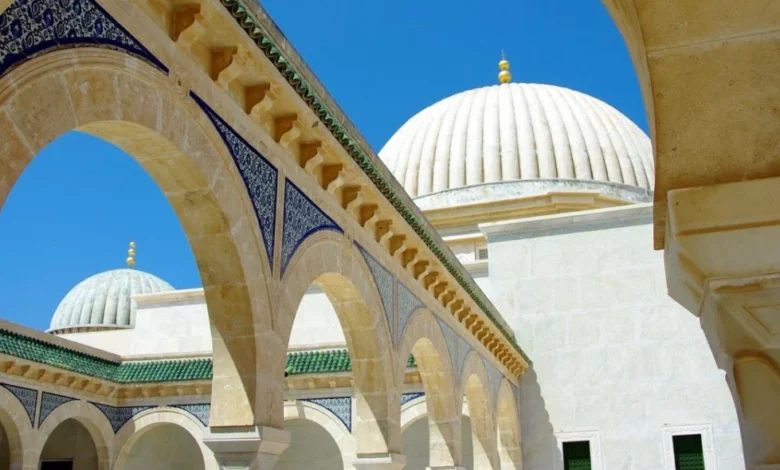
Moving inland, the city of Kairouan holds status as one of the holiest cities in Islam and a foundational center for religious scholarship in North Africa. Founded in 670 CE by the Arab general Uqba ibn Nafi, the city served as an influential administrative and spiritual capital during the Aghlabid dynasty. The focal point of Kairouan is the Great Mosque of Sidi Uqba, recognized for its vast marble-paved courtyard, ancient columns salvaged from earlier Roman and Byzantine structures, and a commanding square minaret that serves as an architectural prototype for Western Islamic minarets. Beyond its religious architecture, Kairouan is renowned as a primary hub for traditional Tunisian hand-knotted carpet weaving. Local artisanal workshops permit visitors to observe master weavers operating vertical looms, continuing a cottage industry governed by strict national quality-control standards and certification tags.
The Sahara and Southern Landscapes
The southern half of Tunisia presents a dramatic climatic and geographic shift, defined by expansive arid terrain, subterranean architecture, and the northern reaches of the Sahara Desert. Douz, frequently referred to as the gateway to the Sahara, serves as the primary launching point for desert expeditions. Travelers engage in traditional camel treks across the undulating sand dunes, culminating in sunset viewings over the desert horizon. Overnight stays in Bedouin-style desert camps offer immersion in regional hospitality, featuring traditional communal meals prepared over open fires, local folk music, and unobstructed stargazing uninhibited by light pollution.
Further into the southern interior lies Chott el Djerid, a massive endorheic salt lake that undergoes striking visual transformations as mineral deposits react to changing solar angles, shifting in color from blinding white to pink and silver hues. Nearby, the desert oasis of Tozeur provides a stark contrast with its dense palm groves, subterranean irrigation systems, and expansive date palm orchards yielding some of the world’s finest dates.

The region’s otherworldly topography has long attracted international filmmakers. Matmata and Ong Jemel feature prominently as shooting locations for the Star Wars franchise, serving as the fictional desert planet of Tatooine. However, Matmata’s subterranean troglodyte dwellings are authentic, historically functional habitations carved directly into the soft sandstone earth to insulate residents against extreme desert temperatures. These subterranean homes remain occupied by local Amazigh (Berber) families, demonstrating sustainable vernacular architecture adapted to severe climatic pressures.
Djerba and Coastal Respite
For travelers seeking coastal relaxation following intensive historical itineraries, the island of Djerba off the southeastern coast provides a Mediterranean retreat characterized by shallow waters, sandy beaches, and a distinct cultural identity shaped by centuries of multi-ethnic coexistence. Djerba is home to the El Ghriba Synagogue, one of the oldest active Jewish pilgrimage sites in Africa, with religious traditions tracing roots back to the destruction of Solomon’s Temple in 586 BCE. The island’s administrative center, Houmt Souk, features traditional white-domed architecture, bustling market stalls, and artisan workshops. On the mainland coast, resort hubs such as Hammamet and Sousse offer extensive coastal infrastructure, long sandy stretches, and historic walled medinas, functioning as accessible bases for coastal tourism.
Gastronomic Profile and Culinary Heritage
Tunisian cuisine is distinguished by robust, bold flavor profiles, heavy utilization of local spices, and integration of Mediterranean and North African culinary traditions. A staple street food item is brik, a delicate, paper-thin pastry sheet folded into a triangle and deep-fried with a filling typically consisting of an egg, tuna, capers, and fresh herbs. Primary carbohydrate staples include couscous, commonly served with slow-cooked lamb, fish, or seasonal vegetables, alongside lablabi, a thick, comforting chickpea soup traditionally consumed as a morning meal, flavored with garlic, cumin, olive oil, and harissa.

Harissa, a hot chili pepper paste composed of roasted red peppers, garlic, olive oil, and various spices, serves as a near-ubiquitous condiment on Tunisian dining tables. Due to its significant capsaicin concentration, culinary guides advise moderation for uninitiated palates. Concluding meals typically involves traditional sweets such as makroudh, a semolina pastry stuffed with date paste and soaked in honey, accompanied by robust Turkish-style coffee or traditional green mint tea infused with roasted pine nuts.
Practical Travel Information and Seasonality
Optimal timing for visiting Tunisia generally falls within the shoulder seasons of spring (March through May) and autumn (September through November). During these months, ambient temperatures remain conducive to extended walking tours of outdoor archaeological sites and urban medinas, while mitigating the intense heat of the interior desert regions. While summer remains a popular period for domestic and international beach tourism along the coast, interior provinces routinely experience high temperatures that can exceed 40°C (104°F). Winter brings mild coastal conditions, though desert temperatures drop significantly after sunset, necessitating appropriate cold-weather attire for overnight Sahara excursions.
From an economic and logistical standpoint, Tunisia offers favorable value for international tourists compared to Western European Mediterranean destinations. Tour packages that bundle accommodation, licensed guides, and cross-country transit continue to represent the most efficient operational framework for travelers aiming to experience the nation’s diverse regional offerings—spanning capital antiquities, holy Islamic architecture, Roman ruins, and desert landscapes—within a standard one-week holiday timeframe.