Mastering the Indian Experience Insights and Expert Guidance for Navigating the Subcontinent

The tourism landscape of India is currently undergoing a significant transformation as international arrival numbers approach pre-pandemic levels. According to data from the Indian Ministry of Tourism, the country saw over 9.2 million foreign tourist arrivals in 2023, marking a substantial increase from previous years. As the subcontinent re-establishes itself as a premier global destination, seasoned travelers and industry experts are emphasizing a shift from traditional sightseeing toward deep-immersion, experiential travel. This evolution requires a nuanced understanding of the country’s unique cultural, logistical, and psychological landscape. Travel journalist Laura Holt, in collaboration with local leaders from Intrepid Travel, has identified several critical pillars for successfully navigating the complexities of the Indian experience, ranging from the tiger-populated forests of Rajasthan to the spiritual hubs of the Ganges.
The Reality of the Indian Safari and Wildlife Conservation
One of the primary draws for international visitors is the opportunity to witness the Bengal tiger in its natural habitat. Ranthambore National Park in Rajasthan serves as a focal point for this interest. However, experts noted that the Indian safari experience differs fundamentally from the traditional African model. While African safaris often emphasize luxury and highly structured viewing, Indian wildlife excursions are characterized by their raw, often unpredictable nature.

The conservation context is equally significant. India celebrated the 50th anniversary of "Project Tiger" in 2023, reporting a national tiger population of 3,167 individuals—a significant increase from the 1,411 recorded in 2006. This growth has led to higher density in parks like Ranthambore, yet the experience remains one of intense anticipation. Travelers are advised to expect a more rugged environment. As Holt observed, the "Indian massage"—a colloquial term for the jarring movement of Jeeps along root-riddled forest tracks—is a standard part of the journey. This lack of "white-linen" formality is, according to local guides, a core component of the country’s authenticity.
Psychological Adaptation and the Mirror Effect
A recurring theme among local experts is the necessity of mental preparation. Mahaveer Singh, a veteran leader for Intrepid Travel, suggests that the external stimuli of India—the vibrant saris, the sounds of urban macaques, and the pervasive scents of street life—should serve as a catalyst for internal reflection. Singh advocates for a philosophy he calls "using India as a mirror."
"Many things will be challenging in India," Singh noted, citing the chaotic pace and sensory overload. He argues that the most successful travelers are those who do not merely observe the culture but also monitor their own responses to it. This psychological approach is supported by travel sociologists who suggest that "culture shock" in India is often a result of a direct confrontation with a pace of life that prioritizes spontaneity over rigid scheduling. By using the environment as a tool for self-reflection, travelers can transition from being overwhelmed observers to engaged participants.

Deconstructing the Pre-Written Narrative
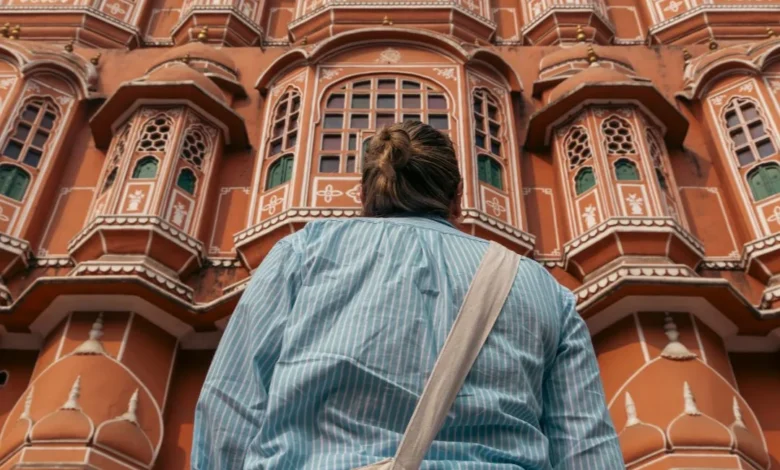
A common pitfall for first-time visitors is "over-researching," which can lead to a rigid set of expectations that rarely align with reality. Temsurenla Yaden, a guide known for her work in Jaipur’s "Pink City," emphasizes the importance of arriving with an open mind rather than a "pre-written story."
Jaipur provides a unique case study in modern Indian tourism. The city has seen the rise of the "Pink City Rickshaw Co.," an initiative where women from low-income backgrounds are trained as drivers. This project not only provides sustainable livelihoods but also offers tourists a different perspective on urban navigation. Yaden observes that travelers who arrive bracing for chaos often miss the fascination of the busy streets. "When travelers allow themselves to soften, to observe instead of judge, everything shifts," she stated. The antidote to being overwhelmed is to experience rather than compare, allowing the unfamiliar to become a learning opportunity rather than a point of discomfort.
The Mechanics of Small-Group Dynamics
The rise of small-group travel—typically defined as groups of 12 to 16 people—has changed the logistics of Indian tourism. Sabyasachi Pathak, an expert in cycling tours through Rajasthan, highlights the importance of group "rhythm." In a country as vast as India, where infrastructure can vary wildly between states, the efficiency of a group depends on collective cooperation and trust in leadership.

Pathak argues that the best journeys occur when individual agendas are set aside in favor of a shared adventure. Small-group travel is designed to balance activity with essential periods of rest. When individual travelers attempt to deviate from the schedule without consultation, it creates logistical pressure that can affect the entire group’s experience. "Trust isn’t about losing independence; it’s about teamwork," Pathak explained. This sentiment is echoed by other industry professionals who note that the "energy" of a group can significantly influence the perceived quality of a trip.
Establishing Grounding Rituals Through Local Traditions
To combat the potential for sensory fatigue, local leaders recommend the adoption of daily rituals. Varsha Shekhawat, a guide based in Varanasi, suggests that something as simple as a morning cup of chai can serve as a grounding mechanism. Varanasi, one of the world’s oldest continuously inhabited cities, is often described as the spiritual heart of India, yet its intensity can be daunting.
Shekhawat encourages travelers to find a local "chai wallah" and observe the city as it wakes. The use of "kulhads"—traditional terracotta cups—is not only an authentic cultural experience but also an environmentally sustainable practice, as the cups are biodegradable. This ritualistic approach allows travelers to pause and consider the day ahead, rather than rushing from one landmark to the next. By slowing down, visitors can better navigate the raw authenticity of places like the Ganges ghats, where life and death are observed in close proximity.

Practical Logistics: The Necessity of Traveling Light
The physical demands of traveling across the Indian subcontinent cannot be overstated. Whether moving through the "Golden Triangle" (Delhi, Agra, and Jaipur) or exploring the tropical backwaters of Kerala, the ability to move quickly and efficiently is paramount. India’s railway network, the fourth largest in the world, is the backbone of national travel, but navigating crowded stations with excessive luggage is a significant challenge.
Ripudaman Singh Shaktawat and Madan Singh, both seasoned Intrepid leaders, emphasize that physical baggage often mirrors emotional baggage. They advocate for a "less stuff, fewer worries" approach. Essential items include:
- A small daypack for daily excursions.
- Comfortable, durable walking shoes.
- A scarf or shawl for entering temples and religious sites.
- Sun protection and a reusable water bottle to reduce plastic waste.
Shaktawat noted that travelers with half-empty suitcases are often the most spontaneous, able to engage in market visits or local festivals without the burden of heavy luggage. This flexibility is particularly crucial for time-sensitive events, such as witnessing the sunrise at the Taj Mahal in Agra, where security lines and transport schedules require punctuality and ease of movement.

Broader Socio-Economic Impact of Expert-Led Tourism
The involvement of local leaders in the tourism sector has broader implications for the Indian economy. By employing local experts, travel companies ensure that tourism revenue remains within the community. This model supports the preservation of traditional crafts and the maintenance of historical sites that might otherwise be overlooked by large-scale commercial tours.
Furthermore, expert-led tours often facilitate genuine connections between visitors and residents. Village walks in Rajasthan or food tours in Jaipur provide a platform for cultural exchange that goes beyond the transactional nature of traditional tourism. As the global travel industry moves toward more sustainable and ethical practices, the role of the local guide has become central to the "decolonization" of the travel experience, moving away from a "voyeuristic" approach toward one of mutual respect and understanding.
Conclusion: A New Paradigm for the Subcontinent
India remains a land of profound contrasts, where ancient traditions exist alongside rapid modernization. For the modern traveler, mastering the experience requires more than just a passport and an itinerary; it requires a shift in perspective. By embracing the advice of those who navigate the terrain daily, visitors can move past the superficial "chaos" to find the underlying order and beauty of the country.

The key takeaways from Holt and the Intrepid team suggest that success in India is measured not by the number of monuments visited, but by the depth of the connections made and the clarity of the "mirror" reflected back at the traveler. As India continues to grow as a global tourism powerhouse, the emphasis on light travel, group harmony, and psychological openness will remain the definitive guide for those seeking to understand the true essence of the subcontinent.