Navigating Japan’s Rail Network: A Comprehensive Guide to Tickets, Etiquette, and the World’s Most Efficient Transit System

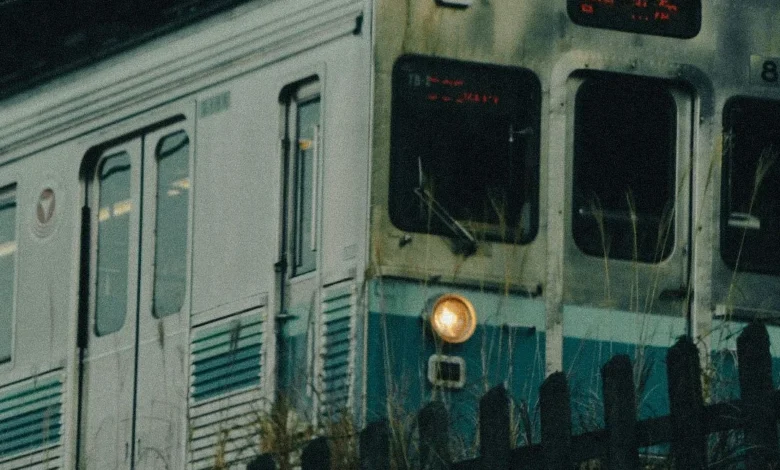
Japan’s rail infrastructure is globally recognized as the gold standard for public transportation, characterized by its near-perfect punctuality, rigorous safety standards, and vast geographic reach. For the millions of international tourists who visit the archipelago annually, the rail network is not merely a utility but a central component of the travel experience. From the high-speed Shinkansen (bullet trains) that connect major metropolises to the rhythmic local lines that service remote mountain villages, the system is designed to facilitate seamless movement across the country’s four main islands. Understanding the nuances of this complex network—ranging from ticket acquisition to the unspoken social contracts of the commuter carriage—is essential for any traveler seeking to navigate Japan with the efficiency of a local.
The Historical Context and Evolution of Japanese Rail
The history of rail in Japan is a narrative of rapid modernization and technological ambition. The country’s first railway line opened in 1872, connecting Shimbashi in Tokyo to Yokohama. However, the most significant milestone occurred in 1964, coinciding with the Tokyo Olympics, when Japan inaugurated the Tokaido Shinkansen. This was the world’s first high-speed rail line, fundamentally altering the country’s economic geography by shrinking the travel time between Tokyo and Osaka.
In 1987, the state-run Japanese National Railways (JNR) was privatized and split into seven distinct companies, collectively known as the Japan Railways (JR) Group. This privatization spurred a wave of innovation and competition, leading to the diverse array of luxury trains, commuter lines, and regional expresses seen today. Today, the network comprises over 27,000 kilometers of track, managed by both JR companies and dozens of private operators, such as Odakyu, Keio, and Kintetsu, which often provide specialized access to tourist regions like Hakone or Nara.

Understanding the Ticket Ecosystem: Passes, IC Cards, and Paper Tickets
Navigating the financial aspect of Japanese rail requires an understanding of three primary payment methods: the Japan Rail Pass, IC cards, and individual paper tickets.
The Japan Rail (JR) Pass
For decades, the JR Pass was the default choice for international tourists. It offers unlimited travel on most JR-operated trains for fixed periods of 7, 14, or 21 days. However, the landscape shifted significantly in October 2023, when the JR Group implemented a price increase of approximately 70%. This adjustment has forced travelers to conduct more rigorous cost-benefit analyses. For a 7-day pass to be economically viable today, a traveler must typically complete a round trip between Tokyo and Hiroshima or several long-distance segments in quick succession. The pass remains a powerful tool for convenience, allowing for free seat reservations and easy access through gates, but it is no longer the automatic budget-saver it once was.
IC Cards: The Digital Wallet
For local travel within cities like Tokyo, Osaka, and Kyoto, IC cards—such as Suica, Pasmo, and Icoca—are indispensable. These are rechargeable, "tap-and-go" cards that can be used on almost all trains, subways, and buses. Beyond transit, they are accepted at convenience stores (konbini), vending machines, and some restaurants. Due to global semiconductor shortages, the sale of physical anonymous Suica and Pasmo cards was temporarily suspended in 2023, leading to a surge in the use of mobile versions via Apple Pay and Google Pay. Travelers are now encouraged to add these cards to their smartphones before arrival for immediate use.
Individual Paper Tickets
For one-off journeys, paper tickets can be purchased at automated vending machines found in every station. These machines feature English interfaces. To use them, travelers look at a large map above the machines to identify their destination and the corresponding fare. In major hubs, ticket offices known as Midori-no-Madoguchi (Green Windows) are staffed by attendants who can assist with complex bookings and seat reservations for long-distance travel.

The Hierarchy of Trains: From Shinkansen to Local Lines
The Japanese rail system is tiered based on speed and the number of stops, which determines both the travel time and the cost.
- Shinkansen (Bullet Train): The pinnacle of the network, these trains run on dedicated tracks and reach speeds of up to 320 km/h. They are divided into categories: the Nozomi (fastest, fewest stops), Hikari, and Kodama (stops at all stations). Note that the standard JR Pass does not fully cover the Nozomi without an additional supplement.
- Limited Express (Tokkyu): These are the fastest non-Shinkansen trains, stopping only at major stations. They require a base fare plus a "limited express fee."
- Express (Kyuko) and Rapid (Kaisoku): These trains skip various smaller stations but do not usually require a surcharge over the base fare.
- Local (Futsu): The backbone of the commuter system, these trains stop at every single station on the line.
Reserved vs. Non-Reserved Seating
On Shinkansen and Limited Express trains, passengers often have the choice between reserved (shiteiseki) and non-reserved (jiyuseki) cars. Reserved seats provide peace of mind, especially during peak travel seasons like Golden Week (late April/early May) or Obon (mid-August). Recently, JR Central and JR West introduced a mandatory reservation system for "oversized baggage" on certain Shinkansen lines. Passengers carrying luggage with total dimensions (length + width + height) exceeding 160 cm must book specific seats at the rear of the carriage to access dedicated storage space.
The Social Contract: Etiquette and Passenger Conduct
The efficiency of the Japanese rail system relies heavily on the cooperation and behavior of its passengers. The "quiet car" philosophy extends to almost all forms of rail transit.
Silence and Communication
Talking on mobile phones is strictly prohibited on trains; passengers are expected to set their devices to "manner mode" (silent). If a call must be taken on a Shinkansen, passengers should move to the vestibule area between carriages. Conversations between travel companions are conducted in hushed tones to avoid disturbing others.

The Queueing System
Orderly boarding is a hallmark of Japanese stations. Platforms are marked with indicators showing exactly where train doors will open. Passengers form neat, single or double lines at these markers. It is considered a major breach of etiquette to cut the line or to attempt to board before arriving passengers have fully disembarked.
Dining on Trains
A distinct cultural divide exists regarding food. On long-distance trains like the Shinkansen, eating is not only permitted but celebrated through the Ekiben (station bento) culture. These regional lunch boxes feature local specialties and are a staple of the travel experience. Conversely, eating on local commuter trains or subways is generally frowned upon and considered messy or inconsiderate.
Accessibility and Inclusivity Measures
Japan has made significant strides in making its rail network accessible. Major stations are equipped with "multi-purpose" toilets, elevators, and tactile paving (Tenji blocks) for the visually impaired. Station staff are trained to assist passengers in wheelchairs, often using portable ramps to bridge the gap between the platform and the train. Additionally, many urban lines offer "women-only" carriages during morning and evening rush hours—clearly marked with pink signage—to provide a safer environment during periods of extreme crowding.
Data and Performance Metrics: The Precision of the System
The reliability of the Japanese rail system is backed by staggering data. According to the Central Japan Railway Company, the average delay of the Tokaido Shinkansen is consistently less than one minute per train, a figure that includes delays caused by uncontrollable natural disasters like typhoons or earthquakes.

Furthermore, the safety record is unparalleled. Since the Shinkansen began operations in 1964, there have been zero passenger fatalities due to derailments or collisions, despite the system carrying billions of passengers over six decades. This is achieved through the Automatic Train Control (ATC) system and the Urgent Earthquake Detection and Alarm System (UrEDAS), which can automatically stop trains the moment a tremor is detected.
Broader Implications: Economic and Environmental Impact
The rail network is the lifeblood of the Japanese economy. By providing reliable transport, it allows for high-density urban living and reduces the reliance on private automobiles. Environmentally, the Shinkansen is a vital tool in Japan’s climate strategy. A journey from Tokyo to Osaka by bullet train emits approximately 85% less carbon dioxide than the equivalent trip by air, making it one of the most sustainable forms of mass transit in the industrialized world.
Moreover, the expansion of the rail network continues to drive regional development. The recent extension of the Hokuriku Shinkansen to Tsuruga in March 2024 is expected to boost tourism in the Fukui Prefecture, demonstrating how infrastructure remains a primary lever for economic revitalization in Japan’s aging and depopulating rural areas.
Common Pitfalls for International Travelers
Despite the system’s logic, first-time visitors often encounter several hurdles:

- Rush Hour Complexity: Traveling with large suitcases between 7:30 AM and 9:00 AM in cities like Tokyo can be physically exhausting and disruptive to commuters.
- Last Train Anxiety: Most Japanese trains do not run 24 hours a day. In Tokyo, the "last train" usually departs around midnight or 1:00 AM. Missing this can result in expensive taxi fares or the need for a "capsule hotel" stay.
- Navigating Large Hubs: Stations like Shinjuku—the world’s busiest, handling over 3.5 million passengers daily—can be overwhelming. Travelers are advised to follow the color-coded overhead signs rather than relying solely on GPS, which often fails underground.
As Japan continues to refine its transit technology, including the development of the SCMaglev (Superconducting Maglev) which aims to connect Tokyo and Nagoya in 40 minutes, the rail network remains a testament to the country’s commitment to public utility, social harmony, and technological excellence. For the traveler, it is more than a way to get from point A to point B; it is a window into the disciplined and meticulous heart of Japanese society.