Traveling through Morocco, one inevitably encounters the profound and pervasive presence of Amazigh culture, a defining characteristic that predates many modern notions of nationhood. The Amazigh, meaning "free people" in their own language, are the indigenous inhabitants of North Africa, a heritage stretching back millennia. Their history, culture, and social structures have not merely influenced Morocco; they have formed its foundational bedrock across centuries, shaping the very essence of the country. While often mislabeled as "Berbers," a term carrying historically derogatory connotations, the Amazigh represent a vibrant, resilient civilization whose unique language, Tamazight, and rich traditions stand at the core of Morocco’s identity, even amidst an increasingly globalized world. From ancient rock carvings to contemporary smartphone conversations, the Amazigh legacy continues to thrive, a testament to an enduring spirit.
The Etymology of "Amazigh" vs. "Berber": Reclaiming a Heritage
The distinction between "Amazigh" and "Berber" is not merely semantic; it reflects a critical reclamation of identity and a rejection of colonial and historical subjugation. The term "Berber" originates from the Greek barbaria or barbaros, meaning "foreign" or "non-Greek-speaking," and was later adopted by Roman and Arab conquerors. The Arabs, in particular, coined "Al-Barbar," likely an adaptation of the Greek, which over time evolved into "barbarous," signifying foreignness and inferiority. This label was subsequently employed by foreign powers to categorize and diminish the indigenous people, denying them their self-identified heritage. While "Berber" remains widely used globally and even sometimes by those of Amazigh descent due to its historical prevalence, it is increasingly recognized as a historically loaded and reductive term that fails to capture the richness and dignity of the culture it purports to describe. The preferred term, "Amazigh," meaning "free people" or "noble people," is a powerful affirmation of self-determination and cultural pride, challenging inherited hierarchies and cultural domination. Raising awareness about this etymological history is crucial for fostering respectful engagement with North African cultures.
Deep Roots: Prehistoric Origins and Ancient North African Kingdoms
The history of the Amazigh people is inextricably linked to the earliest chapters of human existence in North Africa. Archaeological discoveries in Morocco have pushed back the timeline of Homo sapiens significantly, with findings at Jebel Irhoud indicating human presence nearly 300,000 years ago, making it home to the oldest Homo sapiens remains ever found. This profound antiquity underscores the deep indigenous roots of the Amazigh in the region. Much of what is known about these earliest inhabitants comes from archaeological records, rock art, and ancient burial sites, revealing complex societies with sophisticated tool-making and symbolic practices.
Unlike many civilizations whose histories are primarily preserved through written records, a significant portion of Amazigh history has been transmitted orally. This rich oral tradition, passed down through generations via storytelling, poetry (tamergert), and communal memory, serves as a vital repository of their past, values, and worldview. This reliance on oral transmission highlights the importance of communal bonds and intergenerational knowledge transfer within Amazigh society.
Thousands of years before the advent of modern borders, the Amazigh peoples, organized largely through diverse tribes and confederations, exercised significant influence across North Africa. They established intricate trade routes that crisscrossed the Sahara Desert, linking Sub-Saharan Africa with the Mediterranean basin. These networks facilitated the exchange of goods such as gold, salt, slaves, and agricultural products, but also ideas, technologies, and cultural practices. These extensive interactions shaped sophisticated political, economic, and cultural systems, demonstrating the Amazigh’s adaptability and organizational prowess.
Over the centuries, the Amazigh interacted with, and often resisted, a succession of external powers. The ancient Greeks referred to them as "Libyans," a broad term for the inhabitants west of Egypt. The Romans, who established provinces like Mauretania Tingitana (modern northern Morocco) and Numidia, variously called them "Numidians" and "Africans." These interactions often involved conflict, as the Amazigh kingdoms, such as the Numidian kingdom under kings like Masinissa, frequently challenged Roman expansion. Later, during the medieval period, much of Europe grouped the North African inhabitants, including the Amazigh, under the broad and often orientalizing label of "Moors," particularly in the context of the Islamic conquest of the Iberian Peninsula (Al-Andalus). Each of these external labels reflected the perspective of the colonizer or outsider, rarely capturing the self-identified identity of the diverse Amazigh groups themselves.
Islamization and the Rise of Amazigh Dynasties
Prior to the advent of Islam in the 7th century, the religious landscape of North Africa was diverse. Many Amazigh communities practiced various forms of Animism, deeply rooted in their connection to nature and ancestral veneration. Christianity had also gained a foothold, particularly in the Romanized urban centers and some rural areas, while a significant and long-standing Jewish presence flourished across North Africa, with Amazigh Jewish communities forming a notable part of this heritage.
The arrival of Islam in the late 7th and early 8th centuries marked a pivotal moment. The founder of modern Morocco, Moulay Idriss I, a descendant of the Prophet Muhammad, fled the Abbasid Dynasty and arrived in Morocco in 788 CE. He found refuge among the powerful Amazigh Awraba tribe, who converted to Islam under his guidance. This alliance led to the establishment of the Idrissid Dynasty, the first Arab-Amazigh Islamic state in Morocco, laying the groundwork for a distinct Moroccan identity. Islam spread rapidly through the region, but it was not merely a direct import from the Middle East. Instead, it was profoundly shaped and localized through Amazigh governance, customs, and existing social structures, resulting in expressions of Islam that were distinct from those found in the Arab East.
The period following the Idrissids saw the rise of two of Morocco’s greatest historic dynasties, both Amazigh-led Islamic empires: the Almoravids (11th-12th centuries) and the Almohads (12th-13th centuries). The Almoravids, originating from the Sanhaja Amazigh confederation in the Sahara, established a vast empire that stretched across North Africa from Mauritania to Algeria and into Al-Andalus (Islamic Spain). They were instrumental in the spread of Maliki Islam and left a significant architectural legacy. The Almohads, originating from the Masmuda Amazigh tribes of the High Atlas Mountains, overthrew the Almoravids and built an even larger empire, encompassing much of North Africa and Al-Andalus. Their reign was marked by a distinct reformist religious ideology, intellectual flourishing, and monumental architecture, including the Giralda in Seville and the Kutubiyya Mosque in Marrakesh. These dynasties vividly demonstrate the Amazigh capacity for large-scale political organization, cultural synthesis, and profound influence on both North African and European history.
Enduring Resilience: Navigating Centuries of External Influence
Over millennia, the Amazigh people have engaged in a complex tapestry of interactions with a multitude of foreign powers. They battled, traded with, negotiated alongside, and hosted Phoenicians, Carthaginians, Romans, Vandals, Byzantines, Arabs, Spanish, and French powers. Each interaction brought new challenges and influences, yet through it all, Amazigh language, social organization, and cultural continuity remarkably endured. Despite repeated attempts at domination, the Amazigh were never fully conquered in a way that eradicated their fundamental identity. Their resilience often manifested in strategic retreats to mountainous strongholds, the preservation of oral traditions, and the subtle integration of new influences into existing cultural frameworks.
The French protectorate (1912-1956) represented one of the most concerted efforts to reshape Moroccan society. Colonial policies often sought to exploit divisions, sometimes promoting a "Berber policy" that aimed to differentiate Amazigh from Arab populations, often with the intention of weakening nationalist movements. However, this strategy ultimately failed to break the deep-seated cultural connections. Following Morocco’s independence in 1956, the newly formed nation-state pursued a policy of Arabization, emphasizing Arabic as the national language and often marginalizing Amazigh culture in public life, education, and media. For decades, Amazigh language and identity faced significant challenges, with public expression often suppressed or discouraged. Despite these pressures, Amazigh language and cultural practices continued to thrive in homes, communities, and rural areas, demonstrating an extraordinary tenacity.
Tamazight: Language, Culture, and Official Recognition
Amazigh language, collectively known as Tamazight, is a branch of the Afro-Asiatic language family. While often primarily oral in nature, it has possessed its own writing system, Tifinagh, for at least 2,500 years. Early inscriptions in Tifinagh can still be found cataloged in small museums and archaeological sites across southern Morocco, bearing witness to a long literary tradition. Tifinagh characters are distinct, often angular or circular, and reflect the ancient heritage of the language.
The late 20th and early 21st centuries witnessed a powerful resurgence of Amazigh cultural and linguistic activism. This movement advocated for the recognition and promotion of Tamazight, challenging decades of official neglect. A landmark moment arrived in 2001 with the establishment of the Royal Institute of Amazigh Culture (IRCAM) by King Mohammed VI. IRCAM was tasked with promoting and developing Amazigh language and culture, including the standardization of Tamazight and its integration into the educational system.
The culmination of these efforts came in 2011, when Morocco adopted a new constitution. Article 5 of this constitution officially recognized Tamazight as one of Morocco’s two official languages, alongside Arabic. This constitutional amendment was a historic victory for Amazigh rights and marked a significant shift in state policy. Since then, efforts have been underway to codify Tamazight, integrate it into public education, and promote its use in media and administration. Road signs in Morocco now frequently feature Tamazight alongside Arabic and French, and Tamazight television and radio channels have been established, fostering a vibrant linguistic and cultural landscape. While challenges remain in fully implementing these constitutional provisions, the official status of Tamazight represents a profound step towards acknowledging and celebrating Morocco’s indigenous heritage.
Contemporary Amazigh Identity in Morocco: Unifying Threads
Quantifying the Amazigh population in Morocco often relies on artificial distinctions that obscure a complex historical reality. Rather than being a separate ethnic group, Amazigh identity constitutes the deep cultural and ancestral substrate of Moroccan society as a whole. Centuries of linguistic Arabization and cultural layering did not replace Amazigh origins; instead, they were built upon them, creating a uniquely Moroccan synthesis. As such, Amazigh heritage in Morocco is not a minority trait but an established, pervasive foundation that cuts across regions, social classes, and urban-rural divides.
Amazigh populations are found across North Africa, extending beyond Morocco to include Algeria, Tunisia, Libya, Mauritania, Mali, and Niger, reflecting a shared indigenous heritage. Within Morocco, contemporary identity is best understood as the result of a continuous Amazigh presence intertwined with later historical influences, rather than as a division between distinct ethnic categories. This understanding highlights the fluid and inclusive nature of Moroccan identity.
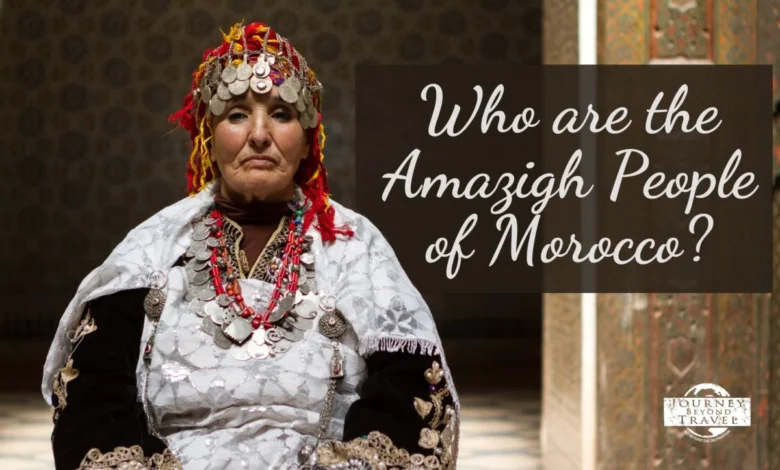
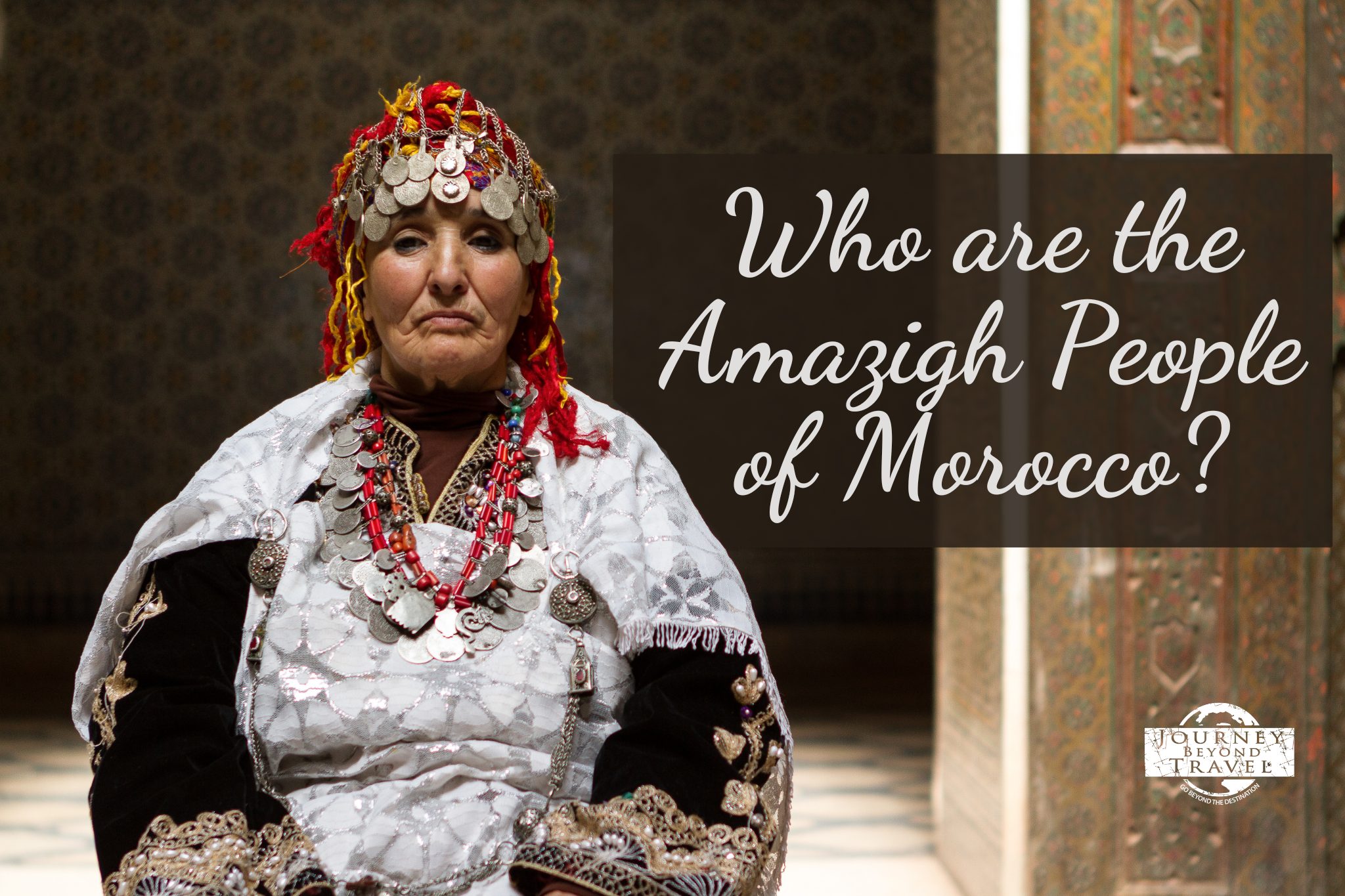
Expressions of Amazigh pride are increasingly visible throughout Morocco, manifested in art, language, traditional clothing (like the tahruyt or jelbab with distinctive Amazigh patterns), music (such as Ahidous or Rways), and public symbols. This reflects a process of reclamation and re-valorization rather than a mere rediscovery. Significant policy changes have also supported this cultural revival. In 2010, the Moroccan state lifted restrictions on Amazigh names, formally acknowledging what had long existed in lived reality and allowing parents to give their children traditional Amazigh names without bureaucratic hurdles. This renewed visibility is also reflected in public celebrations such as Yennayer, the Amazigh New Year, which is increasingly marked across Morocco as a national holiday, celebrated openly through shared meals, traditional music, and vibrant gatherings. These developments underscore a broader societal recognition of Amazigh contributions to the national fabric.
Dispelling Misconceptions: Beyond Mountains and Nomadism
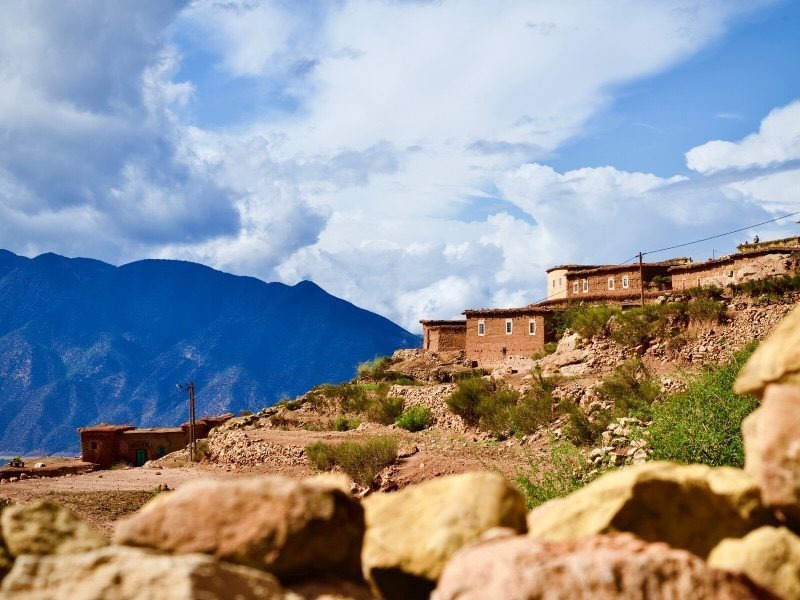
Earlier narratives, particularly those influenced by colonial and Western perspectives, often attempted to geographically compartmentalize Amazigh identity, associating it primarily with mountainous regions such as the High Atlas, Middle Atlas, and Rif mountains. While these regions have indeed played a crucial role in preserving linguistic continuity and traditional ways of life due to their relative isolation and historical autonomy, this framing is misleading and incomplete. Amazigh presence has always extended across Morocco’s diverse landscapes: its mountains, fertile plains, river valleys, and bustling cities.
The stereotype of the Amazigh as predominantly nomadic is another common misconception. While nomadism did exist among certain tribes, particularly in the pre-Saharan and Saharan regions, it represented only one facet of a highly diversified society. This stereotype obscures the fact that Amazigh societies engineered complex agricultural systems, developing sophisticated irrigation techniques, terracing, and crop rotation to sustain communities in varied environments. They were also skilled traders, artisans, and merchants, forming extensive commercial networks that linked diverse regions. Most Amazigh communities historically lived as settled farmers, cultivating olives, argan, dates, and cereals, or as craftsmen producing renowned pottery, textiles, and jewelry. This adaptability to diverse environments, including regions at the edges of the Sahara Desert, highlights their ingenuity and multifaceted contributions to Moroccan economic and social life.
The Future of Amazigh Culture: Preservation and Progress
Seen in its full scope, Morocco’s language, landscapes, and everyday practices reflect a profound continuity that predates the categories later imposed upon them. Amazigh history and presence are evident in myriad ways: in how people speak, build their homes, farm their land, conduct trade, and organize their social lives across the country. Moving through Morocco means engaging with this deep historical and cultural continuity, where past and present are interwoven, and identity is intrinsically linked to place.
The journey towards full recognition and integration of Amazigh culture continues. While significant strides have been made with constitutional recognition and the establishment of cultural institutions, challenges remain. These include ensuring equitable access to Tamazight education across all regions, increasing its presence in national media, and addressing socio-economic disparities that disproportionately affect some Amazigh communities. However, the momentum of cultural revival, driven by both official initiatives and grassroots activism, points towards a future where Amazigh identity is not just acknowledged but celebrated as an indispensable and dynamic force in shaping Morocco’s national narrative.
For travelers, understanding Amazigh culture is not an optional add-on to a trip; it is the fundamental lens through which to comprehend the very soul of Morocco. It is the underlying current beneath the surface, revealing itself in the hospitality of a mountain village, the intricate patterns of a rug, the rhythm of traditional music, and the resilient spirit of its people. The more context one gains before arriving, the more Morocco reveals itself beyond superficial perceptions, offering a deeper, richer, and more authentic experience of a nation shaped by its "free people."