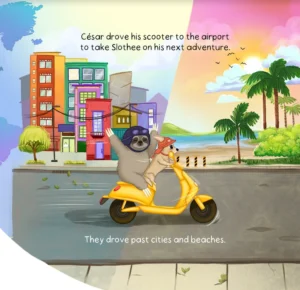
The world of children’s literature is buzzing with the release of Slothee Still Wants Coffee, the highly anticipated second installment in the "Slothee and Friends" series. This captivating new book invites readers, both young and old, on an immersive journey across continents, celebrating cultural diversity and the universal pursuit of a truly exceptional cup of coffee. Building upon the success of its predecessor, the series aims to educate and entertain, fostering an appreciation for global exploration and friendship. Future installments are slated to delve deeper into the intricate world of coffee and tea, promising further adventures that will broaden horizons and ignite curiosity.
A Pedagogical Pilgrimage for the Palate
Slothee Still Wants Coffee is more than just a children’s story; it’s an educational odyssey disguised as an adventure. The narrative follows the endearing protagonist, Slothee, as he traverses a remarkable itinerary of coffee-producing nations, including Costa Rica, Peru, Mexico, Jamaica, Uganda, Vietnam, and Australia. Each destination serves as a unique chapter, not only in Slothee’s quest for the ultimate coffee experience but also in his growing understanding of diverse cultures and traditions. Through his interactions with new friends encountered along the way, Slothee learns about the intricate processes of coffee cultivation, the nuances of brewing, and the cultural significance coffee holds in different societies. The central question that propels the narrative forward is whether Slothee will ultimately discover the "best" cup of coffee, a subjective yet tantalizing goal that resonates with coffee enthusiasts worldwide. The book’s educational undertones are woven seamlessly into the narrative, making learning about geography, culture, and agriculture an engaging and enjoyable experience.
The Global Coffee Landscape: A Brief Overview
The journey undertaken by Slothee mirrors the vast and complex global coffee industry. Coffee is one of the world’s most traded commodities, with millions of people depending on its production for their livelihoods. The journey from bean to cup is a testament to human ingenuity and agricultural expertise.
- Costa Rica: Renowned for its high-quality Arabica beans, particularly the Tarrazú region, Costa Rica emphasizes sustainable farming practices and a commitment to producing premium coffee. The country has a long history of coffee cultivation, dating back to the 18th century, and it plays a significant role in its national identity and economy.
- Peru: As a leading producer of organic and fair-trade coffee, Peru has gained international recognition for its commitment to ethical and sustainable practices. The diverse microclimates in the Andes Mountains allow for the cultivation of a wide range of coffee varietals, contributing to its rich and complex flavor profiles.
- Mexico: Mexican coffee, particularly from regions like Chiapas and Oaxaca, is known for its mild, smooth taste. The country has a strong tradition of coffee farming, with many smallholder farmers contributing to its production. Mexico is also a significant player in the specialty coffee market, with an increasing focus on quality and sustainability.
- Jamaica: Famous for the Blue Mountain coffee, one of the most prized and expensive coffees in the world, Jamaica’s coffee industry is steeped in history. The unique microclimate of the Blue Mountains, characterized by its cool temperatures, high rainfall, and rich volcanic soil, imparts a distinctive mild flavor and lack of bitterness.
- Uganda: A significant producer of both Arabica and Robusta coffees, Uganda’s coffee sector is a vital part of its economy. The country is increasingly focusing on improving the quality of its beans and expanding its reach in the international market, with a growing interest in specialty coffee.
- Vietnam: The world’s second-largest coffee exporter, Vietnam is predominantly known for its Robusta production, often used in espresso blends and instant coffee. However, there is a growing movement towards producing higher-quality Arabica beans and exploring the potential of specialty coffee. Vietnamese coffee culture, with its unique brewing methods like the phin filter, is also gaining global traction.
- Australia: While not a traditional coffee-growing powerhouse, Australia has emerged as a significant player in the coffee consumption and specialty coffee scene. The country boasts a vibrant café culture and a growing interest in high-quality, ethically sourced beans, with some experimental coffee cultivation occurring in regions like Queensland.
A Chronicle of Slothee’s Culinary Quest
The narrative of Slothee Still Wants Coffee unfolds as a carefully orchestrated journey, marked by specific geographical transitions and cultural immersions. While the exact chronological order of Slothee’s visits within the book is designed for narrative flow, we can infer a logical progression that allows for diverse experiences.
Phase 1: The Americas – From Central to South and the Caribbean
Slothee’s adventure likely begins in Costa Rica, a nation synonymous with coffee excellence and a strong emphasis on sustainability. Here, he would encounter the meticulous cultivation practices and the vibrant coffee culture that defines the region. From Costa Rica, his journey would logically extend south to Peru, a country celebrated for its organic and fair-trade initiatives. This transition would expose him to the unique challenges and rewards of high-altitude coffee farming in the Andes. A short hop would then take him to Mexico, where he would discover the smooth, nuanced flavors of Mexican coffee and the traditions associated with its production. The final stop in this leg of the journey would be the Caribbean island of Jamaica, a place where coffee is not just a beverage but a cultural icon, famously represented by the esteemed Blue Mountain variety.
Phase 2: Africa and Asia – Exploring Diverse Terroirs
Moving eastward, Slothee would then venture to Uganda, a significant African coffee producer. This leg of the journey would offer insights into the cultivation of both Arabica and Robusta beans, as well as the economic importance of coffee to the nation. From Africa, his quest would lead him to Vietnam, a powerhouse in the global coffee market. Here, he would witness the large-scale production of Robusta and perhaps even explore emerging specialty coffee initiatives, alongside experiencing the distinctive Vietnamese coffee-drinking rituals.
Phase 3: Oceania – A Modern Coffee Frontier
The concluding chapter of his international coffee exploration would bring Slothee to Australia. While not a producer on the same scale as other nations, Australia’s role in the global coffee landscape is increasingly significant due to its sophisticated café culture and its embrace of specialty coffee. This final destination would offer a contemporary perspective on coffee consumption and appreciation, perhaps even introducing Slothee to innovative brewing techniques or the burgeoning Australian coffee scene.
This structured progression allows readers to follow Slothee’s evolving understanding of coffee, from its agricultural roots to its final presentation in a cup, while simultaneously absorbing lessons about the diverse human elements that shape this global industry.
Voices from the Coffee Community (Inferred)
While the book focuses on Slothee’s personal journey, one can infer the potential sentiments and perspectives of individuals and communities involved in the coffee industry.
- Coffee Farmers: "We pour our hearts and souls into every bean," might be a sentiment echoed by farmers in Costa Rica or Peru. They would likely express pride in their heritage, the challenges of climate change, and the importance of fair prices for their labor. Their hope would be that consumers appreciate the effort and dedication that goes into producing their coffee.
- Coffee Roasters and Baristas: Professionals in this field, perhaps encountered by Slothee in Australia or Vietnam, might speak about the art of roasting and brewing. They would likely emphasize the importance of origin, bean quality, and the skill required to bring out the best flavors. Their goal would be to educate and delight customers with a perfectly crafted cup.
- Cultural Storytellers: Individuals in each country, acting as informal guides for Slothee, would highlight the cultural significance of coffee. They might explain how coffee is integrated into daily life, social gatherings, and national traditions, underscoring that coffee is more than just a drink; it’s a social connector.
These inferred perspectives add depth to the narrative, reminding readers of the human element behind every cup of coffee.
The Broader Impact: Cultivating Global Citizenship
The "Slothee and Friends" series, with Slothee Still Wants Coffee as a prime example, offers significant pedagogical and social implications. By immersing young readers in diverse cultural settings, the books foster a sense of global awareness and empathy. The exploration of coffee production also provides a tangible link to the global economy, introducing concepts of trade, agriculture, and the interconnectedness of communities.
Key Implications:
- Enhanced Cultural Literacy: Children are exposed to different customs, languages (even if implicitly through context), and ways of life, promoting an understanding and appreciation of diversity.
- Development of Critical Thinking: The quest for the "best" cup encourages readers to consider subjective experiences and the multifaceted nature of quality.
- Environmental Awareness: By highlighting coffee cultivation, the books can subtly introduce discussions about sustainable farming practices and the impact of climate on agriculture.
- Economic Understanding: The series can serve as an early introduction to global trade, the livelihoods dependent on specific industries, and the concept of fair trade.
- Literacy and Engagement: The engaging narrative format makes learning enjoyable, encouraging a lifelong love of reading and exploration.
The success of Slothee Still Wants Coffee is likely to be measured not only by its sales figures but also by its ability to inspire curiosity and a deeper connection to the world among its young audience. As the series continues to expand, it promises to be a valuable resource for parents, educators, and children alike, nurturing a generation of informed and compassionate global citizens, one delightful coffee adventure at a time.