Everest Witnesses Record-Breaking Summit Day Amidst Ideal Conditions and Challenging Crowds, Featuring Rare No-Oxygen Ascents and Critical Rescues

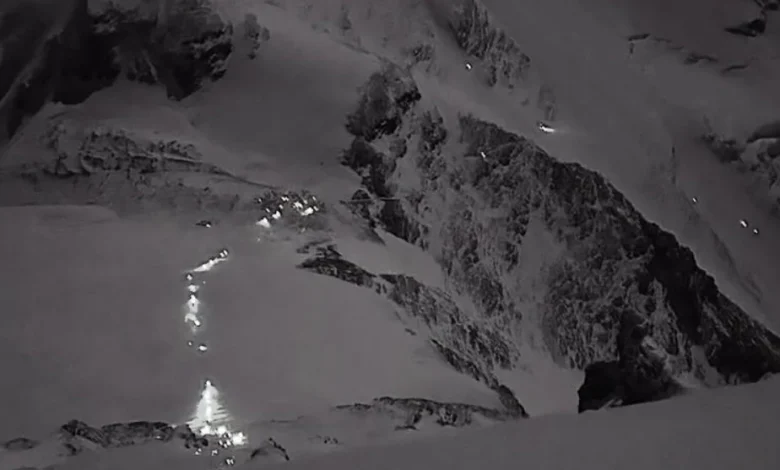
Mount Everest experienced its busiest day of the current climbing season, with an estimated over 200 climbers successfully reaching the 8,848.86-meter summit. This unprecedented surge in ascents, while still below the all-time single-day record of 354 set on May 23, 2019, underscored both the allure of the world’s highest peak and the logistical complexities of high-altitude mountaineering. The massive wave of summiters included dozens who had been held up between Camp 3 and Camp 4 the previous day, alongside those who strategically postponed their Tuesday summit attempts to capitalize on improved weather.
The Convergence of Conditions: A Summit Window Opens
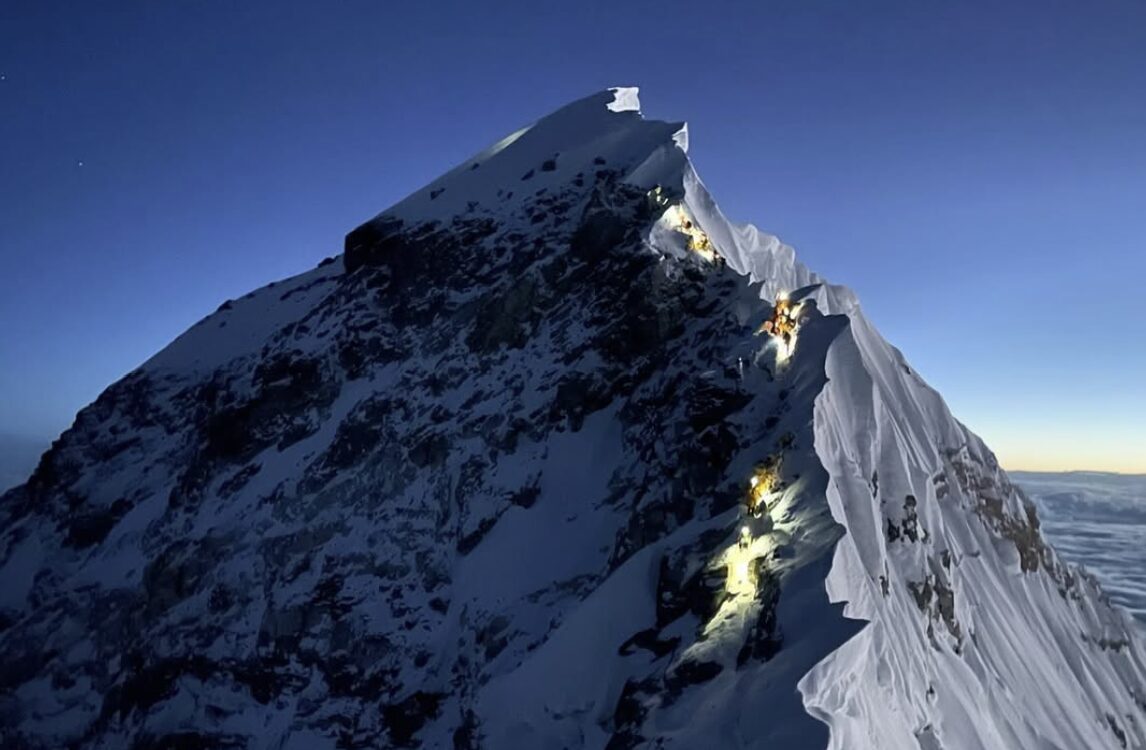
The primary catalyst for this extraordinary summit day was a convergence of near-ideal weather and route conditions. According to initial reports from the mountain, climbers encountered minimal winds and clear skies, providing a crucial window of opportunity for ascents that had been meticulously planned over weeks and months. This favorable weather followed a period of less stable conditions, which had led to a bottleneck of climbers at various high camps. Everest skier Bartek Ziemski, a prominent figure on the mountain, confirmed that the route to the summit was remarkably clear on the day preceding the main push, allowing teams to position themselves for the subsequent mass ascent. However, as more teams converged, the route quickly became congested, particularly along critical sections such as the Hillary Step and the final summit ridge.
The logistical dance on Everest is a delicate one, orchestrated by expedition operators and experienced Sherpa guides. The route from Base Camp to the summit is meticulously prepared with fixed ropes, ladders, and designated camps (Camps 1, 2, 3, and 4) to facilitate safe passage. Camp 4, often referred to as the "Death Zone" due to its extreme altitude (around 7,900 meters or 26,000 feet), serves as the staging point for the final summit push. Climbers typically spend only a short, critical period here, using supplemental oxygen to conserve energy before embarking on the arduous ascent to the top. The sheer number of individuals moving between Camp 3 and Camp 4, and then upwards from Camp 4, created significant traffic, a recurring challenge on Everest during peak summit windows.
A Rare Feat: Marcelo Segovia’s No-Oxygen Ascent
Amidst the throngs of climbers relying on supplemental oxygen and the invaluable support of Sherpa guides, one individual stood out for a truly exceptional achievement: Marcelo Segovia of Ecuador. Segovia successfully summited independently and without the aid of bottled oxygen, a feat considered one of the purest and most challenging forms of high-altitude mountaineering. While specific details of his ascent are still emerging, it is known that Segovia commenced his summit push from Base Camp on Sunday, demonstrating remarkable endurance and acclimatization. This was his second attempt at an oxygen-free summit, having made a prior bid the previous year.
Climbing Everest without supplemental oxygen is an endeavor reserved for only the most elite and experienced mountaineers. The air at the summit contains approximately one-third of the oxygen available at sea level, pushing the human body to its absolute limits. Without bottled oxygen, climbers are significantly slower, more susceptible to frostbite, cerebral edema, and pulmonary edema, and operate with a severely diminished cognitive capacity. Segovia’s success places him in an exclusive club of mountaineers who have achieved this formidable challenge, highlighting an extraordinary blend of physical fortitude, mental resilience, and meticulous preparation. His ascent stands as a testament to the enduring spirit of human exploration and the pursuit of mountaineering in its most traditional form.
The Descent: A Test of Endurance and a Hotbed for Accidents
While reaching the summit is the ultimate goal, mountaineers often emphasize that the descent is equally, if not more, challenging and dangerous. Climbers, already exhausted from the arduous ascent and operating on minimal sleep and sustenance, must navigate treacherous terrain while battling fatigue and the thinning atmosphere. The slow pace reported by many on the way down underscored this reality. Bianca Adler, an 18-year-old Australian who became the youngest person from her country to summit Everest, articulated this challenge, stating that while the ascent was manageable, the descent proved to be exceptionally tough. She subsequently stopped to rest at Camp 4, breathing supplemental oxygen, before planning to continue her descent to Camp 2.
This strategy of resting at Camp 4 before continuing the descent is common, particularly for those who have expended significant energy during the summit push. For climbers attempting the ambitious "Everest-Lhotse traverse" – summiting both peaks in quick succession – Camp 4 serves as a critical recovery point where they can rest and re-oxygenate before embarking on the second summit bid. The physical toll of such an undertaking is immense, demanding peak physical condition and meticulous logistical planning.
Another notable achievement on this busy day was by Romanian "sea-to-summiter" Madalin Cristea, who reached the Everest summit at 6 am. Cristea’s journey is part of a grander expedition, having cycled to Everest Base Camp all the way from the Bay of Bengal. For her, the summit marks only the halfway point, as she intends to complete her incredible journey by cycling back to the Bay of Bengal, embodying a truly epic test of endurance across diverse terrains and altitudes.
Peril and Rescue: A Reminder of Everest’s Inherent Dangers
Even on well-maintained routes with fixed ropes, Everest remains a perilous environment. Most mountain accidents occur during the descent, when exhaustion can lead to missteps and errors in judgment. A stark reminder of these dangers came just two days prior to the main summit wave, when Upasana Gurung was rescued on Monday after falling into a crevasse between Camp 1 and Camp 2. IFMGA guide Ashok Lama shared a video of the rescue operation, highlighting the immediate and professional response required in such emergencies.
According to reports from the Everest Chronicle, Gurung fell approximately 50 meters into the crevasse but fortunately sustained only minor injuries. She was airlifted to a hospital the following day for medical evaluation and recovery. This incident underscores the critical role of the highly skilled Sherpa rescue teams and the robust infrastructure of fixed ropes and ladders that traverse the Khumbu Icefall and other glaciated sections of the route. Despite these safety measures, crevasses, sudden weather changes, and the physiological effects of extreme altitude present constant threats to climbers. The presence of experienced guides and the availability of rapid rescue operations are paramount in mitigating these risks.
Lhotse’s Independent Spirit and Continuing Endeavors
On neighboring Lhotse, the world’s fourth-highest peak, the spirit of independent, no-oxygen climbing also manifested. James McManus of Ireland successfully summited Lhotse without supplemental oxygen, supported by the experienced Sherpa Chhiring Dhenduk Bhote. This achievement, much like Segovia’s on Everest, showcases an exceptional level of mountaineering prowess.
The drive for such challenging ascents continues, with Kristin Harila of Norway aiming to summit Lhotse without oxygen tomorrow, supported by Pansang Rinzee and Mingtemba Sherpa. Similarly, Czech climbers Lenka Polakova and Jan Polacek are also attempting a no-oxygen ascent of Lhotse. These attempts highlight a growing trend among elite climbers to push the boundaries of human endurance and achieve ascents in the purest possible style, away from the often-criticized commercialization of Everest.
Base Camp: A Temporary Respite and Launchpad for New Ambitions
Following the massive summit wave, Everest Base Camp (EBC) has become notably quieter, almost deserted. Many teams have moved up the mountain, while others have already completed their expeditions and departed. However, a dedicated cohort of climbers remains at EBC, patiently awaiting their own opportunities to make a mark. These are often individuals with ambitious goals, including those aiming for no-oxygen ascents or Fastest Known Time (FKT) records.
Among the FKT contenders still at Base Camp are Tyler Andrews of the U.S. and Karl Egloff of Ecuador, both renowned for their speed and endurance in mountain environments. Saulius Damulevicius of Lithuania is also present, preparing for his own no-oxygen summit attempt, planning to depart tonight for a push to the summit on May 25-26. Justin Sackett of the U.S., climbing without bottled oxygen and accompanied by Tenging Gyaljen Sherpa, has already spent his second day at Camp 3, systematically acclimatizing for his final ascent. These climbers represent the cutting edge of high-altitude athleticism, seeking to redefine what is possible on the world’s highest peaks.
The Road Ahead: Continued Pushes and the Winding Down of the Season
While today marked the peak of summit activity, the climbing season is far from over. Forecasts suggest that the current spell of good weather may persist for several more days, offering further opportunities for teams that have chosen to wait for smaller crowds. Many of these patient teams are currently positioned at Camp 2 and Camp 3, meticulously preparing for their summit bids. For instance, Summit Force, a large expedition, has already departed Camp 4 with 28 climbers, aiming to reach the summit tomorrow.
The current dynamics of the Everest season underscore a recurring theme: the delicate balance between seizing opportune weather windows and managing the inevitable congestion that results from multiple teams converging on a single objective. While the high number of successful summits is a testament to the resilience and determination of climbers and the professionalism of their Sherpa support, it also brings into sharper focus the challenges of safety, environmental impact, and the overall experience on the world’s highest peak. As the season progresses towards its eventual close, the stories of triumph, endurance, and the ever-present risks will continue to unfold on the majestic slopes of Everest.