The Essence of Greek Coffee Culture A Deep Dive into Tradition Social Rituals and the Art of Slow Living

In the Hellenic Republic, coffee is far more than a morning stimulant or a caffeine delivery system; it is a foundational pillar of the national identity and a primary vehicle for social cohesion. While many nations treat coffee as a functional commodity consumed in haste, Greek coffee culture is predicated on the philosophy of "siga-siga" (slowly-slowly). This cultural imperative prioritizes the preservation of interpersonal relationships and the appreciation of the present moment over the efficiencies of modern industrial life. To understand the Greek coffee experience is to understand a history that spans centuries, bridging the gap between the ancient Agora and the contemporary metropolitan café.
The Historical Evolution: From Ottoman Roots to National Identity
The history of coffee in Greece is inextricably linked to the Ottoman Empire. Introduced to the region during the centuries of Ottoman rule, the method of preparation—boiling finely ground beans in a small pot—remains largely unchanged. However, the nomenclature of the drink underwent a significant political shift in the 20th century. Historically referred to as "Turkish coffee," the terminology changed abruptly following the 1974 Turkish invasion of Cyprus. In a move of cultural assertion and political protest, the Greek public and state-sponsored advertising rebranded the beverage as "Greek coffee" (ellinikos kafes).
This rebranding did not alter the fundamental preparation but rather cemented the drink’s status as a symbol of Greek heritage. Today, the traditional Greek coffee is recognized by its thick, velvet-like foam, known as kaimaki, and the sediment that remains at the bottom of the cup. Unlike the filtered coffee common in Northern Europe or the pressurized espresso of Italy, Greek coffee is an unfiltered decoction, allowing for a richer concentration of antioxidants and polyphenols.
The Traditional Preparation: The Art of the Briki and Hovoli
The preparation of traditional Greek coffee is a precise ritual. It requires a briki, a narrow-necked pot usually made of copper or brass, which helps create the essential kaimaki. The coffee beans are ground to a fine, flour-like powder, significantly finer than what is used for espresso.
In traditional settings, particularly in the mountainous regions of the Peloponnese or the islands, coffee is often prepared over hovoli—a bed of hot sand that covers a heating element. The sand provides a uniform and gradual heat distribution, allowing the coffee to foam slowly. This slow rising of the foam is critical; if the coffee boils too quickly, the kaimaki collapses, and the flavor profile becomes overly bitter.
The beverage is traditionally served in a small, thick-walled porcelain cup called a demitasse. It is accompanied by a glass of cold water, intended to cleanse the palate before the first sip, and occasionally a "spoon sweet" (glyko tou koutaliou)—preserved fruits such as grapes, quinces, or bitter oranges served in heavy syrup.
The Chronology of Modern Greek Coffee: Frappé and the Freddo Revolution
While the traditional hot brew remains a staple for the older generation, the Greek coffee landscape underwent a radical transformation in the mid-20th century.
- 1957: The Birth of the Frappé. During the Thessaloniki International Fair, Dimitris Vakondios, a representative for Nestlé, was looking for a way to have his usual instant coffee during a break. Lacking hot water, he mixed instant coffee with cold water and ice cubes in a shaker. The resulting frothy, chilled beverage became an overnight sensation. For decades, the Frappé was the undisputed king of Greek summer, characterized by its thick foam and long-lasting nature, perfectly suited for hours of conversation.
- The 1990s: The Rise of the Freddo. As the Greek palate became more sophisticated and influenced by Italian espresso culture, the "Freddo" era began. The Freddo Espresso (double espresso shaken with ice) and the Freddo Cappuccino (Freddo espresso topped with a layer of cold frothed milk) began to eclipse the Frappé. Today, these drinks are the standard order for younger Greeks, combining the intensity of high-quality Arabica beans with the cooling requirements of the Mediterranean climate.
The Social Geography: Kafeneio vs. Kafeteria
The venues for coffee consumption in Greece are divided by both function and demographic.
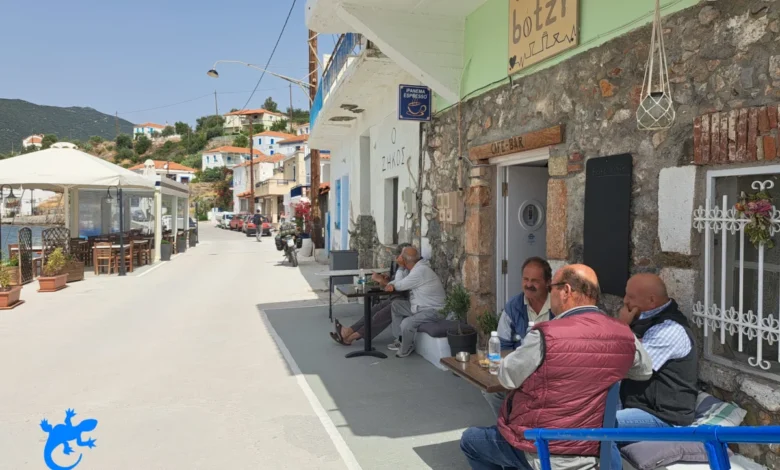
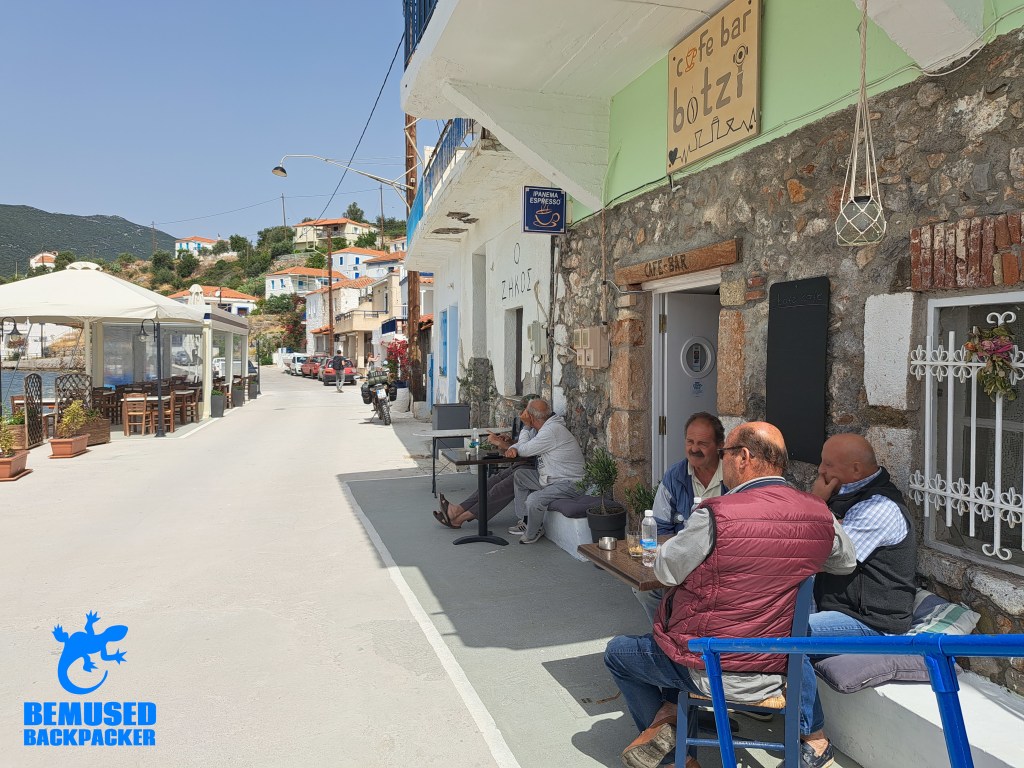
The Kafeneio is the traditional coffee house, found in every village square across the mainland and the islands. Historically, these were male-dominated spaces where village elders gathered to discuss politics, play tavli (backgammon), and handle "komboloi" (worry beads). The Kafeneio served as the unofficial town hall, a place where local news was disseminated and political alliances were formed.
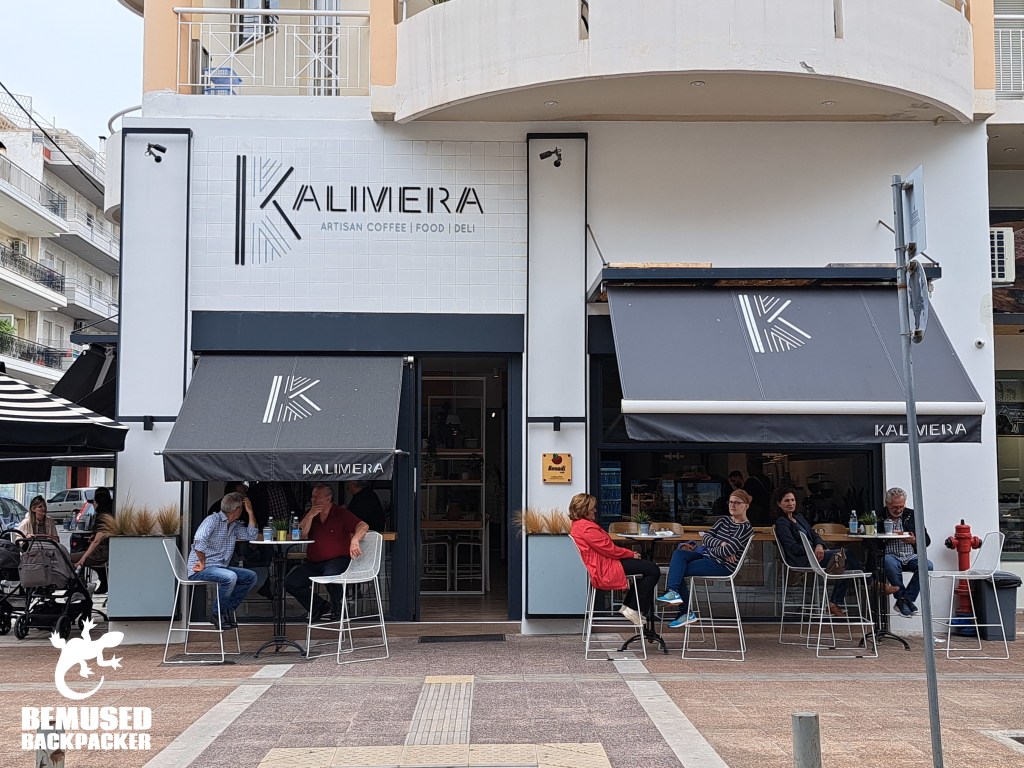
In contrast, the Kafeteria is a modern, often high-design establishment found in urban centers like Athens and Thessaloniki. These venues are inclusive of all genders and ages, focusing on aesthetic appeal and a wide variety of coffee styles. Despite the modernized setting, the behavior remains traditional: a single order of coffee can grant a patron the right to occupy a table for three to four hours without any pressure from the staff to vacate. This "occupancy right" is a hallmark of Greek hospitality and a stark contrast to the "to-go" culture of New York or London.
Linguistic Nuances: The Etiquette of Ordering
Ordering coffee in Greece requires a specific vocabulary, particularly regarding sweetness levels. Because the sugar is added during the brewing process in the briki (for traditional coffee) or during the shaking process (for Frappés and Freddos), it cannot be easily adjusted afterward.
- Sketos (Plain): No sugar. This is often preferred by purists who wish to taste the specific notes of the coffee bean.
- Metrios (Medium): Usually one teaspoon of sugar. This is the most common order, providing a balance between the coffee’s natural bitterness and sweetness.
- Glykos (Sweet): Two or more teaspoons of sugar.
- Vary Glykos (Extra Sweet): A heavy, syrupy version of the drink, often associated with traditional preparations.
The phrase "enan kafe parakalo" (one coffee, please) is the starting point, but a waiter will invariably follow up with "pos ton pinete?" (how do you drink it?), necessitating one of the aforementioned descriptors.
Scientific and Health Implications: The Ikaria Factor
Recent scientific interest has turned toward Greek coffee culture as a potential factor in human longevity. The Greek island of Ikaria is designated as one of the world’s "Blue Zones"—regions where people live significantly longer than the global average. A study published in the journal Vascular Medicine found that elderly residents of Ikaria who drank traditional boiled Greek coffee daily had better endothelial function (the health of the lining of the blood vessels) than those who drank other types of coffee.
Researchers suggest that the boiling process extracts more of the healthy compounds from the coffee beans while keeping the caffeine levels moderate compared to drip coffee. The high concentration of cafestol and kahweol, which have anti-inflammatory and antioxidant properties, may contribute to the reduced rates of cardiovascular disease observed in these populations. Furthermore, the social aspect of coffee consumption—reducing stress and providing a sense of community—is cited by sociologists as a non-biological contributor to the islanders’ long lifespans.
Economic Impact and Global Trends
The coffee industry is a significant driver of the Greek economy. According to data from the Hellenic Coffee Association, Greece ranks among the top 15 countries globally for coffee consumption per capita. Even during the peak of the Greek financial crisis (2009–2018), the coffee sector remained resilient. Greeks viewed the "three-euro coffee" not as an avoidable luxury, but as an essential social necessity—a way to maintain communal ties during times of hardship.
Furthermore, Greece has become a hub for competitive barista championships, with Greek baristas frequently placing in the top tiers of the World Barista Championship and World Brewers Cup. This has led to a "Third Wave" coffee movement in Athens, where micro-roasteries focus on single-origin beans and sustainable sourcing, blending global specialty coffee standards with traditional Greek social habits.
Conclusion: A Lesson in Slow Living
The Greek coffee ritual serves as a vital counterpoint to the accelerating pace of global society. It is a cultural practice that demands patience—from the slow rising of the foam in a briki to the long hours spent in conversation over a chilled Freddo. For the visitor, participating in this ritual is the most direct route to understanding the Greek "filotimo"—a complex word encompassing honor, hospitality, and doing the right thing for the community. In Greece, the cup is never just half full; it is an invitation to stay, to talk, and to remember that life is best experienced when it is savored slowly.
Related posts: