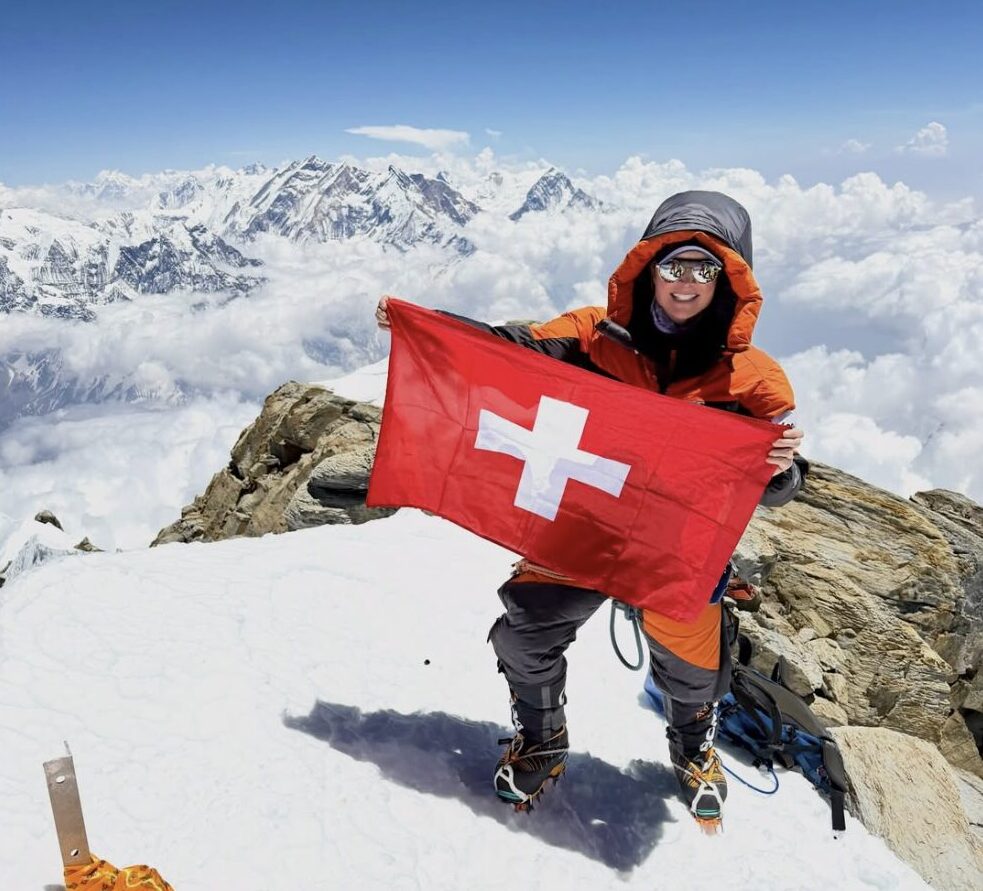
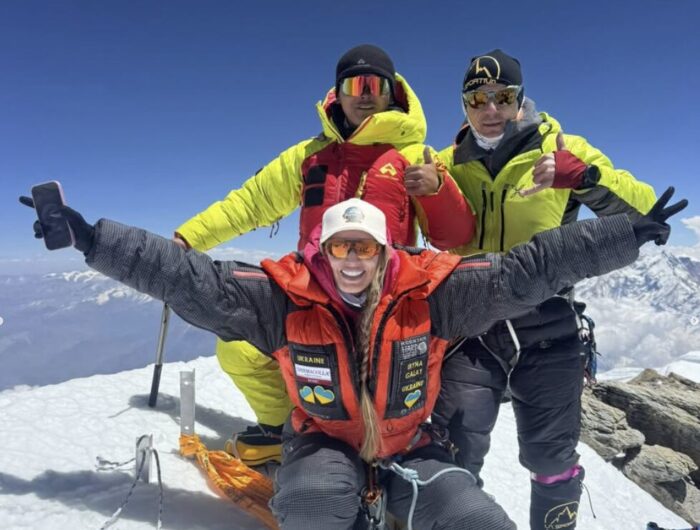
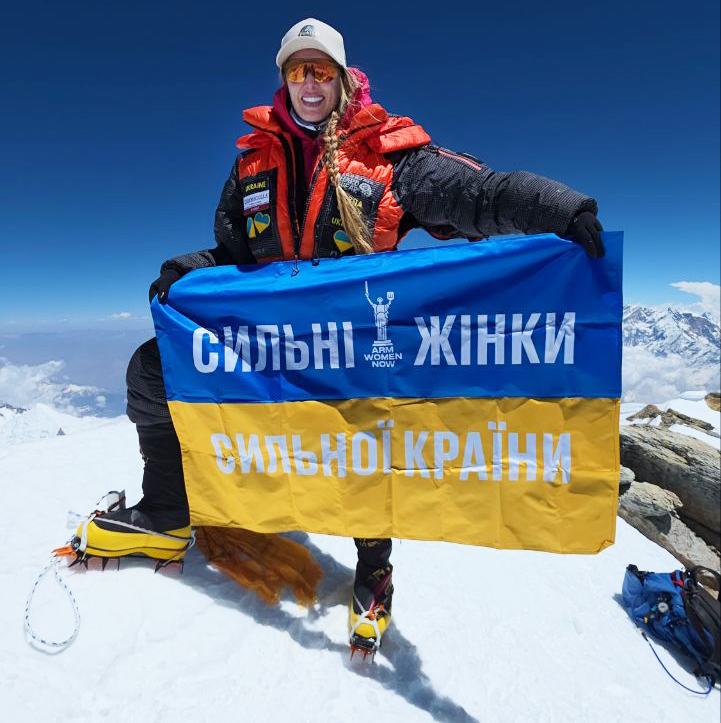
Recent expeditions to Dhaulagiri, the world’s seventh-highest mountain, have culminated in a series of challenging yet successful summits, underscoring both the formidable nature of the peak and the extraordinary resolve of the climbers. Among those reaching the apex were Valentyn Sypavil of Ukraine, Christine Vogondy of Switzerland, and Iryna Galay, also from Ukraine, alongside a contingent of highly experienced Nepali Sherpas and other international mountaineers. Their ascents highlight a blend of individual tenacity, crucial teamwork, and the ever-present unpredictability of Himalayan weather, further cementing Dhaulagiri’s reputation as one of the most demanding 8,000-meter peaks.
The initial summit push saw Valentyn Sypavil detailing a gruelling ascent where the expedition team, including rope-fixers from Imagine Nepal, progressed until their supply of fixed ropes ran out at approximately 7,850 meters. This critical juncture left the group stranded, contemplating their next move in the harsh high-altitude environment. It was at this moment that Christine Vogondy, embarking on her third attempt to summit Dhaulagiri, stepped forward with an invigorating call to action. Her words, described by Sypavil as a motivational jolt — "She called us weaklings and told us there was no turning back. Girls always know how to motivate!" — galvanized the weary climbers. This pivotal moment reignited their determination, illustrating the profound psychological challenges inherent in high-altitude mountaineering where mental fortitude often proves as vital as physical prowess.
Following this renewed impetus, Lakpa Ongjuk Sherpa, associated with Pioneer Adventure, took the lead, carving a path forward with his ice axe up a couloir that led to the summit ridge and ultimately to the peak. Sypavil followed in his footsteps, soon to be joined by Ukrainian climber Iryna Galay, who was supported by Nima Ungdi. For Christine Vogondy, this successful ascent marked a significant milestone, adding Dhaulagiri to her impressive list as her twelfth 8,000-meter peak, placing her among an elite group of mountaineers nearing the completion of all fourteen such giants. The first group of climbers successfully reached the summit between noon and 1 PM, a testament to their perseverance in the face of Dhaulagiri’s notorious difficulties.
Dhaulagiri’s Formidable Nature: An Underestimated Giant
The challenge of Dhaulagiri, often translated as "White Mountain," is consistently underestimated, even by seasoned climbers. Iryna Galay’s reflection on her ascent encapsulates this sentiment perfectly. "Honestly, I underestimated this mountain – that was my mistake," Galay confided to ExplorersWeb. "I thought it would be an easy climb, but Dhaulagiri turned out to be one of the hardest mountains of my life." This candid admission from a climber of Galay’s calibre speaks volumes about Dhaulagiri’s deceptive allure and inherent dangers.
Galay’s experience highlighted the extreme weather conditions that define Dhaulagiri’s climbing season. She recounted enduring "brutal weather" at Base Camp, characterized by an unrelenting six days of heavy snowfall, immediately followed by another seven days of fierce winds. These winds, she noted, frequently exceeded 160 kilometres per hour for approximately two days, a force she had "never seen wind like that before." Such extreme meteorological events are not merely discomforting; they significantly impact safety, visibility, and the logistical feasibility of any ascent, dictating the very rhythm of an expedition. However, Galay also noted a silver lining in these harsh conditions: the powerful winds, by clearing away excessive snow, paradoxically improved the subsequent climbing conditions by reducing avalanche risks and revealing a more stable path.
Dhaulagiri, standing at 8,167 meters (26,795 feet), is renowned for its steep, avalanche-prone slopes and a sobering history marred by numerous accidents and fatalities since its first successful ascent in 1960 by a Swiss-Austrian-Nepali expedition. Its technical demands include a long, exposed traverse and a notoriously tricky summit point, which teams often mislocate in whiteout conditions or fatigue, adding to the inherent risks. Historically, Dhaulagiri boasts one of the lowest summit success rates among the fourteen 8,000-meter peaks, making each successful ascent a significant achievement. It is a mountain that rarely yields to a climber on their first attempt; the Spanish mountaineer Carlos Soria, a legend in the high-altitude world, famously attempted Dhaulagiri over a dozen times without ever reaching its summit, a poignant illustration of its enduring defiance. The "Death Zone" above 8,000 meters, where the human body begins to shut down without supplementary oxygen, further compounds these challenges, testing the absolute limits of human endurance and will.
The Race for High-Altitude Records: Nepali Climbers at the Forefront
Later on the same day as the initial group’s summit, Nirmal Purja, widely known as Nimsdai, achieved his own successful ascent of Dhaulagiri. He was accompanied by his client, Ksenia Shapovalova of Russia, and guide Lakpa Tenjen Sherpa, reaching the summit at 3 PM. Notably, Purja completed his climb without the aid of supplementary oxygen, a feat that further elevates the difficulty and prestige of the achievement. According to their shared photographs, Purja’s team was instrumental in fixing ropes to the very top, suggesting that the initial group may have navigated the final stretch without fixed lines, or that the ropes had been subsequently extended. This Dhaulagiri climb marks Purja’s 50th successful ascent of an 8,000-meter peak, an astonishing testament to his unparalleled career in high-altitude mountaineering.
Purja’s current ambition extends beyond individual summits; he is on an ambitious quest to complete all fourteen 8,000-meter peaks three times over. With this Dhaulagiri ascent, he now only has Gasherbrum II and Cho Oyu remaining to achieve this unprecedented goal. This extraordinary endeavour places him at the vanguard of modern Himalayan climbing. His closest contender in this unique "three rounds" challenge is Sanu Sherpa, who also summited Dhaulagiri on April 18th. Sanu Sherpa is likewise just two peaks away from completing his third round of the 8,000ers, needing only Cho Oyu and Shishapangma. This friendly yet intense rivalry between two of the world’s most accomplished Nepali climbers adds another layer of intrigue to the already captivating narrative of high-altitude mountaineering. It highlights the increasing prominence and record-breaking achievements of Nepali Sherpas, who are not just guides but pioneers, record-holders, and some of the strongest mountaineers on the planet, reshaping the perception of high-altitude climbing and establishing new benchmarks for human endurance.
Independent Endeavors: The Unassisted Push
While the large commercial teams, having achieved their objectives, will typically relocate to other mountains, Dhaulagiri is not entirely deserted. The mountain continues to draw those who seek a purer, more challenging style of ascent. Among these are Domi Trastoy and David Nosas of Andorra, who were reported to be in Camp 2, acclimatizing for an unsupported, no-oxygen attempt. Their approach represents a stark contrast to the heavily supported commercial expeditions, emphasizing self-reliance and minimal assistance. This style of climbing, often referred to as "alpine style," harks back to the traditional ethos of mountaineering, valuing the challenge of the climb over the certainty of success facilitated by extensive infrastructure.
Similarly, Mexican climbers Badia Bonilla and Mauricio Lopez are also en route to Dhaulagiri, having just completed guiding a group to Everest Base Camp. Both pairs of independent climbers have opted for a "Base Camp logistics only" package with Seven Summit Treks, meaning they rely on the expedition company for essential services at the mountain’s base but manage all aspects of their high-altitude climb – including carrying their own gear, setting up their camps, and navigating the treacherous slopes – independently and without supplementary oxygen. This commitment to self-sufficiency and a minimalist approach underscores a different philosophy of mountaineering, one that prioritizes the intrinsic challenge and the personal journey over speed or record-breaking, albeit within the bounds of a shared Base Camp infrastructure. Their presence on Dhaulagiri after the main wave of commercial summits ensures that the mountain continues to be a theatre for diverse climbing ambitions, from record-setting pushes to traditional alpine style attempts.
Broader Implications and the Future of Dhaulagiri Climbing
The successful summits on Dhaulagiri, particularly given the extreme weather conditions experienced, provide valuable insights into the dynamics of the current Himalayan climbing season. These ascents underscore the critical role of weather windows, which, though often fleeting and unpredictable, are meticulously tracked and capitalized upon by expedition leaders. The ability of teams to navigate prolonged periods of heavy snowfall and hurricane-force winds, and then seize a narrow window for a summit push, highlights advanced meteorological forecasting capabilities and expert decision-making under pressure.
These achievements also reflect the evolving landscape of high-altitude mountaineering. The coexistence of highly commercialized expeditions, equipped with extensive rope-fixing teams, supplementary oxygen, and numerous support staff, alongside independent, purist attempts, illustrates the diverse motivations and styles that converge on the world’s highest peaks. While commercial expeditions democratize access to these giants for a broader range of climbers, they also raise questions about mountain traffic, environmental impact, and the traditional spirit of mountaineering. Conversely, the "unsupported, no-oxygen" attempts represent a commitment to the raw, unadulterated challenge of high-altitude climbing, pushing human limits with minimal external aid.
The "race" between Nirmal Purja and Sanu Sherpa for the unprecedented achievement of three ascents of all 8,000-meter peaks signifies a new era in mountaineering records, one increasingly dominated by the incredible skill and endurance of Nepali climbers. Their pursuits not only redefine what is physically possible but also bring well-deserved recognition to the Sherpa community, whose contributions have historically been understated.
Ultimately, Dhaulagiri, with its history of defiance and its continued allure, remains a powerful symbol of human ambition and resilience. Each summit, whether achieved with extensive support or through sheer independent will, adds another chapter to the mountain’s storied legacy, reinforcing the timeless appeal of pushing boundaries in the planet’s most extreme environments. The interplay of individual courage, collaborative effort, and the unyielding power of nature continues to define the epic narratives unfolding on the "White Mountain."