Navigating Toddler Sleep Safety: A Comprehensive Guide to Portable Travel Bed Rails and Pediatric Recommendations for Family Vacations

The transition from a secure crib to a standard bed marks a significant developmental milestone for toddlers, yet it introduces new logistical challenges for families during travel. As pediatric safety experts and experienced parents note, the absence of familiar sleep boundaries in hotels or rental properties often leads to disrupted rest and physical safety risks. To mitigate these issues, a burgeoning market of portable sleep solutions has emerged, ranging from inflatable bumpers to traditional mesh guardrails. According to the American Academy of Pediatrics (AAP), the use of guardrails is a critical preventative measure to ensure that young children do not fall out of bed, particularly when navigating unfamiliar environments. This analysis explores the technical specifications, safety implications, and industry trends surrounding toddler travel bed rails, providing a data-driven overview for the modern traveling family.

The Critical Need for Sleep Boundary Consistency
For a toddler, the transition to a "big kid bed" involves learning to stay within the mattress’s perimeter without the high walls of a crib. At home, this process is often supported by permanent bed rails or a low-profile floor bed. However, the travel industry—comprising hotels, cruise ships, and short-term rentals—rarely provides standardized safety equipment for toddlers who have outgrown the "Pack ‘n Play" or hotel-provided crib.
Data suggests that toddlers are more prone to restless sleep in new environments due to "first-night effect," a phenomenon where one hemisphere of the brain remains more alert during sleep in an unfamiliar setting. This increased restlessness, combined with the often-elevated height of hotel mattresses, significantly raises the risk of nighttime falls. Consequently, the demand for lightweight, packable, and reliable bed rails has seen a sharp increase in the family travel sector.

Technical Analysis of Leading Portable Bed Rail Solutions
The current market offers several distinct categories of travel bed rails, each catering to different luggage capacities and child temperaments.
Inflatable Pressure-Based Bumpers
Inflatable rails, such as those produced by Hiccapop and The Shrunks, are currently the preferred choice for air travel due to their high compression ratio.

- Hiccapop Inflatable Bed Rails: These units are distinguished by their integrated safety flap system. Unlike traditional bumpers that rely solely on friction, the Hiccapop model utilizes a wide fabric flap that extends under the fitted sheet. The child’s own body weight acts as an anchor, securing the rail against the mattress edge. Technical specifications include a length of approximately 52 inches and a height of 4.5 inches, providing a substantial barrier that remains lightweight (roughly 1 lb per rail).
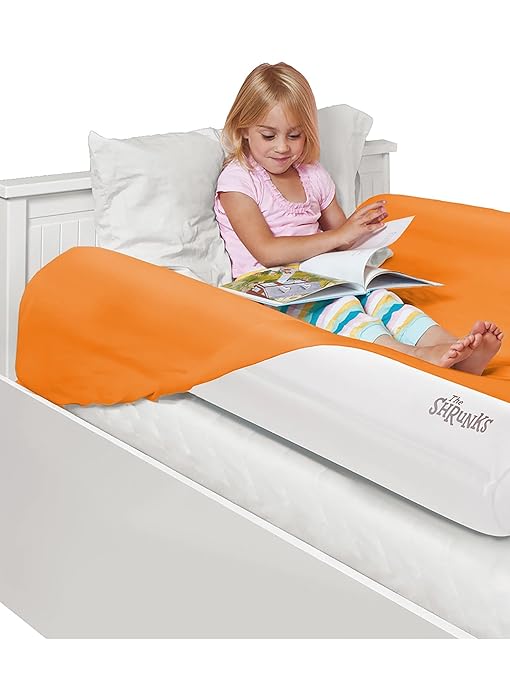
- The Shrunks Inflatable Bed Rails: Known for their "Grip Strips" on the underside, these rails are slightly more compact at 48 inches in length. They are frequently cited for their rigorous safety standards, being BPA-free, Phthalate-free, and Lead-free. Their primary advantage lies in their simplicity and speed of inflation, making them ideal for multi-stop itineraries.
High-Density Foam Bumpers
For families traveling by car or staying in long-term rentals, non-inflatable foam bumpers like those from BANBALOO offer a different set of advantages. These rails utilize high-density foam that does not require inflation, eliminating the risk of punctures or air leaks. While they do not compress as small as inflatable versions, they provide a firm, consistent barrier. These are often preferred for older toddlers who might push aggressively against a rail during sleep.
Traditional Mesh Guardrails
The Dream On Me Mesh Security Rail represents the "traditional" guardrail category. These devices use a steel or plastic frame covered in breathable mesh, anchored by a system that slides between the mattress and the box spring. While these are the least packable and are generally reserved for road trips or RV travel, they provide the highest vertical barrier, which is often necessary for children who are extremely active sleepers or for use on elevated bunk beds.

Pediatric Safety Standards and Fall Prevention
The American Academy of Pediatrics and the Consumer Product Safety Commission (CPSC) have historically monitored the safety of bed rails, emphasizing the prevention of entrapment. A critical safety factor in any bed rail installation is the elimination of gaps between the rail and the mattress. If a rail shifts, a child could potentially become wedged in the resulting space.
Modern travel rails address this through various mechanical means:
- Friction and Grip: Silicon or rubberized bottoms to prevent sliding.
- Sheet Integration: Placing the rail under the fitted sheet to use the tension of the bedding to keep the rail flush against the mattress.
- Weight Anchoring: As seen in the Hiccapop design, using the child’s weight to prevent lateral movement.
Supporting data from pediatric injury reports suggests that the majority of bed-related falls in the 2-to-5-year-old demographic occur when children are in unfamiliar sleep environments or when they are overtired, which are both common conditions during family vacations.
Strategic Applications in Family Travel
The utility of travel bed rails extends beyond mere fall prevention. Industry analysts and family travel consultants highlight several strategic uses:

Creating a Familiar "Micro-Environment"
For a toddler used to a small twin bed, a hotel king-sized bed can feel vast and intimidating. Positioning rails to create a smaller, defined sleeping "nook" can reduce anxiety and promote faster sleep onset.
Managing Bed-Sharing Logistics
In scenarios where parents must share a bed with a toddler, a central inflatable rail can serve as a "kick guard." This physical divider allows both parent and child to maintain their own sleep space, reducing the frequency of nighttime wakings caused by movement.

Facilitating Sibling Sleep
When multiple children share a bed, a central bumper can prevent "sleep-fighting" and accidental wake-ups. By defining clear boundaries, parents can often consolidate children into one bed, reducing the need for multiple hotel rooms or expensive suite upgrades.
Alternatives and the Risks of Makeshift Solutions
Many travelers attempt to avoid purchasing dedicated gear by using hotel pillows or rolled blankets as makeshift bumpers. While cost-effective, these solutions carry inherent flaws:

- Compression: Standard hotel pillows are often soft and will compress under the weight of a rolling toddler, failing to provide a vertical barrier.
- Shifting: Without a grip mechanism or an anchoring flap, pillows and blankets easily migrate during the night, often ending up on the floor before the child does.
- Space Inefficiency: Rolled blankets take up significant surface area on the mattress, whereas dedicated inflatable rails are designed to provide maximum height with a minimal horizontal footprint.
For road-trip-based travel, some parents utilize pool noodles tucked under a fitted sheet. While more effective than pillows due to their firm cylindrical shape, they still lack the height of professional-grade 4.5-to-7-inch travel bumpers.
The Broader Impact on the Travel Industry
The rise of portable toddler safety gear reflects a broader shift in the travel industry toward "individualized safety." As liability concerns grow, many hotel chains have reduced the availability of "loaner" safety equipment, shifting the responsibility to the consumer. This has empowered a secondary market of high-quality, consumer-owned travel gear that ensures a consistent safety standard regardless of the destination’s local regulations.

Furthermore, the "family-friendly" designation for Airbnb and VRBO listings is increasingly scrutinized based on whether the host provides—or allows the installation of—safety devices like bed rails. The availability of lightweight, non-damaging (inflatable or foam) rails allows parents to maintain safety without violating rental agreements regarding furniture modification.
Conclusion and Future Outlook
As global family travel continues to expand, the focus on pediatric sleep hygiene and safety is expected to drive further innovation in the portable gear market. Future developments may include "smart" bumpers with integrated motion sensors or even more advanced materials that offer the firmness of foam with the compressibility of air.

For the modern parent, the investment in travel bed rails is not merely a purchase of a physical product, but an investment in "sleep insurance." By maintaining the safety standards of the home environment while on the road, families can ensure that vacations are defined by exploration and relaxation rather than the stress of potential nighttime accidents. The data remains clear: a secure sleep environment is the foundation of a successful family travel experience, and portable bed rails are a vital tool in achieving that security.