Granada, a city defined by its position at the foothills of the Sierra Nevada mountains in southern Spain, has long been a focal point for international tourism. While its primary landmark, the Alhambra—a UNESCO World Heritage site receiving over 2.7 million visitors annually—often dictates the typical visitor’s itinerary, a shift in travel trends is prompting a re-evaluation of the city’s urban experience. Increasingly, travelers are bypassing the standard, high-paced sightseeing model in favor of "slow travel," a movement that emphasizes immersion in local neighborhoods such as Realejo and Centro Sagrario.
This report examines the socioeconomic and cultural implications of this shift, analyzing how intentional, slower-paced tourism affects both the visitor experience and the sustainability of local urban environments.

The Evolution of the Granada Travel Experience
Historically, the tourist experience in Granada has been concentrated within a narrow window. Most visitors arrive for a 48-to-72-hour period, primarily to secure entry to the Alhambra and the Generalife gardens. Data from the Granada City Council’s tourism office indicates that while this model maximizes short-term revenue for major monuments, it often leaves the surrounding urban fabric, particularly historic districts like the Albaicín and the former Jewish quarter of Realejo, underutilized in terms of economic distribution.
The "slow travel" approach, however, encourages extended stays. By renting private apartments or boutique pensions in residential zones, travelers are moving away from centralized hotel hubs. This migration redistributes tourist spending toward local grocery markets, independent cafes, and artisan shops, which are typically bypassed by the traditional tourist circuit.
Chronology of a Shifted Perspective
The transition from "destination-focused" travel to "experience-focused" travel is often marked by repeat visitation. First-time visitors are statistically more likely to adhere to a rigid itinerary, driven by the pressure to see major architectural sites. Returning visitors, however, often report a desire for what sociologists term "authentic engagement."

For many, the process of shedding the rigid itinerary follows a distinct pattern:
- The Initial Visit: Characterized by high-intensity sightseeing, primary reliance on guidebooks, and limited interaction with the local language or community.
- The Transitional Phase: A return visit, often prompted by a lingering curiosity, where the visitor opts for a residential base rather than a traditional tourist hotel.
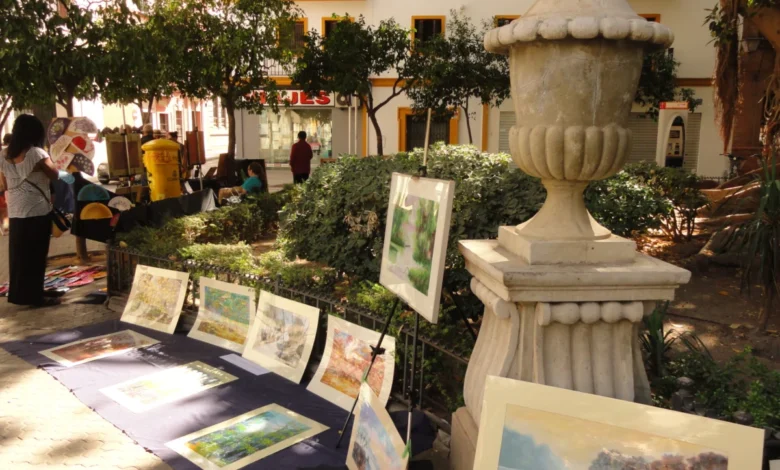
- The Immersion Phase: The adoption of local rhythms, such as the afternoon siesta, the utilization of neighborhood squares like Campo del Príncipe, and the attempt to converse in Spanish.
Economic and Cultural Data Points
The economic landscape of Granada is heavily reliant on the service sector, with tourism accounting for approximately 15% of the local GDP. Experts from the University of Granada have noted that the "hidden economy"—the informal trade of local bars and artisan workshops—is significantly bolstered by visitors who linger.
Recent data shows that small-scale, neighborhood-focused tourism has a higher "multiplier effect." When a tourist spends money at a locally owned establishment rather than a major chain or international attraction, a larger percentage of that currency stays within the local economy. Furthermore, the aesthetic evolution of these neighborhoods, such as the emergence of street art initiatives in the Realejo district, has been facilitated by a culture that encourages pedestrians to explore non-commercialized areas. These murals, often the work of local artists like Raúl Ruiz, serve as grassroots cultural markers that are entirely independent of institutional curation.

The Role of Language in Cultural Integration
A critical component of this slow-travel model is the adoption of the local language. Linguistic experts suggest that even basic proficiency in Spanish functions as a "social lubricant" in Andalusian culture. For the traveler, the transition from being an observer to a participant is frequently marked by the ability to navigate social interactions in shops and cafes.
While language apps provide a baseline for vocabulary, researchers in sociolinguistics emphasize that conversational confidence is only achieved through the "in-situ" experience. The fear of error—a common barrier for adult learners—is mitigated in Granada’s social atmosphere, where the cultural focus is often on the act of communication rather than grammatical precision. This shift in traveler behavior effectively lowers the barriers between the host population and the visitor, fostering a more sustainable, human-centric form of tourism.
Broader Implications for Urban Management
The move toward decentralized tourism poses both opportunities and challenges for city planners. While the dispersion of tourists prevents the "over-tourism" phenomenon that has impacted cities like Barcelona or Venice, it also requires careful management of residential neighborhoods.

The Granada City Council has periodically discussed policies to balance the rise of short-term vacation rentals with the need for affordable housing for the city’s significant student population. The influx of visitors into areas like Realejo adds a layer of complexity to municipal planning, requiring infrastructure that supports both permanent residents and temporary guests.
However, the consensus among urban historians is that this trend is largely positive. By encouraging visitors to engage with the city’s "everyday life"—its plazas, its local culinary customs, and its informal history—the city avoids becoming a static "museum city." Instead, it maintains a vibrant, evolving character.
Conclusion: Redefining Success in Travel
The current trend toward the "slow travel" model in Granada serves as a case study for the future of international tourism. Success is no longer measured solely by the number of landmarks visited, but by the depth of the interaction between the visitor and the destination.

For the modern traveler, the most significant "attractions" are often those that do not appear in a guidebook: the silence of a courtyard fountain, the nuances of a local conversation, or the discovery of a neighborhood mural. These elements represent a shift from consuming a city to experiencing it. As travelers continue to prioritize quality of engagement over quantity of sights, cities like Granada are uniquely positioned to offer a more meaningful, sustainable, and reciprocal form of cultural exchange.
The lasting impression of a city is rarely found in the architecture alone, but in the quiet, unscripted moments that occur when one steps away from the itinerary and into the life of the streets. As the data and ongoing cultural shifts suggest, the future of travel lies not in the destination, but in the pace at which we arrive.