How a Sacred Valley Restaurant Is Redefining Social Enterprise for Single Mothers in Peru

The crisp mountain air of Urubamba, nestled within Peru’s historic Sacred Valley, carries a sound rarely heard in traditional culinary establishments: the unfiltered laughter and chatter of children. At AMA restaurant, this vibrant atmosphere is not a byproduct of its operations, but rather its foundational mission. Founded by Julio Chemi Sanchez Hernandez, AMA—derived from the Spanish word for love—operates as a unique social enterprise designed to alleviate the socioeconomic pressures faced by single mothers in the Andean region. By blending a fully functioning restaurant, a children’s play area, a fair-trade artisan boutique, and community outreach initiatives, the venue addresses a systemic market failure: the exclusion of primary caregivers from formal, stable employment due to a lack of affordable childcare infrastructure.
Main Facts and Core Operations
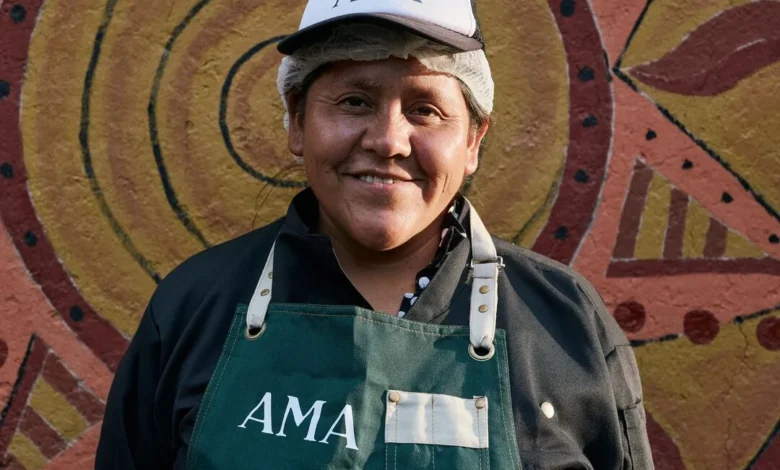
At its core, AMA provides employment, professional training, and communal childminding services to 45 single mothers hailing from five distinct regions across the Sacred Valley. Rather than forcing mothers to choose between generating an income and caring for their offspring, the restaurant integrates family life directly into the workplace. While some women manage kitchen operations utilizing local Andean ingredients, others weave traditional textiles or curate the artisan shop. Meanwhile, their children utilize designated play structures and complete homework assignments on-site.
The economic engine driving this enterprise relies heavily on international tourism, specifically a long-standing partnership with the global adventure travel company Intrepid Travel. Since 2019, Intrepid groups—frequently en route to Machu Picchu—have accounted for approximately 95% of the restaurant’s commercial patronage. Visitors participate in cultural exchanges, listening to the personal narratives of the staff while consuming locally sourced refreshments served in bespoke ceramics crafted by regional artisans. This steady stream of ethical tourism ensures a predictable revenue stream, allowing AMA to sustain and expand its operational model without depending entirely on domestic economic fluctuations.

Chronology and Background Context
The genesis of AMA is deeply rooted in the personal history of its founder, Julio Chemi Sanchez Hernandez. Raised in Andahuaylas, an Andean community situated approximately seven hours from Cusco, Julio was the eldest of five children born to a 19-year-old single mother named Giovanna. In pursuit of economic mobility, Giovanna migrated to Lima during Julio’s youth, enduring repeated setbacks as she attempted to establish small businesses and pursue formal education. Despite enduring financial precarity, Giovanna prioritized the education of her children above all else.
Following university studies in mathematics and science and a year of extensive travel across Peru’s diverse coastal, jungle, and mountain landscapes, Julio settled in Urubamba in 2018. During his travels, he observed a widespread socioeconomic pattern: female community members possessed significant skills, cultural knowledge, and entrepreneurial potential, yet faced structural barriers that kept them out of the formal labor market. Inspired by his mother’s resilience and sacrifices, Julio established AMA in 2018 to replicate the supportive, nurturing environment of his upbringing on an institutional scale.
In 2019, the enterprise welcomed key personnel, including Lupita Castro Arias, known as Lupe, who now serves as the head chef. Following a separation from her husband, Lupe faced traditional hospitality employers who strictly prohibited employees from bringing their children to work, forcing her to rely on distant family members for childcare. Upon joining AMA, Lupe was granted the flexibility to integrate her son into the daily work environment, a policy she credits with transforming her family’s stability and mental well-being.
Supporting Data and Nutritional Initiatives

The impact of AMA extends beyond immediate employment figures, translating into measurable community-level interventions. Operating under a peer-to-peer training model, the restaurant’s culinary staff collaborates with local mothers to design and prepare nutrient-dense breakfasts utilizing regional ingredients. These meals are then distributed directly through the local school system to combat widespread nutritional deficits, where children previously attended classes having consumed only basic rations of water, tea, and bread.
Data regarding the initiative’s expansion demonstrate rapid scaling:
- 2025: AMA successfully delivered 500 school breakfasts across the target communities.
- 2026 (Projected): The organization aims to scale delivery to 2,000 breakfasts.
- 2027 (Projected): The target increases exponentially to 10,000 breakfasts distributed through the regional school framework.
Furthermore, operational milestones for 2027 include the integration of a specialized, hands-on chocolate-making workshop into Intrepid Travel’s Peru Women’s Expedition, offering travellers deeper engagement with the cooperative’s female artisans.
Official Responses and Stakeholder Perspectives
Stakeholders within the AMA ecosystem emphasize the symbiotic relationship between ethical tourism and grassroots economic development. Julio frequently highlights the magnitude of his operational responsibility, viewing the welfare of his workforce not merely as a managerial duty, but as a familial obligation. "I may not have biological children, but I have 45 single working mothers relying on me," Julio notes. "That is 45 families, and 45 kids. It is a substantial responsibility."

From the perspective of the employees, the enterprise offers a rare pathway to upward mobility in a region traditionally underserved by labor protections for women. Lupe articulates the mutual trust underpinning the organization: "Julio elevates you up the ladder. He has a big heart. That is why I trust him, and he trusts me. In the Sacred Valley, almost nobody offers single mothers this kind of opportunity."
Broader Impact and Economic Analysis
The operational model of AMA provides a case study in sustainable community development and the practical application of social entrepreneurship within the tourism sector. By internalizing childcare and nutritional support into the business framework, the restaurant mitigates the hidden costs of labor participation that disproportionately affect women in rural Latin America.
Economic analyses of similar community-based tourism (CBT) initiatives suggest that direct-to-consumer models—such as the one established between AMA and international tour operators—yield higher retention of tourism dollars within local economies compared to conventional mass-tourism structures. By retaining supply chains locally, from the ceramic tableware to agricultural inputs used in the kitchen, AMA ensures that consumer spending generates multiplier effects across multiple regional sectors, including agriculture, textile manufacturing, and education.
Looking ahead, Julio’s projected expansions—including a planned community open kitchen project near the local market designed to host tourist cooking classes—signal a strategic pivot toward diversifying revenue streams. This intended growth aims to insulate the enterprise from potential shocks in the international travel sector while scaling the pedagogical and nutritional programs that have become central to the organization’s regional identity.