Beyond Sustainability: How the Regenerative Travel Asia Symposium is Redefining Global Tourism

For years, the sustainable travel movement has focused on damage control: minimizing harm, reducing plastic consumption, lowering carbon emissions, and respecting host cultures. However, as the global tourism industry rebounds past pre-pandemic levels and the impacts of climate change accelerate, a growing coalition of industry leaders, conservationists, and hospitality executives is arguing that merely sustaining damaged ecosystems is no longer enough.
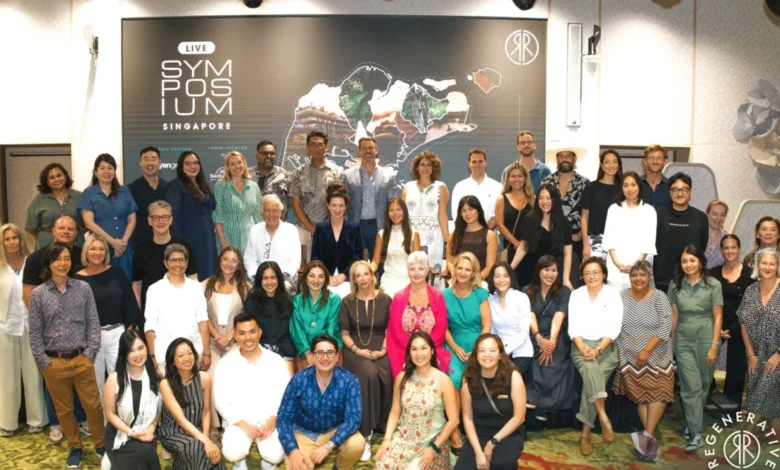
This paradigm shift took center stage at the recent Regenerative Travel Asia Symposium in Singapore. Gathering regional and international stakeholders, the event tackled a profound and fundamental question: What if the travel and tourism industry could actively restore ecosystems, strengthen local communities, and fundamentally rebuild humanity’s relationship with the natural world?
The consensus emerging from the symposium is clear. For decades, global tourism has operated primarily on a model of consumption. Regeneration challenges this extractive framework, demanding a complete rethinking of how travelers interact with the places, communities, and ecosystems they visit.
The Evolution from Sustainability to Regeneration
The historical framework of sustainable tourism emerged in the late 20th century as a response to mass tourism’s visible degradation of natural environments and indigenous cultures. It introduced metrics focused on efficiency—using less water, recycling waste, and lowering emissions. Yet, critics note that sustainability often boils down to doing "less bad."
Regeneration, by contrast, adopts an abundance mindset. Amanda Ho, co-founder and CEO of Regenerative Travel, set the tone for the Singapore symposium by describing regenerative tourism as a conceptual shift from head to heart, scarcity to abundance, and the individual to the collective. Ho challenged participants to view tourism not merely as a commercial industry, but as an active, reciprocal relationship between people, places, and nature.
Keynote speaker Juliet Kinsman expanded on this philosophy, reminding the audience that human beings are not separate from biodiversity, but rather part of an interconnected living system. In an increasingly digital world dominated by artificial intelligence and screen-bound experiences, Kinsman emphasized the critical importance of "regenerating humanity" by rebuilding visceral connections with the physical planet and one another.
Consumer Demand vs. Practical Execution
This philosophical shift finds a remarkably receptive audience among global consumers. Jeremy Tran of Sustainable Travel Asia shared compelling market research from Booking.com during the symposium, revealing that an overwhelming 85% of global travelers actively desire more sustainable travel options. Furthermore, 69% of respondents stated that they want to leave the destinations they visit better than they found them.
Despite these encouraging figures, a significant implementation gap remains: wanting to travel better and knowing how to travel better are two entirely different things.
Tran pointed to the profound influence of social media in distorting modern travel behaviors. In an era where remote destinations can become global viral trends overnight—often overwhelming local infrastructure—travelers must ask whether they are choosing experiences with genuine intention or simply following digital crowds. Moving beyond algorithmic trends requires individuals to interrogate their underlying motivations for travel and evaluate how they engage with local environments upon arrival.
Addressing the Overdevelopment Crisis
While individual choices matter, systemic issues require structural solutions. Maitri Fischer of Eco-Mantra, a leading firm in environmentally sustainable design, used the island of Bali as a cautionary tale to illustrate the tensions that arise when tourism growth outpaces local infrastructure and needs.
Rapid, unmitigated overdevelopment in regions like Bali has triggered severe cascading crises, including strained waste management systems, acute water shortages, and immense pressure on public infrastructure. Fischer emphasized that for tourism to be genuinely regenerative, local communities cannot merely be treated as passive hosts or economic recipients. Instead, they must be empowered as active decision-makers who hold agency over their land, culture, and economic future.
Industry in Action: Case Studies in Regeneration
While theoretical frameworks are essential, the viability of regenerative tourism hinges on execution by industry leaders. Throughout the Singapore symposium, major hospitality groups—including Banyan Group, The Datai Langkawi, and Potato Head Bali—showcased operational models proving that commercial success and ecosystem restoration can coexist.
One of the most notable case studies presented was Song Saa Private Island in Cambodia. Built on degraded land, the resort was founded with the explicit vision of ecological restoration. Through the establishment of the Song Saa Foundation, the property helped create Cambodia’s first officially recognized Marine Protected Area. Operationally, the resort sources roughly 75% of its workforce from surrounding local communities while implementing comprehensive on-site waste management, food waste reduction programs, and rainwater harvesting systems. Crucially, Song Saa integrates guests directly into its conservation framework, inviting visitors to participate in marine research and community outreach, thereby transforming them from passive consumers into active environmental contributors.
Similarly, Nick Hardman, a marine biologist and Head of Sustainability at Banyan Group, underscored the healing potential of the sector. "Tourism has a huge power to be part of the healing process," Hardman told the audience, stressing that engagement must be deeply personal. Whether through participating in coral restoration dives or engaging in ethical cultural exchanges with Indigenous populations, travelers are vastly more inclined to protect environments and cultures they feel a personal connection to.
The Risks of Greenwashing and the Imperative for Transparency
As regenerative travel gains mainstream traction, industry analysts issue a stark warning: the concept risks becoming hollowed out into a buzzword or greenwashing marketing label.
True regeneration demands absolute transparency, measurable long-term ecological and social impact, and rigorous accountability. Without these safeguards, regeneration is reduced to a semantic update of traditional sustainability. Both corporate tourism leaders and everyday travelers share the responsibility of ensuring that regenerative commitments translate into verifiable, permanent improvements.
Furthermore, accessibility emerged as a vital point of debate during the symposium. If regenerative travel remains exclusively the domain of high-end luxury resorts and private islands, its systemic impact will remain limited. For true collective change to occur, regenerative practices must be integrated across the broader spectrum of the tourism industry, making conscious travel options accessible and affordable to a wider demographic of tourists.
A Path Forward for the Global Traveler
As the climate crisis intensifies and international travel volumes continue to surge, the transition toward regenerative models is no longer optional; it is an operational necessity for the survival of destination communities and ecosystems.
For the individual traveler, contributing to this movement begins with intentional decision-making. By seeking operational transparency, supporting community-led initiatives, patronizing businesses that reinvest in local infrastructure, and questioning who ultimately benefits from tourism expenditures, consumers can help steer the industry toward a future defined by mutual benefit.
Regeneration does not demand perfection from travelers or operators; rather, it demands intention. It invites humanity to step away from a culture of extraction and consumption, moving instead toward connection and active contribution. At its finest, travel should not merely alter the perspective of the visitor—it should fortify, enrich, and preserve the people and places that welcome them.