The Best Sedona Hikes with Kids Provide a Gateway to Arizona’s Red Rock Landscapes for Families with Infants and Toddlers

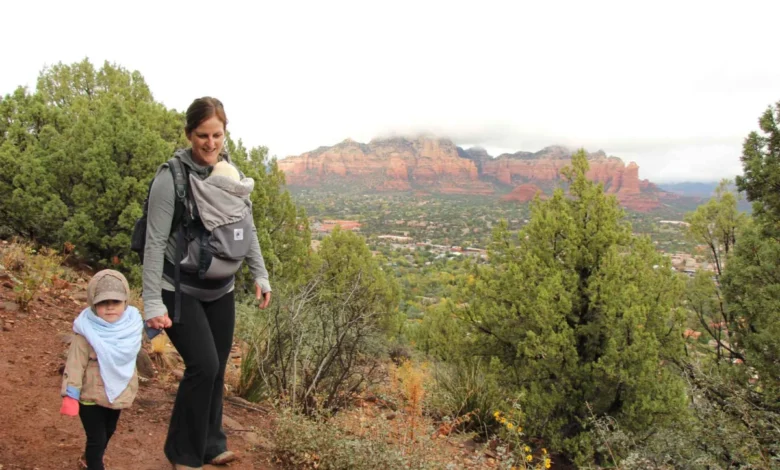
Sedona, Arizona, has solidified its reputation as a premier destination for multi-generational outdoor recreation, driven largely by its accessible trail systems and iconic geological formations. While the region is often associated with strenuous backcountry trekking and technical mountain biking, a significant portion of its 200-plus miles of trails is specifically suited for families traveling with infants, toddlers, and young children. The convergence of the Coconino National Forest’s natural beauty and the infrastructure of the Red Rock Ranger District allows for a variety of hiking experiences that accommodate strollers and baby carriers, making the desert landscape approachable for even the youngest visitors.

The appeal of Sedona for families lies in the high visual reward relative to physical effort. Many of the most celebrated red rock vistas are accessible via trails with minimal elevation gain and manageable distances. This accessibility is a cornerstone of the region’s tourism industry, which sees approximately three million visitors annually. According to data from the Sedona Chamber of Commerce and Tourism Bureau, outdoor recreation remains the primary draw for tourists, with a growing demographic of young families seeking "soft adventure" opportunities that do not require specialized equipment or extreme physical conditioning.

Strategic Planning for Desert Hiking with Young Children
Success in navigating Sedona’s trails with children requires an understanding of the local environment, which is characterized by high-altitude desert conditions. Situated at an elevation of approximately 4,500 feet, Sedona offers cooler temperatures than the nearby Sonoran Desert in Phoenix, yet it remains subject to intense solar radiation and rapid shifts in weather. Journalistic analysis of regional safety reports suggests that the primary risks to family hikers are dehydration and heat exhaustion, particularly during the peak summer months when temperatures regularly exceed 90 degrees Fahrenheit.

Experts and park officials recommend a "carrier-first" approach for most trails. While some pathways are maintained with crushed red shale or gravel, the majority of Sedona’s terrain is uneven, featuring "slickrock" (smooth sandstone), loose rocks, and sandy patches. A high-quality baby carrier or hiking-specific backpack provides the mobility necessary for these conditions. However, for families specifically seeking stroller-friendly options, certain multi-use pathways offer a viable alternative without sacrificing the scenic experience.

Top Family-Friendly Trail Assessments
1. Bell Rock Pathway: The Stroller-Accessible Standard
The Bell Rock Pathway stands as the benchmark for accessible hiking in Sedona. Running along the base of Bell Rock and Courthouse Butte—two of the area’s most photographed formations—the pathway is wide and relatively flat. While the entire pathway extends for several miles, the most popular section for families is a one-mile out-and-back stretch from the southern trailhead.

This trail is unique for its use of red shale gravel, which provides a firm enough surface for strollers equipped with larger, all-terrain wheels. The pathway offers unobstructed views of the Schnebly Hill Formation, a geological layer of red sandstone that defines the Sedona skyline. From a logistical standpoint, the southern trailhead provides ample parking and vault toilets, though the lot frequently reaches capacity by 9:00 AM during peak season.

2. West Fork Trail: Shade and Water Exploration
Located within the Coconino National Forest along the Oak Creek Canyon, the West Fork Trail offers a distinct environment from the exposed desert floors. This trail follows the West Fork of Oak Creek through a deep canyon characterized by towering 1,000-foot walls and lush riparian vegetation. For families, the primary draw is the series of creek crossings.

The trail requires hikers to cross the water multiple times using stepping stones. While this precludes the use of strollers, it provides a high level of engagement for older children. The canyon walls provide significant shade, which is a critical factor for families hiking during the warmer hours of the day. Due to its popularity and the limited parking at the Call of the Canyon Day Use Area, the U.S. Forest Service often implements a "one-in, one-out" vehicle policy.
3. Fay Canyon Trail: Natural Arches and Geological Intimacy
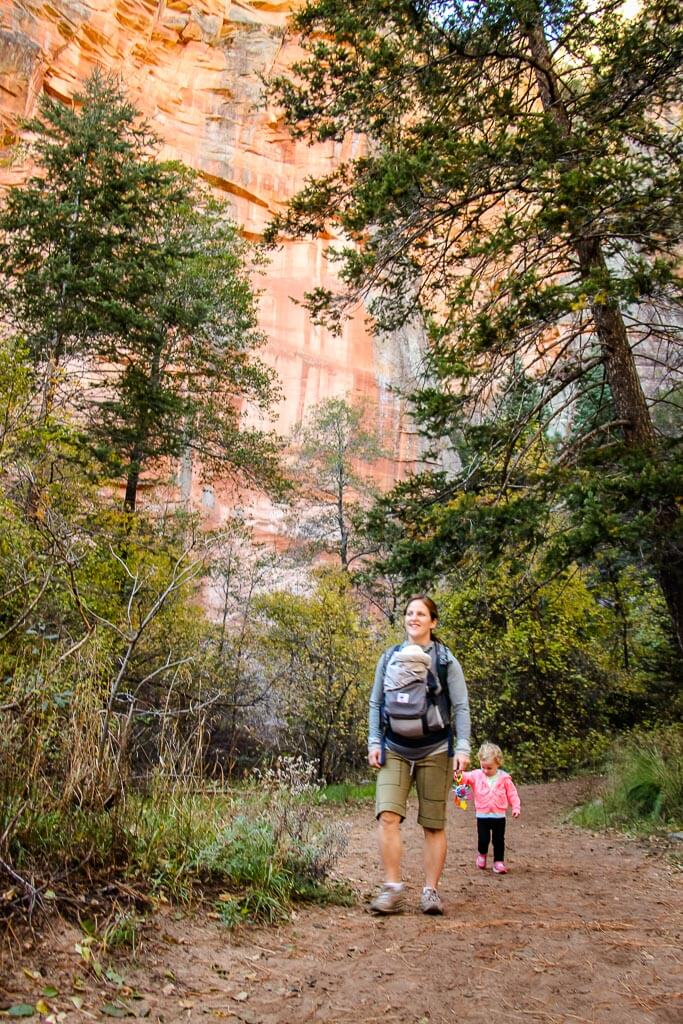
Fay Canyon is often cited as a quieter alternative to the more crowded West Fork. This 2.2-mile round-trip hike is largely flat and meanders through a box canyon. The trail is shaded by a canopy of Emory oaks and Arizona cypresses, providing a buffer against the sun.

A notable feature of this trail is the Fay Canyon Arch, a natural stone bridge located about half a mile into the hike. While the side trail to the arch is steep and may require parents to carry children, the main trail remains easy to navigate. Geologically, Fay Canyon provides an up-close look at the Supai Group of sedimentary rocks, showcasing the intricate layering of the region’s history.

4. Baldwin Trail: Iconic Views of Cathedral Rock
The Baldwin Trail, situated near the Village of Oak Creek, offers a 2.7-mile loop that provides some of the best vantage points of Cathedral Rock. The trail is notable for its proximity to Oak Creek, allowing families to combine a hike with a visit to the water’s edge at "Buddha Beach."

The terrain here is more varied than the Bell Rock Pathway, with sections of red dirt and rocky steps that necessitate a baby carrier. The loop format is particularly beneficial for keeping children engaged, as the scenery shifts from open vistas to riverside groves.

5. Huckaby Trail and Airport View Trail: Proximity to Urban Amenities
For families staying within the Sedona city limits, the Huckaby and Airport View trails offer immediate access to nature. The Airport View Trail, starting from the Sedona Airport parking lot, provides a panoramic overlook of the town and the northern red rock cliffs. While the trail is short, its exposure to the sun is high, and the narrow, rocky path is best tackled with a carrier.

The Huckaby Trail, located near Midgley Bridge, offers a more rugged experience with significant views of the Sedona skyline. It serves as a reminder of the region’s commitment to preserving "view corridors," ensuring that even as the town grows, the connection to the surrounding wilderness remains intact.

Regional Infrastructure and the Red Rock Pass Program
The maintenance of these trails is funded in part by the Red Rock Pass program. This fee-based system, managed by the U.S. Forest Service, is required for parking at most trailheads. As of 2024, the program offers daily, weekly, and annual passes, with funds reinvested into trail restoration, signage, and restroom facilities.

The presence of clear signage and well-marked cairns (rock piles used as trail markers) is a critical safety feature for families. In a 2023 statement regarding trail safety, the Red Rock Ranger District emphasized that "staying on marked trails is the most effective way to prevent accidents and protect the fragile desert crust known as cryptobiotic soil."

Broader Implications of Accessible Nature
The emphasis on family-friendly hiking in Sedona reflects a broader national trend toward "nature-based play" and early childhood environmental education. Research published in the Journal of Outdoor and Environmental Education suggests that children who engage with natural landscapes before the age of five are more likely to develop a lifelong commitment to conservation and physical activity.

By providing trails that accommodate strollers and infants, Sedona is positioning itself as a leader in "inclusive outdoorsmanship." This strategy not only bolsters the local economy by attracting a diverse range of visitors but also ensures the long-term sustainability of the park system by fostering a new generation of stewards.

Chronology of the Sedona Hiking Experience
A typical successful family excursion in Sedona follows a specific chronological pattern dictated by the desert climate:

- Early Morning (6:00 AM – 8:00 AM): Arrival at the trailhead. Early arrival is essential to secure parking and avoid the peak UV radiation of midday.
- Mid-Morning (8:00 AM – 10:30 AM): Active hiking. This window provides the best light for photography and the most comfortable temperatures for children in carriers.
- Late Morning (10:30 AM – 12:00 PM): Completion of the trail and transition to shaded areas or indoor activities.
- Afternoon: Recovery and hydration. Many families utilize this time for scenic drives along the Red Rock Scenic Byway (State Route 179), an All-American Road.
Safety Protocols and Environmental Stewardship
Families visiting Sedona are encouraged to adhere to "Leave No Trace" principles, which are vital for preserving the area’s high-desert ecosystem. This includes packing out all trash (including diapers), staying on designated paths to avoid crushing desert vegetation, and respecting wildlife.

Water requirements for children are significantly higher in the arid Arizona climate. The American Academy of Pediatrics recommends that children drink fluids every 20 minutes during outdoor activity in the heat. For a two-hour hike in Sedona, a family of four is advised to carry at least one gallon of water.

In conclusion, Sedona’s trail system offers a rare combination of world-class scenery and logistical accessibility. Through the careful selection of trails like Bell Rock and West Fork, families can introduce children to the wonders of the American Southwest in a manner that is safe, educational, and deeply memorable. As the region continues to manage the balance between high visitor volume and environmental preservation, these family-friendly corridors remain essential to the cultural and economic fabric of northern Arizona.