The HOKA Tecton X 3 has emerged as a significant contender in the elite trail running shoe market, distinguishing itself not merely by its speed-enhancing capabilities but by its remarkable capacity to mitigate post-run muscle fatigue. This third iteration of HOKA’s carbon-plated trail racer has been rigorously tested across varied, demanding terrains, from the high-altitude singletrack of Crested Butte to the arid desert paths of Fruita, Colorado, consistently delivering a performance that redefines expectations for endurance and recovery in ultra-trail running.
The Evolution of Trail Running Footwear: A Contextual Overview
The landscape of running footwear has undergone a revolutionary transformation in recent years, largely driven by the advent of "super shoes" – designs that incorporate advanced foam technologies and carbon fiber plates. This innovation, initially confined to road racing, has progressively migrated to the rugged world of trail running. The goal remains consistent: to enhance propulsion, improve running economy, and reduce the physiological toll on athletes, especially over ultra-distances. HOKA, a brand synonymous with maximalist cushioning and a smooth ride, has been at the forefront of this transition, leveraging its expertise to adapt these cutting-edge technologies for the unique challenges of off-road environments.

The Tecton X series represents HOKA’s dedicated effort to bring this "super shoe" paradigm to the trails. Its predecessors, the Tecton X and Tecton X 2, laid the groundwork, experimenting with dual carbon plates and responsive foams. The Tecton X 3, however, marks a significant refinement, integrating lessons learned and pushing the boundaries of what a trail racing shoe can achieve in terms of speed, protection, and recovery. This evolution is particularly pertinent given the increasing popularity and competitiveness of ultra-trail events, where marginal gains in efficiency and reductions in fatigue can profoundly impact race outcomes.
Unpacking the Technological Innovations of the Tecton X 3
At the core of the Tecton X 3’s performance lies a sophisticated interplay of materials and design philosophy. The shoe is a testament to engineering precision, featuring a dual-layer PEBA midsole, a unique winged carbon plate, a Matryx textile upper, and a high-performance Vibram Megagrip outsole.
The PEBA Midsole: Cushioning and Energy Return Redefined
The most significant update in the Tecton X 3 is its dual-layer PEBA (Polyether Block Amide) midsole. PEBA is a thermoplastic elastomer widely recognized for its exceptional resilience, lightweight nature, and superior energy return properties. Unlike traditional EVA (Ethylene-vinyl acetate) foams, PEBA offers a much higher rebound and maintains its structural integrity over longer durations, making it ideal for high-mileage events. This material is a staple in top-tier road racing shoes due to its ability to absorb impact effectively while simultaneously providing a springy, propulsive feel.

For trail running, the integration of PEBA presents unique challenges. The foam needs to be protective enough against sharp rocks and roots, stable enough on uneven terrain, and durable enough to withstand abrasive conditions. HOKA’s dual-layer approach in the Tecton X 3 addresses this by optimizing the foam’s density and placement, ensuring a plush yet responsive ride that cushions the relentless pounding of long descents without sacrificing ground feel or stability. This cushioning system plays a critical role in minimizing the muscular fatigue often experienced in the quadriceps after significant downhill running, a benefit frequently highlighted by testers.
The Winged Carbon Plate: Stability Meets Propulsion
Carbon fiber plates have revolutionized running by providing a rigid structure that enhances propulsion and maintains foot stability. However, their application in trail shoes has often been met with mixed results. A flat carbon plate can feel overly stiff or even unstable on technical, uneven terrain, leading to a disconnected feel or increased risk of ankle rolls.
The Tecton X 3 ingeniously addresses this with its "winged" carbon plate design. Instead of a flat insert, the carbon plate wraps slightly up the sides of the midsole. This innovative geometry serves to cradle the foot, enhancing lateral stability without imparting excessive stiffness. This design is crucial for navigating technical singletrack, loose scree, and rocky ascents, where foot security and confidence are paramount. Expert analysis suggests that this winged design provides a subtle but effective form of motion control, allowing runners to maintain balance and avoid the wobbly sensation sometimes associated with highly cushioned or plated trail shoes. The plate’s primary function remains to deliver a propulsive push-off and protect against sharp trail debris, but its winged architecture significantly elevates its functionality for dynamic off-road environments.
Matryx Upper: Durable Security and Breathability
The upper of the Tecton X 3 features Matryx textile, a specialized fabric woven with high-tenacity fibers, often including aramid (Kevlar-like) threads, for enhanced durability and support. This material strikes an excellent balance between robustness and breathability, crucial for long days on the trail. It is designed to wrap the foot securely, providing a locked-in feel essential for navigating technical terrain where precision foot placement is critical. Despite its inherent toughness, the Matryx upper remains lightweight, contributing to the shoe’s overall low weight (approximately 8.3 ounces for a men’s size 8).

A notable update is the integrated knit gaiter and thin tongue. While the knit gaiter effectively prevents trail debris from entering the shoe – a significant advantage during scree field traverses or muddy sections – it has elicited varied feedback. Some runners appreciate its sock-like fit and debris-blocking capabilities, noting that it quickly becomes unnoticeable after a few steps. Others, however, find it can run warm and may take longer to dry after water crossings, or feel slightly restrictive around the ankle. The thin tongue, while saving weight, offers minimal padding, suggesting that runners should avoid overtightening the laces to prevent pressure points on the top of the foot.
Vibram Megagrip Outsole with Traction Lug Technology: Uncompromising Grip
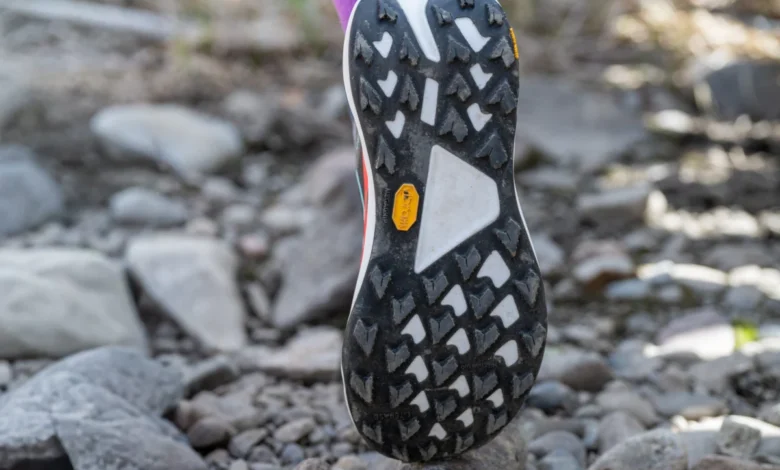
Traction is non-negotiable in trail running, and HOKA has equipped the Tecton X 3 with one of the industry’s most trusted outsoles: Vibram Megagrip with Traction Lug technology. Vibram Megagrip is a high-performance rubber compound renowned for its exceptional grip on both wet and dry surfaces, including loose dirt, slippery rocks, and muddy trails. The "Traction Lug" design refers to specific lug patterns and shapes engineered to maximize surface contact and multi-directional grip.
This aggressive outsole ensures confident footing across a wide array of trail conditions, a critical feature for a shoe designed for speed and racing. The decision to incorporate such a robust outsole underscores HOKA’s commitment to performance without compromising safety or reliability, recognizing that even the fastest shoe is ineffective without dependable grip.
Performance on the Trail: Speed, Protection, and Sustained Endurance

Field testing of the Tecton X 3 across diverse high-altitude and desert terrains has consistently highlighted its exceptional attributes. The combination of the PEBA foam and winged carbon plate delivers a ride that is both energetically bouncy and remarkably stable. Runners report a noticeable reduction in the impact forces transmitted to the body, particularly during punishing descents, which translates directly into less quad fatigue and a fresher feel deeper into long runs. This enhanced impact absorption is a game-changer for ultra-distance events, where preserving leg strength can be the difference between finishing strong and bonking.
The broad platform of the shoe, combined with the foot-cradling effect of the winged plate, provides a sense of security and confidence even on highly technical terrain. Unlike some maximalist shoes that can feel disconnected from the trail, the Tecton X 3 strikes a commendable balance, offering ample cushioning without entirely sacrificing ground feedback. Its lightweight profile (8.3 ounces for a men’s size 8) is particularly impressive given the substantial stack height and protective features, making it feel nimble and agile.
Durability and Longevity: A Race-Day Weapon
While the Matryx upper and Vibram outsole demonstrate commendable durability, the longevity of the PEBA midsole foam is a common point of discussion for any "super shoe." High-performance foams, by their nature, often have a shorter lifespan than more traditional, denser materials. Experience suggests that while the Tecton X 3 handles rough trail use better than anticipated, its PEBA foam will eventually compress and lose its energetic properties.

Industry insights and user feedback indicate that, like many premium race-day shoes, the Tecton X 3 performs optimally when reserved for key workouts and races rather than serving as an everyday training shoe. Runners who utilize it as a daily driver often report a faster degradation of the midsole cushioning compared to those who strategically deploy it. Given its premium price point, this positions the Tecton X 3 as a specialized tool – a "race-day weapon" designed to deliver peak performance when it matters most, rather than an all-purpose workhorse.
Target Audience and Market Positioning
The HOKA Tecton X 3 is unequivocally designed for the ambitious trail runner prioritizing speed, efficiency, and recovery over long distances. It caters to athletes targeting competitive performance in events ranging from vertical-heavy 50Ks to grueling 100-milers. Its ability to extend endurance and leave legs feeling fresher at the finish line makes it a compelling choice for those seeking to maximize their race-day potential.
In the broader market of trail running shoes, the Tecton X 3 occupies the ultra-premium category. Its closest competitors include other carbon-plated trail shoes from brands like Salomon (e.g., S/Lab Ultra 3 with Energy Blade), Nike (Ultrafly), and Brooks (Catamount Agil), each offering their own interpretations of speed and protection. HOKA’s unique approach with the dual, winged carbon plate and refined PEBA cushioning sets it apart, particularly for runners who prioritize a balance of stability and maximalist comfort on technical terrain.

However, the shoe’s precise, race-oriented fit and high price tag ($275) mean it won’t be suitable for everyone. Runners with wider feet, or those whose feet tend to swell significantly during ultra-distances, might find the fit too restrictive. In such cases, or for those seeking a more forgiving daily trainer, alternatives like the HOKA Speedgoat 7 (known for its durability and protective cushioning) or the Salomon Pulsar (a streamlined, non-plated speed shoe) might be more appropriate. It is also critical that the carbon plate aligns correctly underfoot for optimal performance, suggesting that sizing up excessively might compromise the shoe’s integrated system.
Broader Implications for Trail Running
The continued development and refinement of "super shoes" like the HOKA Tecton X 3 carry significant implications for the sport of trail running. These shoes are not just marginal improvements; they represent a step change in how athletes can approach and perform in ultra-endurance events.
- Performance Enhancement: By reducing fatigue and improving running economy, these shoes enable faster times and potentially push the boundaries of human performance in trail racing. Records are increasingly being set in shoes featuring such advanced technologies.
- Athlete Recovery: The emphasis on reducing post-run soreness contributes to faster recovery times between training sessions and races, allowing athletes to train harder and more consistently.
- Accessibility vs. Cost: While these innovations benefit elite athletes, the high price point raises questions about accessibility for the wider running community. The investment required for a "race-day only" shoe can be substantial.
- Spirit of the Sport: Some purists occasionally debate whether such technological aids detract from the "natural" challenge of trail running, though the prevailing view among competitive athletes is to embrace advancements that enhance performance and safety.
- Future of Footwear Design: The Tecton X 3 showcases the ongoing innovation in materials science and biomechanics. Future iterations and competing models will likely continue to explore new geometries, foam compounds, and upper constructions to further optimize the balance of speed, protection, and comfort on trails.
In conclusion, the HOKA Tecton X 3 stands as a formidable entry in the evolving category of carbon-plated trail running shoes. It skillfully combines high-rebound PEBA cushioning, an innovative winged carbon plate for stability, and robust traction, delivering a fast, protective, and remarkably leg-saving ride. While its premium price and specialized fit position it primarily as a race-day weapon, its performance capabilities make it an undeniable asset for serious trail runners aiming to conquer challenging distances with greater efficiency and less fatigue. It is a testament to the ongoing quest for pushing the boundaries of human potential, supported by cutting-edge footwear technology.